
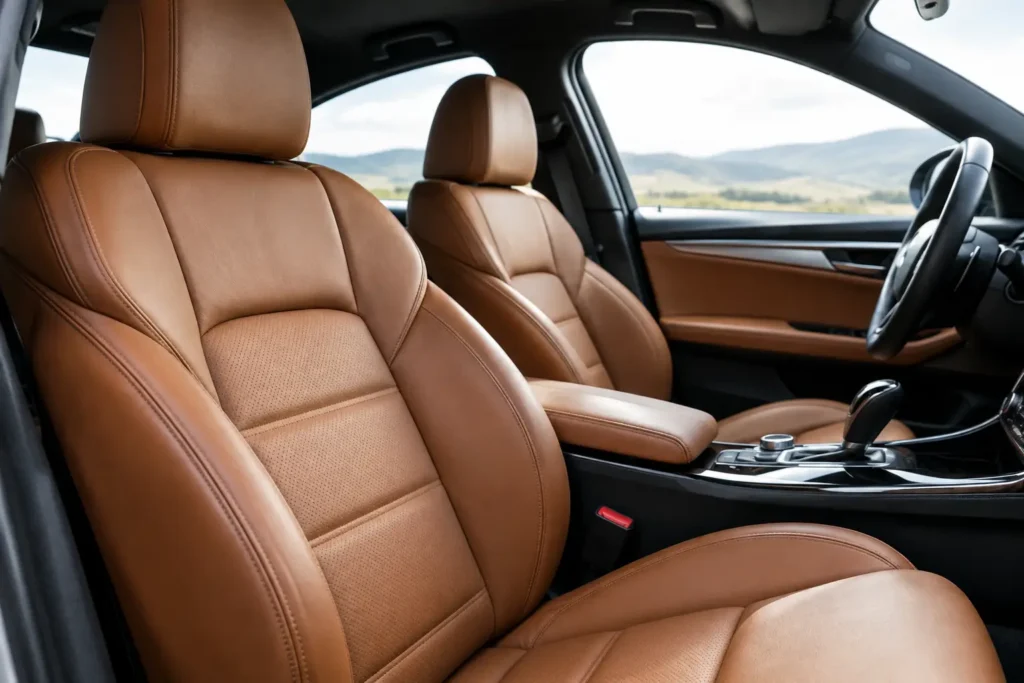
A cracked steering wheel, polished-through armrest, or faded console can make an otherwise well-kept vehicle feel tired every time you get behind the wheel. Professional leather reupholstery corrects that daily reminder of wear by replacing damaged material with properly fitted leather or suede, restoring the feel, color, and visual standard the interior deserves.
For a classic, luxury vehicle, collector car, or a daily driver you plan to keep, the difference is more than cosmetic. The right restoration preserves original parts, supports resale value, and gives the cabin the solid, finished feel it had when the vehicle was new – or better if you choose a custom finish.
What Leather Reupholstery Actually Fixes
Leather does not fail all at once. It dries, stretches, becomes glossy from hand oils, fades from UV exposure, and eventually cracks at high-contact points. On steering wheels, the damage often begins where drivers naturally grip at 10 and 2 o’clock. Armrests split along seams, shifter boots loosen, and console lids develop deep creases from years of use.
Reupholstery is the answer when the leather itself has worn beyond what cleaning, conditioning, or spot repair can realistically correct. The old covering is removed, the underlying part is evaluated, and new material is patterned, cut, stitched, fitted, and finished around the original component. When performed correctly, it does not look like a cover placed over a damaged part. It looks integrated because it is built around the part from the inside out.
This matters especially on steering wheels. A loose wrap, uneven seam, or incorrect leather thickness changes how the wheel feels in your hands. On a high-end or vintage interior, it also looks immediately out of place. Professional work must account for spoke contours, thumb grips, factory seam locations, airbag fitment areas, and the original shape of the rim.
Leather Reupholstery for Steering Wheels and Interior Parts
Steering wheels are the most common candidates for leather reupholstery because they receive constant use and remain in plain view. But they are only one part of the interior that can benefit from a proper restoration. Console lids, door pulls, armrests, shifter boots, e-brake handles, dashboard sections, and trim panels can all be reupholstered when the base structure is sound.
The material choice depends on the vehicle and the intended result. Smooth automotive leather suits many factory-style restorations. Perforated leather can recreate a sport package appearance or improve visual contrast. Alcantara-style suede offers a more performance-focused look and a soft, secure grip, though it requires different maintenance than leather. Exotic textures, contrast stitching, colored center stripes, and custom piping can push the interior beyond factory specification without sacrificing a clean, purposeful finish.
Matching an original interior is often more involved than selecting a color that looks close under shop lighting. Leather has grain, sheen, thickness, and texture. Black leather may appear warm, cool, matte, or slightly glossy depending on the vehicle and age of the surrounding materials. Tan, gray, red, and factory-specific colors present even more variables. A strong restoration considers the entire cabin so the repaired piece belongs with the seats, dash, door panels, and trim rather than calling attention to itself for the wrong reason.
Restoration or Customization: The Right Direction Depends
Not every vehicle should receive the same treatment. A numbers-matching classic, a concours build, or a collector-grade luxury vehicle may call for a faithful factory-style restoration. That means preserving original seam placement, color direction, material texture, and wheel profile as closely as possible.
A custom build gives you more room to personalize. You might retain the factory wheel while adding perforated side grips, a 12 o’clock stripe, contrast stitching, carbon fiber accents, or suede sections. This approach works particularly well when the factory interior is dated, heavily worn, or being upgraded alongside seats, trim, and paint-matched details.
There are trade-offs. Suede provides an excellent tactile feel but can show oils and wear faster than quality leather if it is not maintained. Bright contrast stitching looks sharp but may not suit a vehicle intended for period-correct judging. A thicker leather can feel substantial, while too much thickness can soften crisp contours or affect how trim pieces fit. The best decision is rarely the trendiest option. It is the option that fits the vehicle, how it is driven, and the level of originality you want to preserve.
The Details That Separate Quality Work From a Quick Cover-Up
A finished part can photograph well and still be poorly built. The test comes from fit, feel, and durability over time. Quality leather reupholstery begins with preparation. If foam is compressed, a wheel rim is damaged, a substrate is cracked, or old adhesive remains, those issues must be addressed before new material is installed.
Patterning is equally important. Leather must be cut with enough precision to follow compound curves without bunching, twisting, or leaving excess material at the spokes and seams. Stitching needs consistent spacing and tension. On a steering wheel, the seam should sit cleanly and comfortably in the proper location, not rub against the driver’s hands or wander around the rim.
Adhesives and finishing methods matter as much as the visible leather. Automotive interiors face heat, cold, UV exposure, repeated pressure, and constant contact with skin oils. Materials intended for furniture or fashion accessories may look acceptable at first but are not always suited to that environment. Automotive-grade materials and proven installation methods are what keep the work tight, stable, and durable.
Color work also demands restraint. Dyeing or refinishing adjacent components can be the right solution when a newly restored leather section reveals faded plastic, vinyl, or painted trim. But a mismatch should not be hidden under a heavy coating that masks texture or chips prematurely. Proper color matching is a controlled process, not a shortcut.
When Reupholstery Makes More Sense Than Replacement
Replacing a worn interior part sounds simple until you try to find the correct one. New original equipment pieces may be discontinued, expensive, or unavailable in the right color. Used replacements frequently carry the same wear, and a supposedly clean used steering wheel can still have hardened leather, fading, or hidden damage.
Reupholstery allows you to keep the original part that already fits your vehicle. That is particularly valuable for rare trim, vintage wheels, low-production luxury models, and factory parts with unique switches, woodgrain, or airbag configurations. It also avoids the generic look and questionable fit of many aftermarket replacements.
Replacement may still be the better option if the underlying structure is severely broken, safety-critical components are compromised, or a part cannot be restored to a dependable standard. An honest assessment should identify those cases before any cosmetic work begins. Restoration should improve the part, not disguise a problem that needs replacement.
Preparing a Part for Send-In Restoration
Send-in service gives owners access to specialized craftsmanship without needing to be local to the shop. Before removing a part, take clear photos of the current condition, including damage, trim details, seams, buttons, and any areas that affect reassembly. Those reference images are useful if the vehicle has unusual factory options or if you are reproducing a specific configuration.
For steering wheels, follow the vehicle manufacturer’s procedures for battery disconnection and airbag removal, or have a qualified technician remove the wheel. Do not ship airbags, and do not force clips, connectors, or trim pieces that are difficult to remove. Protect delicate electronics, switches, and wood or carbon fiber sections with appropriate padding so they arrive in the same condition they left.
Include clear instructions about your goal: factory-correct restoration, a specific leather color, matching stitching, perforated sections, suede, or other custom details. A reference photo helps, but material selection should account for real-world texture and color rather than relying only on a screen image. At Craft Customs, all restoration and customization work is completed in-house, allowing material, stitching, refinishing, and fitment details to be managed as one process.
Care After Leather Reupholstery
Fresh leather does not need aggressive treatment. Keep it clean with a soft microfiber cloth and use a leather-safe cleaner when needed. Avoid household cleaners, silicone-heavy dressings, and harsh degreasers, which can leave residue, alter the finish, or dry the material over time.
For steering wheels, regular hand cleaning is one of the simplest ways to protect the finish. Lotions, sunscreen, sweat, and hand sanitizer build up quickly and can make leather shiny or slippery. Light, consistent care is more effective than waiting until the surface is heavily soiled or visibly worn.
Your interior is where every mile is experienced. If the leather has begun to crack, fade, loosen, or feel wrong in your hands, restoring the original part can change the vehicle more than most owners expect – every time the door opens and every time the road begins.