
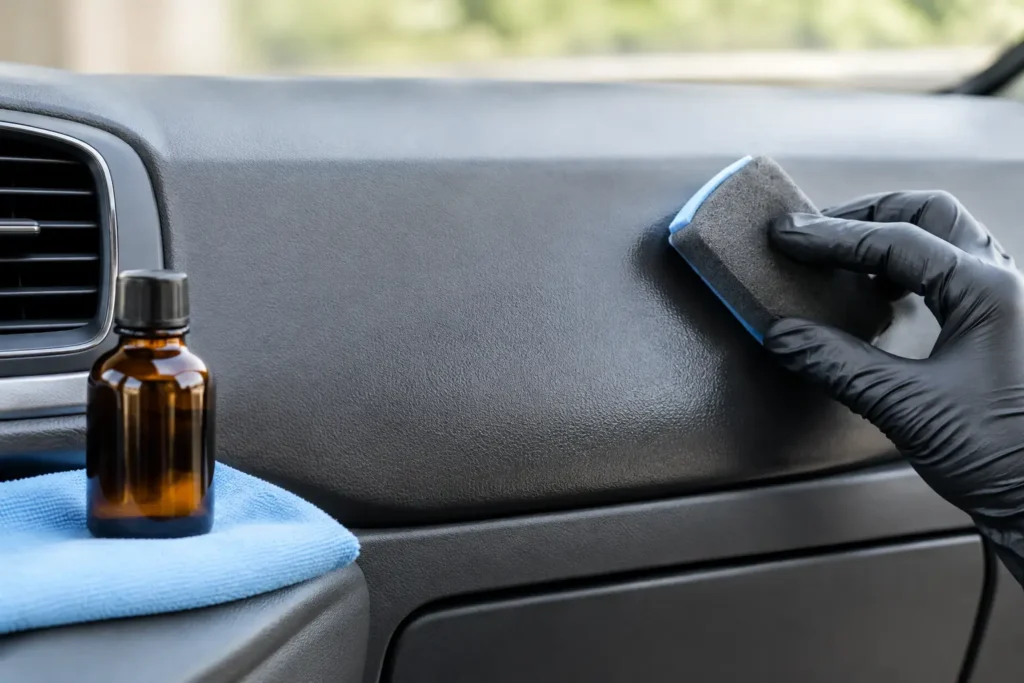
A sticky dash bezel, chalky door panel, or peeling console trim can make an otherwise well-kept vehicle feel neglected every time you get behind the wheel. The best coatings for interior plastics do more than add color. They restore the correct sheen, flex with the part, resist hand oils and UV exposure, and make the repair look like it belongs in the vehicle.
Interior plastic refinishing is not a one-product job. A smooth painted radio bezel, a soft-touch console lid, a textured door pull, and a sun-baked dashboard each need a different approach. Choosing the wrong coating can leave a finish that scratches easily, feels overly glossy, or begins peeling after a few hot days in the cabin.
What Makes a Coating Right for Interior Plastic?
A quality interior coating needs adhesion, flexibility, chemical resistance, and the right appearance. These requirements are closely connected. If a coating bonds well but cures too hard, it may crack on a flexible panel. If it looks correct but cannot stand up to sunscreen, skin oils, cleaners, and repeated contact, the repair will not hold its value.
Most automotive interior plastics are made from materials such as ABS, polypropylene, PVC, TPO, and polyurethane. Some accept coatings readily after careful cleaning and scuffing. Others, especially low-surface-energy plastics like polypropylene and TPO, require a dedicated adhesion promoter before color is applied. Skipping that step is one of the most common reasons a finish lifts or flakes.
Sheen matters just as much as durability. Factory interiors are rarely high gloss. Many have a low-luster satin or matte appearance designed to reduce glare and hide minor texture variations. A technically durable coating can still look wrong if it is too shiny, too flat, or mismatched to adjacent trim.
Best Coatings for Interior Plastics by Application
The right product family depends on the material, the part’s location, and how often it is touched. These are the coating types professional restorers rely on most often.
Flexible interior dye and coating systems
For color changes and refinishing flexible vinyl, plastic, and coated interior surfaces, automotive interior dyes are often the best choice. Despite the name, professional-grade dye systems are generally pigmented coatings formulated to bond into or onto the surface while retaining flexibility.
They work especially well on door panels, lower dash pieces, pillar trim, console side panels, armrests, and other parts that need an OEM-style low-gloss finish. When properly matched and applied in light, controlled coats, they can cover fading, discoloration, and minor cosmetic wear without filling in factory texture.
The trade-off is preparation. Interior dye will not hide peeling soft-touch material, silicone contamination, deep scratches, or unstable old paint. Those failures need to be corrected before color is applied.
Adhesion promoter for difficult plastics
Adhesion promoter is not a color coating, but it is essential for many interior plastic repairs. It creates a bond-friendly layer on plastics that normally resist paint, particularly polypropylene, TPO, and similar molded materials used in modern trim.
Use it after the surface has been cleaned, repaired, and lightly abraded where appropriate. It is typically applied in a thin, even film, then followed within the manufacturer’s specified recoat window. Too much can create its own problems, including solvent trapping or reduced texture definition.
On a frequently handled door pull or console component, an adhesion promoter can be the difference between a durable restoration and a coating that starts wearing through at contact points.
Two-component urethane interior coatings
For hard trim pieces that receive regular handling, two-component urethane coatings offer excellent durability and chemical resistance. These systems use a hardener or activator, producing a tougher cured finish than many one-component aerosol products.
They are a strong option for steering wheel trim, center console bezels, shifter surrounds, painted dash trim, and hard plastic components that need to withstand repeated cleaning. A properly selected low-gloss urethane can closely reproduce an original factory finish while offering better resistance to scratches and skin oils.
The limitation is that two-component products require careful mixing, controlled spray technique, and proper safety equipment. They are not the best choice for every DIY repair, especially when a precise color match or texture retention is critical.
Soft-touch coatings for factory-feel surfaces
Many late-model luxury interiors use soft-touch coatings on consoles, switches, handles, and decorative trim. When these coatings break down, they can become sticky, gummy, or patchy. Applying a standard interior paint directly over failed soft-touch material usually produces a temporary-looking repair that fails from underneath.
The failed coating must be fully removed or stabilized first. Once the substrate is properly prepared, a dedicated soft-touch coating can restore the subtle rubberized feel that standard paint cannot reproduce. This is a specialized process because the final finish must balance feel, durability, and a uniform appearance.
Soft-touch refinishing is often worth professional attention on high-value vehicles, where a slightly incorrect texture is immediately noticeable beside original components.
Preparation Determines How Long the Finish Lasts
The coating is only as durable as the surface beneath it. Interior plastics collect contaminants that are easy to overlook: silicone-based dressings, armor products, hand lotion, smoke residue, wax transfer, and cleaner residue. A part can look clean and still reject paint.
Start by removing the component whenever practical. Masking in place is sometimes necessary, but it increases the risk of overspray, uneven edges, and contamination from surrounding surfaces. Clean the part repeatedly with the correct plastic-safe cleaner until no residue remains.
Next, remove failed coatings and repair damage. Deep scratches, gouges, cracks, and worn edges should be repaired with materials designed for flexible plastic when the part flexes. Sanding should level the repair without erasing surrounding grain. On textured trim, preserving the factory pattern is often more important than making every imperfection disappear.
After final cleaning, use the appropriate adhesion promoter if the plastic requires it. Apply the color in several light coats rather than one heavy pass. Heavy coats can pool in texture, create uneven gloss, or trap solvents that weaken the finish. Allow sufficient cure time before reinstalling the part or exposing it to heat and handling.
Matching Color and Sheen Is the Professional Difference
“Black” is not one color in an automotive interior. It can be charcoal, blue-black, brown-black, warm black, or a faded version of the original finish. The same is true of gray, tan, red, and beige interiors. A close color match can still look wrong if the gloss level is off.
For restoration work, compare the finish to a protected area of the original part, such as the underside, back edge, or section hidden by a trim panel. That area often shows the original color more accurately than the sun-exposed face. Also consider how the repaired component sits beside leather, vinyl, woodgrain, carbon fiber, and metal trim.
Craft Customs approaches interior refinishing as a matched system, not simply a coat of paint. The goal is a finish that looks appropriate next to the surrounding materials and continues to feel right in daily use.
When Refinishing Is Not the Best Repair
Coatings are highly effective for faded color, surface scuffs, light scratches, and cosmetic wear. They are not a cure for every damaged interior component. Plastic that is badly warped from heat, heavily cracked through its structure, missing material, or degraded beneath a peeling coating may need reconstruction or replacement before refinishing makes sense.
Steering wheels deserve special judgment. A painted plastic spoke can often be refinished successfully, but a worn leather rim needs leather repair or reupholstery rather than a plastic coating. Likewise, peeling woodgrain or damaged carbon fiber may require refinishing, overlay work, or conversion depending on the construction of the original part.
Care After Interior Plastic Refinishing
Once cured, use mild interior cleaners and soft microfiber towels. Avoid aggressive degreasers, solvent-heavy cleaners, abrasive pads, and glossy silicone dressings. Those products can alter the sheen and leave a film that attracts dust or makes a factory-style matte surface look artificial.
For high-touch parts, regular gentle cleaning is better than occasional harsh scrubbing. If a cupholder surround, door pull, or console receives constant use, protecting the coating starts with keeping oils and grime from building up in the first place.
A well-chosen coating can make worn interior plastic look factory new, but the lasting result comes from treating the part like a restoration project, not a quick cosmetic cover-up. Choose the system for the material, prepare it thoroughly, and let the finish cure before it returns to the cabin.