
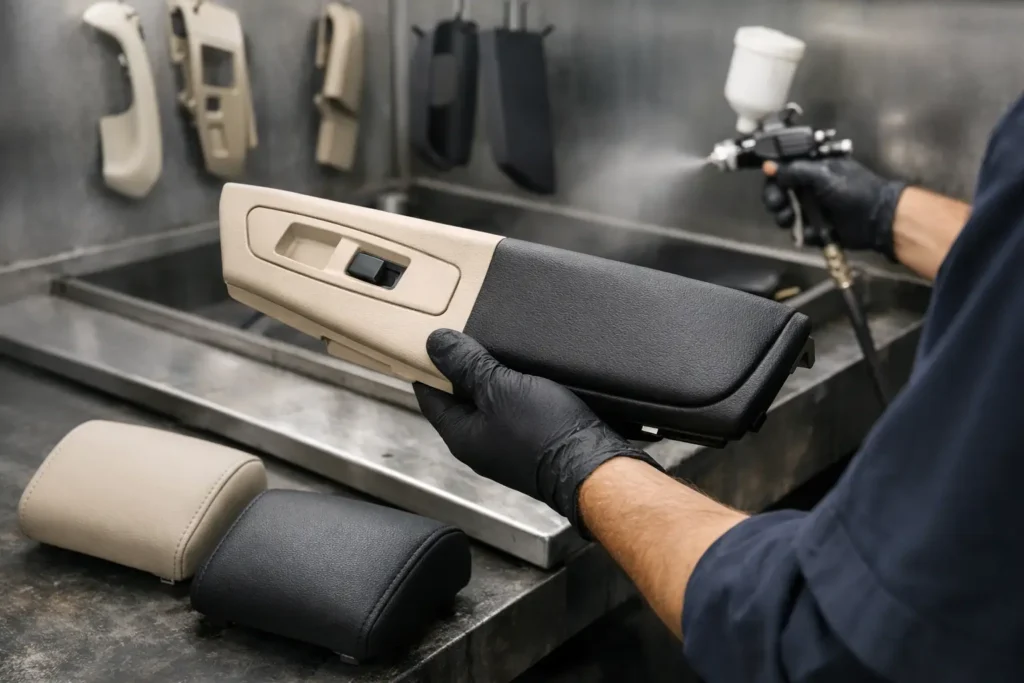
A faded armrest, sun-bleached dash trim, or mismatched console lid can make the whole cabin feel older than the vehicle really is. An automotive interior part dyeing service is often the right fix when the structure of the part is still good, but the color, finish, or surface appearance has clearly worn out. Done correctly, dyeing can restore a factory look, correct years of discoloration, or help tie custom interior pieces together without replacing hard-to-find original parts.
That last point matters more than most owners realize. On many vehicles, especially older luxury models, classics, limited trims, and specialty performance cars, replacement interior parts are either discontinued, expensive, or inconsistent in color. Even when you can source a used replacement, it may be just as faded as the piece you already have. Dyeing gives you another path – keep the original part, correct the appearance, and preserve the fit and authenticity of the interior.
What an automotive interior part dyeing service actually does
Interior dyeing is not a quick spray-over meant to hide damage for a few months. A professional service starts by identifying the material and the condition of the part. That can include leather, vinyl, plastics, padded trim, consoles, dash components, armrests, shift surrounds, and other touch surfaces that see years of UV exposure, body oils, abrasion, and heat cycling.
From there, the process is about surface preparation, repair, color matching, and proper finish application. If the part has grime embedded in the grain, silicone contamination from past dressings, worn topcoat, or minor cracking, all of that has to be addressed before color is applied. Skipping prep is why cheap refinishing jobs peel, streak, or fail around high-contact areas.
A strong result also depends on using the right product system for the specific material. Leather behaves differently than molded plastic. A soft-touch armrest needs a finish that can flex. A hard trim panel needs consistency and adhesion. This is why experienced interior specialists treat dyeing as a material-specific refinishing process, not one generic coating for every part.
When dyeing makes sense and when it doesn’t
Dyeing is a smart option when the part is structurally sound but cosmetically tired. Fading, discoloration, light surface wear, uneven sun exposure, color mismatch from prior repairs, and outdated trim tones are all common reasons owners choose this service. It is also useful when you want to restore one damaged piece so it blends with the rest of the cabin instead of standing out.
It can also be the right call for customization. If you are changing a steering wheel wrap, refinishing woodgrain, converting trim to carbon fiber, or updating seats and accents, dyeing surrounding interior parts helps everything look intentional instead of pieced together.
But dyeing is not the answer for every problem. If a part is badly warped, heavily broken, missing chunks, or the substrate itself has failed, restoration may require rebuilding, rewrapping, refinishing, or replacing the component. The honest answer is sometimes that a part needs more than color correction. A reputable shop will tell you that upfront rather than covering over damage and hoping it holds.
Why factory-accurate color matching matters
Interior color is rarely as simple as black, tan, or gray. Factory cabins often use subtle undertones and finish variations that become obvious the moment one part is refinished incorrectly. You might have a warm parchment next to a cooler beige, or a low-sheen black panel sitting beside a glossier dyed piece. Even if the general color family is close, the mismatch will read as a repair.
That is where professional color matching changes the outcome. The goal is not just applying new color. It is making the restored part belong in the cabin. That includes matching tone, saturation, and sheen so the part looks right under daylight, garage lighting, and direct sun.
For custom projects, color matching matters in a different way. If you are building a two-tone interior or coordinating a dyed console with custom leather, suede, or painted trim, consistency is what makes the upgrade feel premium. Without it, the interior looks like a collection of separate jobs instead of one finished design.
The parts owners most often send in for dyeing
Some components show wear long before the rest of the cabin. Armrests darken and crack from constant contact. Console lids fade and pick up stains. Door pull areas lose their finish. Dash trim can discolor from sun exposure, and smaller pieces like shifter surrounds or side panels often end up scratched, sticky, or visibly aged.
Steering wheel side trim, lower dash pieces, pillar components, plastic bezels, and center console sections are also common candidates. In many cases, these are exactly the parts your eye lands on first when you open the door. Restoring them can change the feel of the entire interior without tearing apart the whole cabin.
This is especially true on vehicles that are otherwise well cared for mechanically. A clean exterior and strong drivetrain do not offset a worn interior touchpoint. When the parts you handle every day look tired, the vehicle feels tired too.
What separates lasting results from a short-term cosmetic fix
The difference is in the prep, the repairs, and the finishing discipline. A quality dyeing service does not rush contaminated or damaged parts straight to color. Oils, old coatings, residue, and unstable material all have to be dealt with first. If a crack or surface defect telegraphs through the final finish, it will not suddenly disappear because the color changed.
Application technique matters just as much. Heavy coats can fill texture, create uneven gloss, and reduce the natural look of leather or vinyl. Poor curing can leave the surface vulnerable to wear. Wrong products can make a formerly premium interior piece feel plasticky or stiff.
A proper result should look clean, feel right in the hand, and hold up under normal use. That is what owners of luxury, exotic, classic, and enthusiast vehicles should expect. The interior does not need to look refinished. It needs to look correct.
Send-in service is often the better option
For many owners across the country, a send-in automotive interior part dyeing service makes more sense than searching locally for a shop that handles these materials every day. Interior restoration is a specialized trade. General upholstery shops, collision centers, or detailers may offer some refinishing, but not all have the material knowledge, color inventory, or process control needed for rare or high-visibility parts.
Sending original components to a dedicated in-house shop gives you access to specialists who work on these parts full time. That usually means more consistent prep, better color matching, and better quality control. It also allows owners of uncommon vehicles to keep their original pieces instead of gambling on questionable replacements.
For customers working on a restoration or custom build, this model also makes planning easier. You can remove individual pieces, ship them in, approve the direction, and get back parts that are ready to reinstall. That is often cleaner and more precise than trying to coordinate mobile refinishing or broad local shop work across multiple materials.
Choosing the right shop for interior dyeing
If you are trusting someone with factory trim, vintage pieces, or expensive interior components, ask practical questions. Do they work in-house or outsource? Do they handle the specific material you are sending? Can they match factory color and sheen? Do they restore damage before refinishing, or only recolor? Have they worked on your make, model, or similar parts before?
You should also pay attention to proof. Before-and-after work matters here because this is a visual service. A capable shop should be able to show real transformations across different materials and different levels of wear. Craft Customs built its reputation on that kind of detailed, in-house interior restoration work because results are what move this category, not vague promises.
The best shop is not always the cheapest one, and interior work is a good example of why. Redoing a failed job costs more than doing it right once. If the part is rare, the cost of a bad refinishing attempt may be much higher than the price difference between shops.
A well-executed dyeing service does more than improve color. It brings the cabin back into balance. The vehicle feels more cared for, more valuable, and more complete every time you open the door. If one worn interior part keeps bothering you, that usually means it is time to fix it properly, not keep looking past it.