
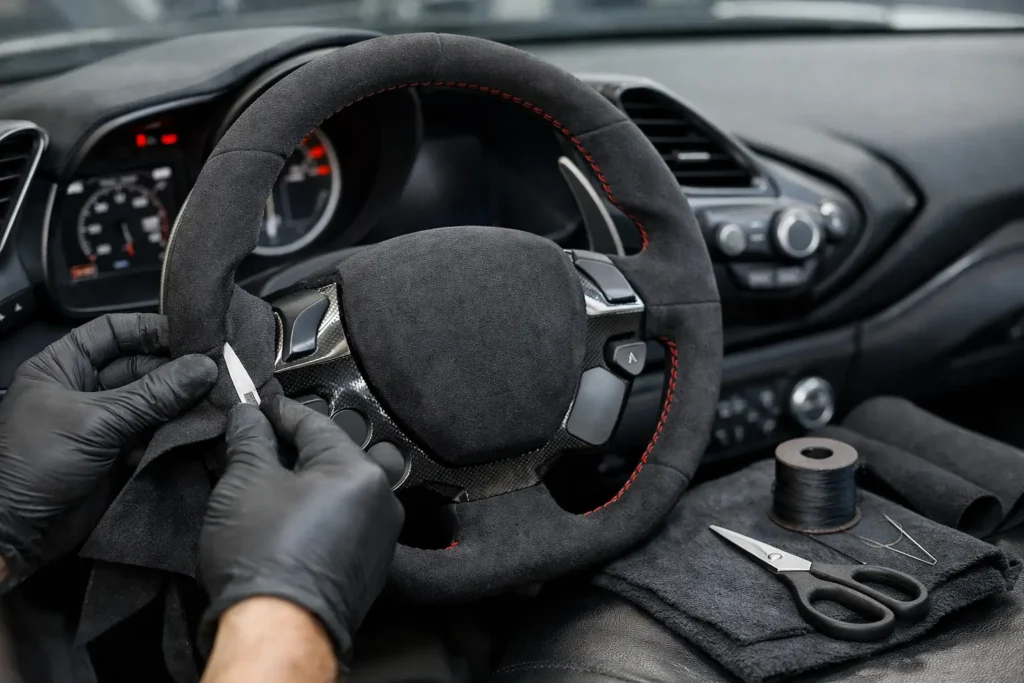
The first thing most drivers notice after a suede steering wheel wrap service is not the look – it is the grip. A worn factory wheel can feel slick, shiny, and tired even when the rest of the cabin still presents well. Wrapped correctly in suede, that same wheel feels more controlled, more premium, and far more connected to the car.
That change matters whether you drive a weekend sports car, a restored classic, a luxury SUV, or a daily driver with a steering wheel that has simply aged poorly. The steering wheel is one of the few interior parts you touch every time you use the vehicle. If it feels cheap, damaged, or slippery, the whole cabin feels older than it is.
What a suede steering wheel wrap service actually includes
A professional suede steering wheel wrap service is not the same as a slip-on cover or a quick cosmetic rewrap. The goal is to rebuild the wheel properly so it fits the hand correctly, looks intentional, and holds up under real use.
In most cases, the process starts with the original steering wheel core. The old material is removed, the surface is inspected, and any problem areas in the foam or underlying structure are addressed before new material goes on. If the grip areas are uneven, compressed, or damaged, those issues need to be corrected first. Wrapping over a bad foundation only gives you a better-looking problem.
From there, the wheel is patterned, cut, stitched, and hand-finished to match the shape of the wheel and the style of the build. Some owners want a straightforward factory-style suede wrap. Others want added thumb grips, a thicker profile, performance-inspired contouring, center stripe details, contrast stitching, or a combination of suede and leather. The best result depends on the wheel itself and how the vehicle is used.
Why drivers choose suede over leather
Leather is still the right material for many steering wheels. It wears well, cleans easily, and suits luxury interiors. But suede brings a different driving feel, and for the right owner, it is the clear upgrade.
The main draw is tactile control. Suede has a softer, more friction-rich surface that gives the wheel a planted feel in the hands. On performance cars especially, that added grip changes the experience in a way that is immediately noticeable. It can also reduce the glossy, worn appearance that develops on many factory leather wheels over time.
There is also the visual side. Suede gives a steering wheel a richer, more purposeful finish. It can make a modern interior feel sportier or help a custom build feel more tailored. In black or charcoal, it often adds contrast without looking loud. In some interiors, it is the missing material that ties together seats, trim, and accent stitching.
That said, suede is not automatically better than leather for every driver. If your vehicle sees heavy daily use, frequent hand lotion exposure, work-truck conditions, or minimal interior care, leather may be the more practical choice. Suede rewards owners who value feel and appearance and are willing to maintain it properly.
Suede steering wheel wrap service for daily drivers vs. weekend cars
This is where honest guidance matters. A suede steering wheel wrap service makes sense for both daily drivers and special-use vehicles, but the right material choice depends on your habits.
For a weekend car, a collector vehicle, or a performance build, suede is often an easy yes. These vehicles tend to be driven with cleaner hands, stored indoors, and maintained more carefully. The material can stay sharp for a long time when it is treated with that level of attention.
For a daily driver, suede can still be a strong option, but expectations need to be realistic. Any steering wheel gets wear because it is a constant touchpoint. Suede will show oils and smoothing faster than leather if it is neglected. That does not mean it fails quickly. It means the owner should understand the tradeoff between premium grip and higher maintenance.
A lot also depends on where and how the vehicle is driven. Hot climates, long commutes, and frequent stop-and-go use create more contact and more heat. If you love the suede look and feel, it may still be worth it. The key is having the wheel wrapped by a shop that understands proper fitment, seam placement, and material selection instead of treating the job like a generic upholstery task.
What separates a professional wrap from a poor one
Steering wheels are small parts with very little room for error. Weak craftsmanship shows up fast.
Poor suede wraps often have bulky seams, uneven tension, loose material at the spoke transitions, distorted stitching lines, or incorrect thickness that changes the wheel’s shape in a bad way. Some look acceptable in photos but feel wrong in the hand. Others start to wrinkle or smooth out early because the material was stretched improperly or the prep work was rushed.
A quality wrap feels natural from the first drive. The seam alignment is consistent. The contours remain symmetrical. The padding, if modified, feels intentional rather than overbuilt. Around airbag sections, multifunction controls, and trim transitions, the work should look clean and precise. This is one of those services where experience matters because every wheel design has its own geometry and its own problem areas.
At Craft Customs, that level of detail is the point. A steering wheel should come back looking factory-correct or fully custom by design – never improvised.
Design options that make sense with suede
Suede is flexible enough to fit a lot of interior styles, but restraint usually produces the best result. The strongest custom steering wheels tend to combine one or two deliberate choices rather than stacking every available option onto one part.
A full suede wrap in a neutral tone works well when you want an understated upgrade. If the interior already has leather seats and matching trim, suede side grips with leather top and bottom sections can create contrast without overwhelming the cabin. Contrast stitching can pull in seat stitching, brake caliper color, or gauge lighting. A center marker can add a motorsport cue, but it suits some vehicles better than others.
Thickness is another choice worth considering. Some owners want extra padding for a fuller grip, especially if the factory wheel feels thin. Others want to preserve the original profile. There is no universal right answer. A classic car and a late-model M car should not necessarily be built the same way.
Care and long-term wear
Suede is durable when it is handled correctly, but it is not a maintenance-free surface. That is the tradeoff for the look and feel.
Regular light cleaning matters. So does keeping dirty or oily hands off the wheel when possible. If the wheel starts to look matted, that usually reflects contamination and use patterns, not a material defect. A professionally wrapped wheel can still age very well, but it needs reasonable care.
This is also why send-in restoration has an advantage over quick local patchwork in many cases. When a shop specializes in interior parts and does all work in-house, the process is controlled from prep through finish. That leads to better consistency and fewer shortcuts, especially on high-touch components like steering wheels.
When a suede wrap is the right move
If your current wheel is worn, peeling, slick, faded, or just out of place with the rest of the interior, a suede wrap can change the way the vehicle feels every time you drive it. It is especially effective when the rest of the cabin is solid and the steering wheel is the one part making everything feel tired.
It also makes sense when you are already upgrading other interior components. A refinished steering wheel often has more impact than owners expect because it sits at the center of the visual field. Pair it with refreshed trim, a restored console lid, or matching shift components, and the cabin starts to feel intentional again.
The right shop should help you decide whether suede is the best fit, how much customization makes sense, and what level of wear to expect based on your vehicle and use. That is better than being sold a trend-driven option that looks good for a week and disappoints after a season of driving.
A properly executed suede steering wheel wrap service is not just about changing material. It is about restoring one of the most used parts of the interior to a standard that matches the rest of the vehicle. When the shape is right, the stitching is clean, and the finish suits the car, every drive starts to feel a little more like the vehicle you thought you bought in the first place.