
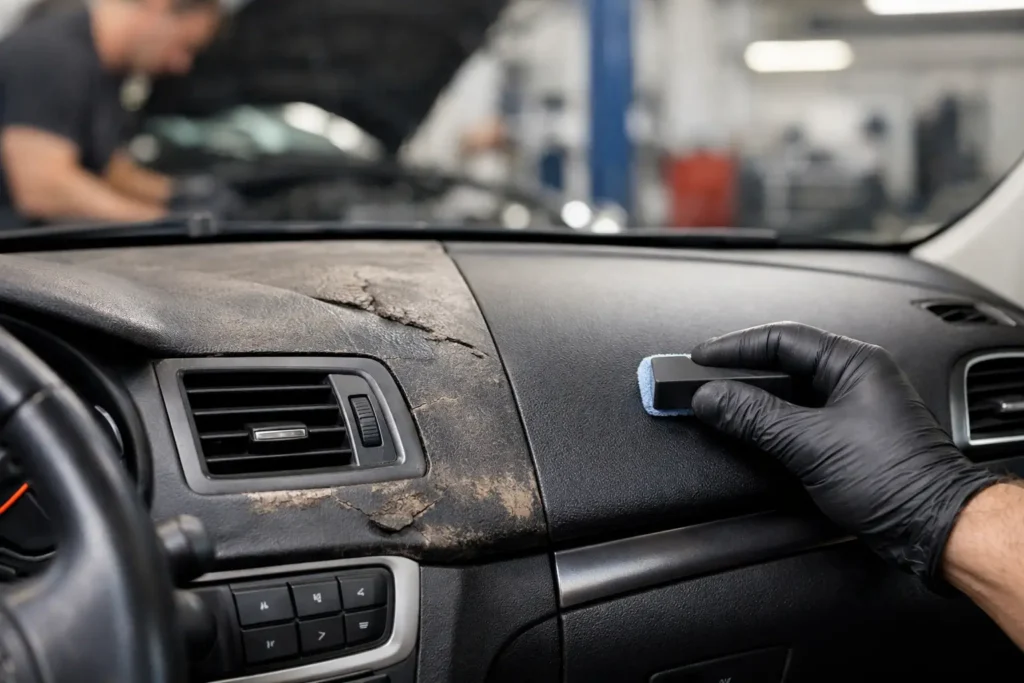
A faded woodgrain panel, peeling soft-touch finish, or cracked dash bezel can make the whole cabin feel worn long before the rest of the vehicle is actually tired. That is why a professional dash trim restoration service matters. When the trim in front of you looks damaged every time you drive, it changes how the entire interior feels, and it can drag down the perceived value of an otherwise well-kept vehicle.
Dash trim takes more abuse than many owners realize. Sun exposure, heat cycles, skin oils, cleaners, and simple age all work against the finish. In older vehicles, the problem is often cracking, lifting veneer, or faded color. In newer vehicles, it may show up as peeling coatings, scratched piano black surfaces, hazy clear coat, or plastic trim that has lost its original depth and uniformity. The result is the same – the dashboard starts looking neglected even when the rest of the car is mechanically solid.
What a dash trim restoration service actually includes
A true restoration is more than cosmetic touch-up work. The goal is to correct damage, stabilize the part, and refinish it so the surface looks right, feels right, and holds up over time. That can mean stripping failed coatings, repairing cracks or surface imperfections, rebuilding damaged areas, refinishing woodgrain, repainting trim, or converting the piece into a completely different finish such as carbon fiber, suede, or a color-matched painted surface.
The right process depends on the original material and the condition of the part. Real wood trim, molded plastic, coated composite, and wrapped pieces all require different handling. That is one reason owners often get disappointing results from general repair shops or DIY kits. Dash trim is not one material and one repair method. It is a category of parts with different substrates, finishes, and failure points.
When the work is done properly, the restored trim should fit the vehicle correctly, match adjacent pieces, and look intentional under full daylight, not just inside a shop. That level of finish is what separates a specialty restoration from a quick repaint.
Common problems a dash trim restoration service solves
Some damage is obvious. Cracks, chips, deep scratches, and missing finish usually push owners to act. Other problems are subtler but just as damaging to the interior. Faded color, uneven gloss, bubbling veneer, worn edges, and sticky or peeling soft-touch coatings can make the dash look dated and cheap.
Woodgrain trim often suffers from UV fading and clear coat failure. The top layer may become cloudy, brittle, or begin to separate. Painted trim can develop scratches around buttons, vents, and touchpoints. Plastic bezels may warp slightly or show stress marks. In luxury vehicles, high-gloss black trim is especially prone to swirls and visible surface wear. In classics, original finishes may have become brittle enough that preservation is no longer realistic without refinishing.
Not every part should be restored the same way. If the goal is originality in a collector car, the finish has to respect the era and appearance of the vehicle. If the goal is updating a modern interior, a custom refinish may make more sense than trying to duplicate a dated factory look. The best result depends on whether you are preserving value, improving aesthetics, or doing both.
Restoration versus replacement
Owners often start by looking for replacement dash pieces, then discover the hard part is finding parts that are actually better than what they already have. New old stock trim is rare. Used parts usually come with the same wear, and aftermarket replacements may have fit or finish issues that stand out once installed.
That is where restoration becomes the smarter route. You keep the original part that already fits your vehicle and have it refinished by specialists who understand how to correct the damage without compromising the part itself. This matters even more on uncommon trims, discontinued interiors, and vehicles where factory color or grain patterns are difficult to match.
Replacement can still make sense when a part is structurally destroyed or missing altogether. But in many cases, restoration gives a better final result because it works from the OEM component rather than a substitute. That is especially true when the dash trim is part of a larger interior look and the finish needs to coordinate with the steering wheel, console, shifter, armrest, or door trim.
Why material knowledge matters
Dash trim restoration is not just paint work. Material knowledge is the difference between a finish that looks good for a few weeks and one that performs like it belongs in the car. A woodgrain panel may need stripping, repair, stain work, and clear finishing. A plastic dash bezel may need adhesion prep, filling, texture correction, primer, color, and protective topcoat. Carbon fiber conversion requires a completely different approach than refinishing a factory veneer.
Even color matching has variables. Interior colors shift under natural light, LED light, and tinted glass. Gloss level changes how color reads. A black trim panel with the wrong sheen can look off even if the color itself is close. Experienced restoration work accounts for those details because they are what the eye catches immediately after installation.
This is also why send-in specialty service is often the better choice than trying to have a general body shop handle interior trim. Exterior painters may be excellent at panels and bumpers, but interior parts require different prep, different finishing priorities, and tighter attention to touch surfaces and close-range appearance.
When custom refinishing makes more sense than stock restoration
Sometimes the original finish is not worth recreating. Maybe the factory wood looks dated. Maybe the silver trim scratches too easily. Maybe the interior needs one upgraded element to tie together new seats, a reupholstered steering wheel, or a refreshed center console.
A professional dash trim restoration service can also be a customization opportunity. Carbon fiber conversions, satin or gloss painted trim, blacked-out accents, suede wrapping, and OEM-style color changes can completely modernize the cabin without changing the character of the vehicle in the wrong way. The best custom work still looks integrated. It should not feel like an afterthought.
There is a trade-off here. A custom finish can improve visual appeal and personal enjoyment, but a rare collector car may benefit more from a period-correct restoration. For enthusiast builds, performance cars, and daily drivers, custom refinishing often adds more satisfaction than strict originality. For investment-grade classics, authenticity usually carries more weight. It depends on the vehicle and your goal for it.
What to expect from the process
The process starts with evaluating the specific part and the kind of damage present. Surface wear, cracking, peeling, and previous repair attempts all affect how the piece should be handled. Good restoration work is not guesswork. The part needs to be assessed for repairability, finish type, and how closely it needs to match surrounding interior components.
For send-in work, the owner removes the original trim and ships it to the shop. That approach gives access to specialized workmanship without being limited to local options. It also means the actual part from your vehicle is the one being restored, which is often the best route for fit and final appearance. Craft Customs built its service model around this kind of precision send-in restoration because interior parts reward controlled, in-house work far more than rushed local refinishing.
Turnaround times vary based on material, damage, and finish choice. A straightforward refinish is different from a complex repair or a full custom conversion. If you are trying to coordinate multiple interior components, it is usually smarter to plan the project together so the textures, colors, and sheen levels come back consistent.
How to know if your dash trim is worth restoring
If the trim is original to the vehicle, fits correctly, and is not completely destroyed, it is usually worth evaluating for restoration. Light cracks, faded color, peeling finish, worn edges, and surface damage are all common issues that can often be corrected. Even trim that looks far gone may still be a better restoration candidate than a questionable used replacement.
The strongest candidates are parts that are visually prominent and frequently handled or seen. Driver-side bezels, radio surrounds, center dash trim, glove box trim, and decorative wood or painted accent pieces all have an outsized effect on how the interior feels. Fixing one or two highly visible components can make the whole cabin look newer.
If the rest of the interior is already in strong shape, damaged dash trim stands out even more. Restoring it is often one of the highest-impact upgrades you can make short of reupholstering seats or replacing carpets. And if you are planning to sell the vehicle, interior presentation matters. Buyers notice trim condition immediately because it is right in their line of sight.
A good dash should not compete with the rest of the car for attention. It should look correct, clean, and finished every time you get behind the wheel. When the trim is restored properly, the interior stops apologizing for itself and starts feeling like the vehicle it was always supposed to be.