
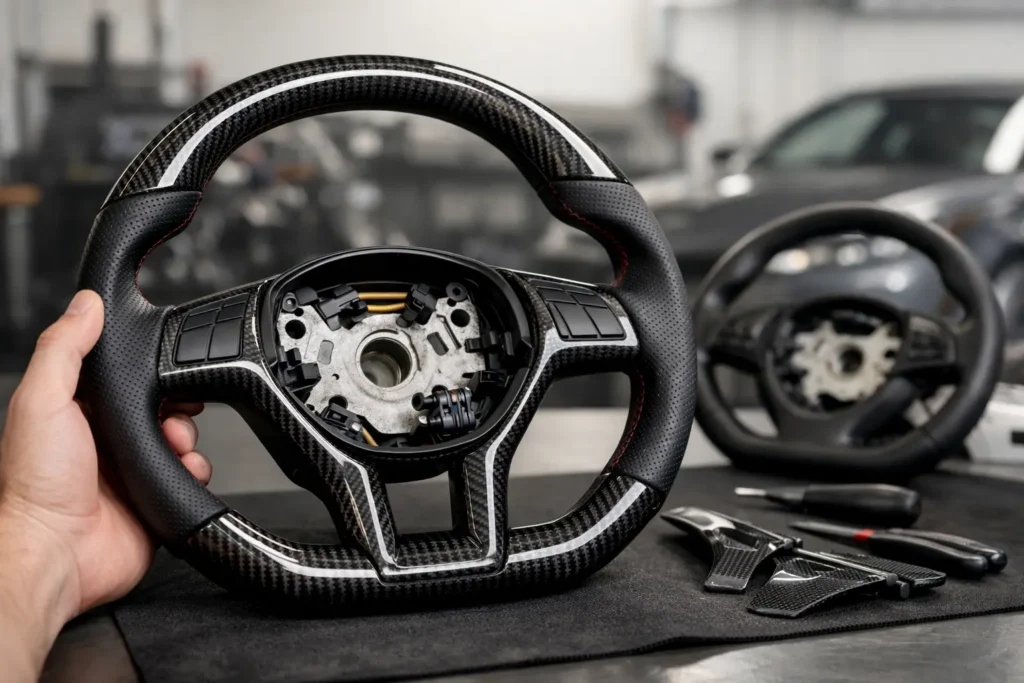
A steering wheel can make a clean interior feel tired faster than almost any other part. It is the one surface you see every time you drive and the one you touch the most. That is why a carbon fiber steering wheel conversion has become such a popular upgrade for owners who want a sharper look, a more premium feel, and an interior that matches the rest of the vehicle instead of dragging it down.
For some drivers, the goal is clearly performance-inspired styling. For others, it is about replacing worn leather, dated woodgrain, or factory trim that no longer fits the build. Either way, the best result is not just a wheel that looks different in photos. It needs to fit correctly, feel balanced in your hands, retain the original functions, and hold up over time.
What a carbon fiber steering wheel conversion actually changes
A true carbon fiber steering wheel conversion is not the same as buying a generic steering wheel cover or swapping in a cheap aftermarket wheel with questionable fitment. In most cases, the process starts with your original steering wheel core. That matters because the factory core preserves the correct fit to the column, maintains the airbag and control layout, and keeps the wheel compatible with the rest of the vehicle.
The conversion typically focuses on the outer structure and finish of the wheel. The top and bottom sections may be reshaped and wrapped or refinished with real carbon fiber. Side grips can be built to a thicker profile. Leather, perforated leather, suede, or custom stitching can be added to the hand positions. Some customers want a subtle OEM-plus look. Others want a flat-bottom design, racing stripe, color-matched stitching, or gloss carbon sections that tie in with dash trim and console pieces.
That range is exactly why the details matter. A good conversion should look intentional from every angle, not like several materials were forced together on one part.
Why owners choose carbon fiber over a standard rewrap
Sometimes a standard leather restoration is the right answer. If the wheel is from a classic vehicle or the owner wants strict factory accuracy, carbon fiber may not belong there. But for many modern performance cars, luxury sedans, trucks, and custom builds, carbon fiber makes sense because it changes both the visual weight and the perceived value of the interior.
Gloss carbon adds contrast and structure. It can make the wheel feel more architectural and more in line with factory sport packages. Matte or satin finishes can look more understated, especially when paired with smooth or perforated leather. The conversion also gives the owner a chance to correct ergonomics. A wheel that felt too thin from the factory can be rebuilt with a fuller grip, thumb contours, or a flatter bottom section that changes the driving position slightly without losing factory fit.
There is also a practical side. If your original wheel has cracked leather, faded dye, peeling trim, or damaged top sections, a conversion is a chance to solve multiple problems at once instead of patching one area and leaving the rest untouched.
Carbon fiber steering wheel conversion options that matter most
Not every wheel needs every upgrade. The best builds usually come from choosing a few elements that work together.
Finish and weave
Gloss carbon is the most common choice because it gives the wheel a strong visual pop and shows off the weave clearly. It fits modern sports cars and luxury interiors well. Matte or satin carbon is quieter and can work better if the cabin already has understated trim. The weave alignment matters more than many owners realize. If the pattern is off, the whole wheel can look cheap even when expensive materials were used.
Grip shape and thickness
This is one of the biggest functional upgrades. A slightly thicker grip can make the wheel feel more planted and more substantial. Too thick, however, can feel bulky, especially on smaller wheels. The right profile depends on the vehicle, the original wheel diameter, and how the owner drives.
Side materials
Most conversions pair carbon at the top and bottom with leather or suede on the sides. Smooth leather is the easiest to maintain and usually the safest choice for a daily driver. Perforated leather adds texture and a sportier look. Suede or Alcantara-style materials provide a more aggressive feel but require more care and can show wear faster with heavy use.
Stripe, stitching, and color accents
A center stripe can be a smart visual detail if it matches the vehicle’s style. On some builds it looks factory-inspired. On others it can feel forced. The same goes for contrasting stitching. Used well, it ties the wheel to seats, dash seams, or shifter boots. Overdone, it can make the interior feel busy.
The trade-offs most shops do not explain clearly
A carbon fiber steering wheel conversion is not automatically the right move for every vehicle. The best specialists will tell you where the upgrade fits and where it does not.
First, gloss carbon shows fingerprints and reflected light more than leather or matte finishes. Some owners love that polished look. Others find it distracting if too much carbon is used.
Second, carbon sections change the tactile feel of the wheel. That is part of the appeal, but not everyone prefers a hard surface at the top and bottom. If comfort is the top priority for a daily commuter, a leather-focused wheel may still be the better answer.
Third, quality varies dramatically. Real craftsmanship means proper prep, clean transitions between materials, consistent contours, and durable finishing. A poor build may look acceptable from ten feet away but reveal uneven edges, mismatched stitching, weak clear coat, or shape inconsistencies up close.
That is why this service should be approached like structural interior refinishing, not like a simple cosmetic accessory purchase.
Why using your original wheel usually gives the best result
When owners search for a carbon fiber steering wheel conversion, they often compare a custom conversion to a full aftermarket replacement. In most cases, keeping the original wheel core is the smarter path.
The original core already matches the airbag, switch cutouts, mounting points, and overall geometry of the vehicle. That reduces fitment risk and preserves the factory layout. It also means the finished wheel is built around the exact part your vehicle was designed to use, not an approximation.
For rare, older, high-end, or less common vehicles, this matters even more. Replacement parts can be hard to source, and generic options often fail on details that owners notice immediately. An in-house conversion built from the original wheel gives the best chance of a factory-fit outcome with a custom finish.
What to expect from the process
A proper conversion starts with an inspection of the wheel’s condition. Cracks, previous repairs, loose sections, damaged controls, and missing trim all need to be identified before cosmetic work begins. From there, the wheel can be rebuilt and customized based on the chosen design.
This is where experience matters. The wheel has to be straight, symmetrical, and consistent through the hand positions. The seams need to land where they belong. The carbon sections need a clean finish. If additional interior parts are being refinished to match, the tones and textures need to work together instead of competing.
For send-in customers, clear communication is part of the job. You should know what materials are being used, what the final design includes, and what condition issues may affect the result. A serious shop will treat the wheel like a key interior component, not a side project.
Craft Customs works this way because the difference is visible the moment the part goes back in the vehicle.
Is a carbon fiber steering wheel conversion worth it?
If the rest of the vehicle is clean and the steering wheel is the weak point, the answer is often yes. The wheel sits at the center of the driver’s view, so changing it can shift the feel of the entire cabin. A well-executed conversion can make the interior look newer, more expensive, and more intentional without changing the core character of the vehicle.
It is especially worthwhile when the original wheel is already worn or outdated. Instead of spending money restoring it to a finish you no longer want, you can put that investment toward a custom result that better fits the vehicle and your taste.
The only time it makes less sense is when the design does not match the car, the materials are chosen without restraint, or the work is trusted to a shop that lacks real interior finishing experience. Carbon fiber should elevate the wheel, not turn it into a novelty piece.
A steering wheel is small compared to a full interior, but it carries an outsized share of what the cabin feels like every day. If you are going to change it, do it in a way that looks right in the car, feels right in your hands, and still looks right long after the first photos are taken.