
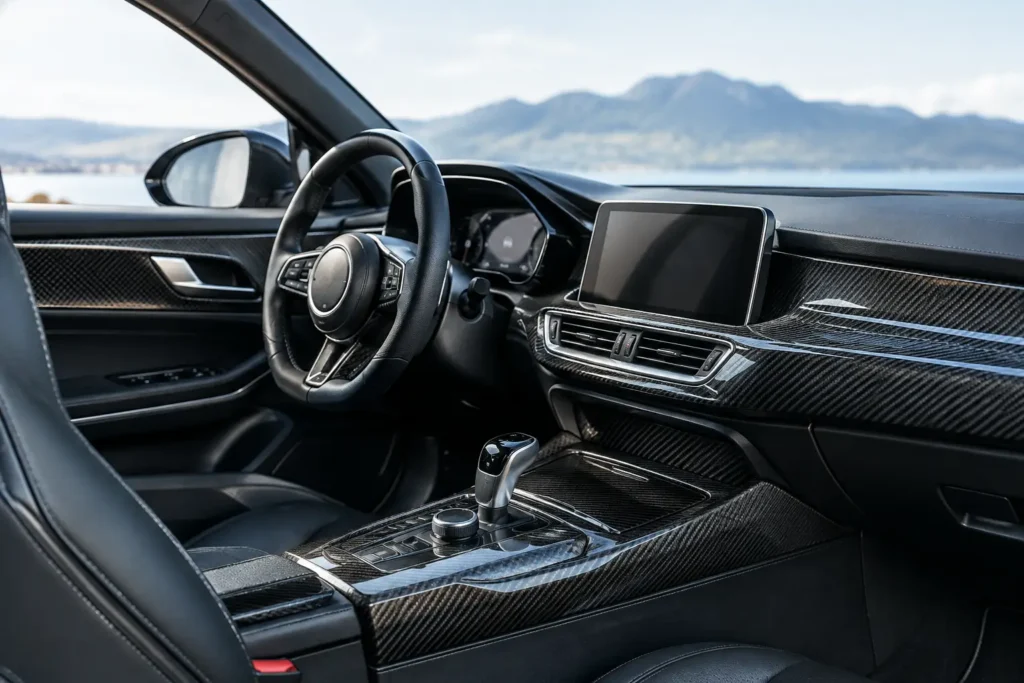
A worn steering wheel, peeling dash trim, or cloudy clear coat can make an otherwise exceptional vehicle feel dated the moment you sit down. The future of carbon fiber interiors is not simply about adding more weave to the cabin. It is about using carbon fiber with better judgment: where it improves the driving environment, how it holds up over time, and how it can be restored when years of heat, UV exposure, and daily use take their toll.
For performance cars, luxury vehicles, modern trucks, and custom builds, carbon fiber has moved beyond its role as a lightweight motorsports material. It is now a defining interior finish. But the next generation of carbon fiber interiors will be less about covering every surface and more about precision, material balance, and long-term serviceability.
The Future of Carbon Fiber Interiors Will Be More Intentional
Early aftermarket carbon fiber often chased visual impact first. A strong weave pattern across every trim panel could look dramatic in photos, but it did not always suit the vehicle or age well. Excessive gloss, mismatched weave direction, poor fitment, and low-quality coatings have given some carbon fiber upgrades a reputation for looking artificial.
That is changing. Owners are becoming more selective, especially in the luxury, exotic, collector, and restoration markets. They want trim that looks like it belongs in the vehicle, whether the goal is an OEM-plus upgrade, a motorsports-inspired cockpit, or a fully custom interior.
The strongest future designs will use carbon fiber as an accent with purpose. Steering wheel spokes, dash trim, console surrounds, door inserts, shift areas, and select seatback details can create a cohesive look without turning the cabin into a visual overload. The right amount depends on the vehicle. A modern supercar can carry a more aggressive carbon treatment than a classic luxury coupe, while a daily-driven truck may benefit from subtle carbon accents paired with durable leather.
Weave alignment will matter more, too. On a quality carbon fiber part, the pattern should flow consistently from one section to the next. Corners, curves, cutouts, and seams demand careful planning. That visual discipline is often what separates a premium carbon fiber conversion from a surface that looks rushed.
Carbon Fiber Must Feel as Good as It Looks
Interior materials are touched constantly. That is why finish selection will become one of the most important decisions in carbon fiber customization. High-gloss carbon fiber creates depth and reflects light beautifully, particularly in show builds and high-end performance cabins. It can also show fingerprints, fine scratches, and glare more easily.
Satin and matte finishes are gaining ground because they feel more modern and controlled. A satin carbon fiber dash or steering wheel trim can complement Alcantara, suede, soft-touch leather, and painted surfaces without competing for attention. Matte finishes can be especially effective in vehicles driven hard, where minimizing windshield reflection matters.
There is no single best finish. The right choice depends on the vehicle, the surrounding materials, and how it is used. A concours-level weekend car may call for a deep gloss finish. A performance build may benefit from satin carbon fiber and a suede-wrapped steering wheel for reduced glare and improved grip. For a luxury daily driver, a restrained finish that coordinates with factory leather and trim often delivers the most lasting value.
Texture will also play a larger role. The future is not limited to the familiar black twill weave. Forged carbon, colored fibers, metallic effects, exposed weave under tinted clear, and paint-matched accents give owners more ways to personalize a cabin. These options need restraint. A custom finish should support the interior’s overall color story, not distract from it.
Durability Will Separate Quality Work From Quick Cosmetics
Carbon fiber is often described as durable, but an interior carbon finish is only as durable as its construction and topcoat. Cabin trim lives in a difficult environment. It sees direct sunlight, extreme heat, skin oils, cleaners, jewelry, keys, and repeated contact. A steering wheel component endures even more wear than a dash panel.
Over time, lower-quality carbon surfaces can develop yellowing, hazing, cracks in the clear finish, lifting around edges, or scratches that dull the weave beneath. Those problems are not inevitable, but they are real. They are also why preparation, coating quality, curing, and finish correction matter as much as the carbon pattern itself.
The next standard for interior carbon fiber should be repairability. A damaged panel should not automatically be treated as disposable. In many cases, skilled refinishing can correct clear coat damage, restore gloss or satin consistency, repair the visual surface, or convert an outdated trim treatment into something more current. The condition of the original substrate and the extent of damage always determine what is possible, but restoration is often a smarter option than searching for scarce replacement parts.
This is particularly important for discontinued luxury models, rare performance vehicles, and classic cars. Original trim pieces may be expensive, unavailable, or too valuable to replace casually. Refinishing the original component preserves fitment while allowing a modern material upgrade.
Real Carbon Fiber, Overlays, and Look-Alike Finishes
The market will continue to offer several paths to a carbon appearance, and owners should understand the difference before choosing one. Genuine carbon fiber components and conversions provide authentic depth and weave structure. They can be an excellent choice when properly built and finished.
Overlays can provide a practical option for certain applications, but fit, edge treatment, and long-term adhesion must be evaluated carefully. Film-based or printed carbon looks can be useful for budget-focused cosmetic updates, yet they generally do not offer the same depth, durability, or repair potential as a properly finished carbon fiber surface.
The best option is not automatically the most expensive one. It is the one that suits the part, the vehicle, the budget, and the owner’s expectations. A high-contact steering wheel trim piece, for example, demands a different approach than a low-contact dash accent. Honest material recommendations matter because a poor-fit solution costs more when it has to be redone.
Carbon Fiber Will Be Paired With Restoration, Not Just Customization
The most compelling interior builds do not treat carbon fiber as an isolated upgrade. They use it as part of a complete restoration plan. A carbon fiber dash trim conversion may look striking, but it has greater impact when the steering wheel leather is renewed, the console is refinished, the shifter and e-brake are restored, and faded plastic trim is color-matched to the rest of the cabin.
That integrated approach will become more common as owners keep vehicles longer and invest more in the ones they already own. Rather than accepting cracked leather, peeling coatings, faded woodgrain, or dated trim, owners can rebuild the interior around the experience they want every time they drive.
For classic vehicles, this creates an interesting balance. Some cars deserve strict factory-correct restoration, especially when originality drives collector value. Others benefit from discreet modernization. A period-appropriate leather color paired with subtle carbon fiber inserts can sharpen the cabin without erasing the character that made the vehicle special. The decision comes down to the car’s purpose: preservation, personal enjoyment, performance, or resale.
Personalization Will Become More Precise
Mass-market vehicles increasingly use large screens and simplified dashboards, which can make cabins feel similar from one model to the next. Custom trim gives owners a way to restore identity. The future will favor details that feel tailored: a matching weave across dash and console pieces, stitching that echoes exterior paint, leather selections that complement a carbon finish, or a steering wheel rebuilt to suit the driver’s hands.
Craft Customs sees this every day in send-in projects. The best results come from treating each original part as part of a complete cabin rather than a standalone object. Color, finish level, texture, and material transitions should be considered before work begins, not after the pieces return to the vehicle.
Carbon fiber will remain a premium interior material because it can look technical, refined, and unmistakably custom. Its real future, however, belongs to owners who choose it with intention and craftsmen who build the finish to last. Start with the parts you touch and see most, then make every material choice earn its place in the cabin.