
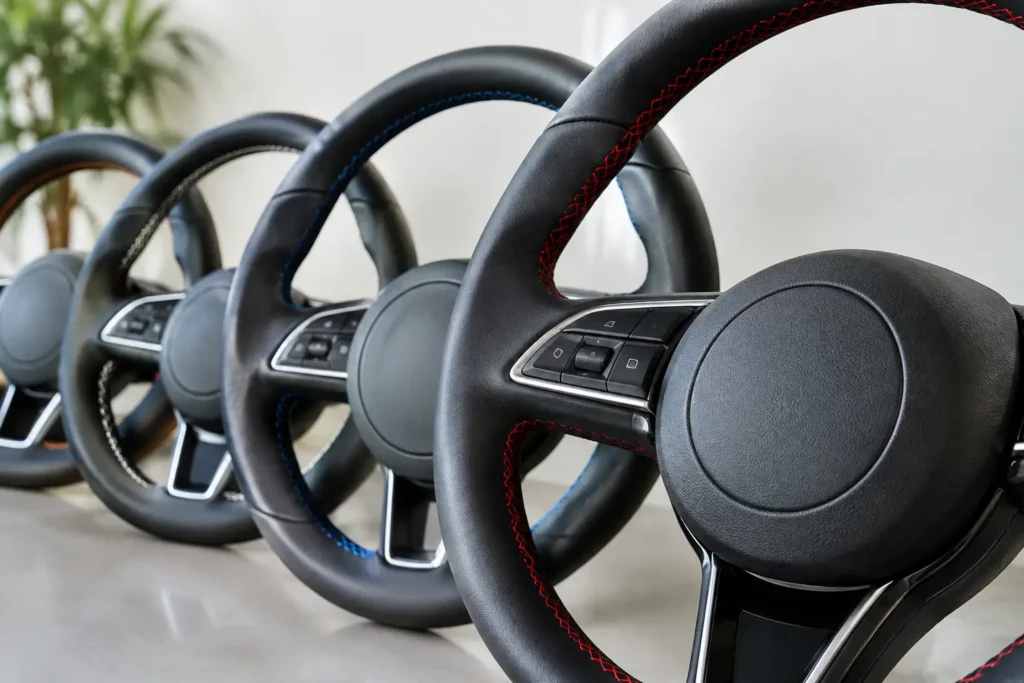
A steering wheel can have perfect leather and still look wrong if the stitching does not belong with the vehicle. The best steering wheel stitching styles are not simply a matter of picking a thread color. Stitch pattern, thread placement, material thickness, and the wheel’s original construction all affect how the finished piece feels in your hands and how convincingly it fits the interior.
For a factory restoration, the right answer is usually the stitch style the manufacturer used. For a custom build, the goal is different: create a purposeful upgrade that complements the seats, shifter boot, dash trim, and driving character of the car. Here is how to choose with confidence.
Start With the Wheel’s Intended Character
A classic luxury sedan, a modern performance coupe, and a vintage muscle car do not call for the same finish. A subtle, tight stitch can make a reupholstered wheel look original to the vehicle. A highly visible laced stitch can turn the same wheel into a focal point.
The first decision is whether the wheel should look restored or customized. Owners preserving collector value usually benefit from a close match to the original stitch spacing, thread color, and leather profile. Owners updating a tired interior often have more room to add contrasting thread, perforated leather, Alcantara-style suede, carbon fiber sections, or a thicker hand-wrapped grip.
Neither approach is automatically better. The strongest result is the one that respects the vehicle and the owner’s intent. A bright red stitch can look right at home in a black performance interior, but it may distract from the warmth and authenticity of a restored 1960s wood-rim wheel.
Best Steering Wheel Stitching Styles to Consider
Factory-style hidden or recessed stitching
Factory-style stitching is the best choice when originality is the priority. Depending on the wheel design, the seam may sit in a recessed channel, along the inside circumference, or in a location that is barely visible from the driver’s seat. The leather lays cleanly around the rim, and the thread supports the construction without becoming the main visual feature.
This approach works especially well for luxury vehicles, classic restorations, and late-model daily drivers that need to look factory new rather than modified. It is also a practical option for wheels with complex spoke shapes, thumb grips, heating elements, or integrated controls, where a bulky stitch could interfere with fit and finish.
The trade-off is visual drama. A hidden stitch looks refined, but it will not provide the bold handcrafted appearance that some custom clients want.
Baseball stitching
Baseball stitching is one of the most recognizable hand-laced styles. The thread crosses back and forth between two leather edges, creating a visible pattern similar to the lacing on a baseball. It adds texture, depth, and a distinctly custom appearance.
This style is especially effective on truck, off-road, hot rod, and performance-oriented interiors. It can also work on vintage wheels when the rest of the build has a period-correct handcrafted feel. In a contrast color, baseball stitching becomes a strong design accent. In matching thread, it delivers texture without pulling too much attention away from the leather.
Because the lacing is exposed, consistency matters. Uneven spacing, loose tension, or oversized thread can make a wheel feel rough and look unfinished. Properly executed baseball stitching should feel intentional under the palms, not bulky or irregular.
Cross stitching
Cross stitching creates a more pronounced X-shaped pattern than standard baseball lacing. It has an assertive, performance-driven appearance and is often chosen for wheels finished in suede or perforated leather. Black leather with red, blue, yellow, or white cross stitching can tie directly into seatbelts, brake calipers, interior accent panels, or exterior paint.
This is one of the better options for a show car, track-inspired build, or modern custom interior. The pattern reads clearly from outside the vehicle and photographs exceptionally well. It is less appropriate when the objective is an OEM appearance or historically accurate restoration.
Cross stitching should be used with restraint. A wheel with contrast leather sections, a center stripe, carbon fiber, and bright cross stitching may have too many competing details. If the materials are already busy, a simpler seam often produces the more premium result.
French seam or double-row stitching
French seams use two visible, parallel rows of stitching near a joined leather edge. This style has a tailored, upholstered appearance that works naturally with luxury interiors and higher-end custom work. It is commonly seen in premium seating, consoles, and dash components, making it a strong way to coordinate a steering wheel with the rest of the cabin.
A double-row stitch can be subtle when thread matches the leather, or more defined when it uses contrast. It is particularly effective on thicker steering wheel grips, flat-bottom performance wheels, and wheels with leather sections divided by woodgrain or carbon fiber.
The primary consideration is available space. On a narrow rim, double rows can look crowded. On a properly padded wheel, they give the rim a structured, high-end finish without the rugged look of hand lacing.
Accent stitching and center markers
Sometimes the best style is not a different seam at all, but a carefully placed accent. A 12 o’clock center marker in a contrasting thread or leather strip gives the driver a fast visual reference when the wheels are straight. It is a familiar feature in motorsport-inspired interiors and pairs well with perforated side grips or suede wrapping.
Accent stitching can also frame grip zones at the 10-and-2 or 9-and-3 positions. This works well for drivers who want a performance feel without covering the entire wheel in bright thread. The key is alignment. A center stripe or marker must sit precisely at 12 o’clock when the wheel is installed, or it will look noticeably off every time the driver gets behind the wheel.
Thread Color Changes the Entire Result
Thread can disappear into the leather or define the whole wheel. Matching thread is the safest choice for factory restorations and understated luxury interiors. It lets the material quality, grain, and wheel shape do the work.
Contrast thread is better when there is a color story elsewhere in the vehicle. Black leather with saddle brown stitching can connect to brown seat inserts or woodgrain trim. Red thread can support a performance theme. Silver or light gray can bring a modern technical feel to black, charcoal, or carbon fiber interiors.
Avoid choosing a thread color from a phone photo alone. Interior colors shift dramatically under sunlight, garage lighting, and the tinted glass of the vehicle. A specialist should compare materials carefully and, when needed, color-match surrounding components so the steering wheel looks like part of the interior rather than an add-on.
Leather Choice Affects How Stitching Performs
Stitching style cannot be separated from material choice. Smooth automotive leather produces a clean, traditional look and works with nearly every seam type. Perforated leather improves visual contrast and is often preferred at hand positions on sport wheels. Suede offers exceptional grip and a race-inspired feel, though it requires more maintenance because it can show wear, oils, and flattened fibers faster than leather.
Thicker leather can support more substantial stitching and create a fuller grip. That can be welcome on a thin, worn wheel, but adding too much padding may change the original hand feel or make control areas feel crowded. For vehicles with heated wheels, switches, paddles, or delicate trim, the wrapping process must account for every factory feature before material and stitch choices are finalized.
Choose Craftsmanship Over a Generic Pattern
The visible stitch is only the last part of the job. Before a wheel is rewrapped, the underlying rim must be assessed for damaged foam, cracks, loose spokes, failed trim, and uneven previous repairs. A beautiful stitch line cannot correct an unstable foundation.
Precise leather cutting, uniform tension, clean seam placement, and properly finished transitions are what separate a premium reupholstery job from a cover that looks temporary. On rare, classic, exotic, or heavily worn wheels, experience matters even more because replacement parts may be unavailable and the original wheel must be preserved.
At Craft Customs, steering wheels are restored and customized in-house so leather, stitch style, color matching, and surrounding trim can be considered as one finished interior. Whether the right choice is an OEM-style seam or a bold hand-laced contrast pattern, the goal is the same: a wheel that looks right, feels right, and holds up to real driving.
The best choice is the one you will still appreciate every time your hands settle at the wheel. Let the vehicle’s era guide the details, let the materials support the use, and reserve the boldest stitching for a design that has earned it.