
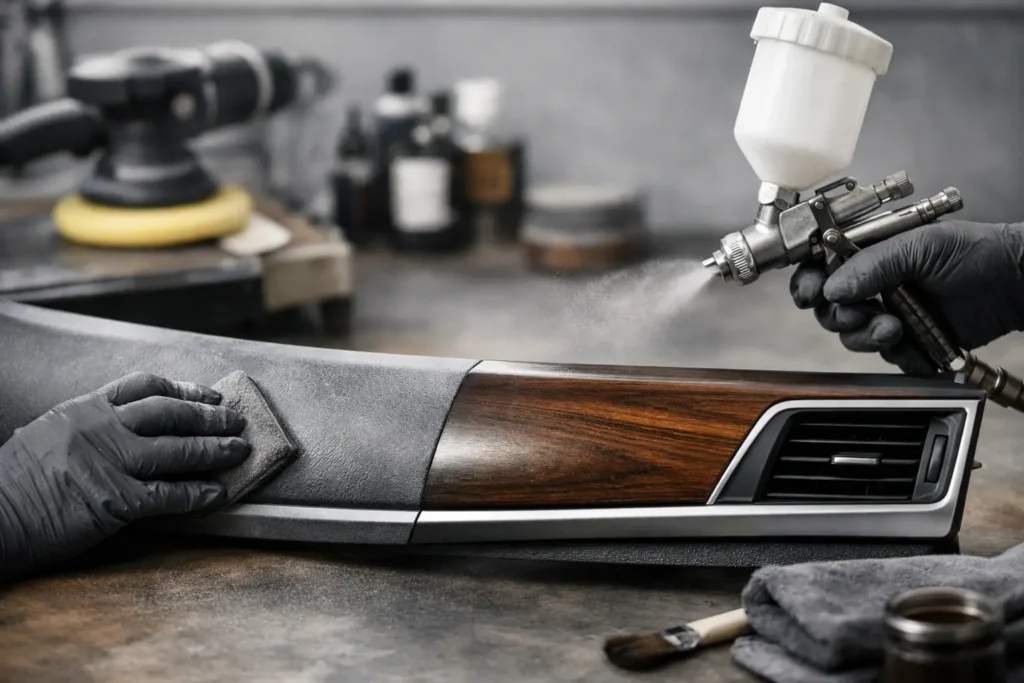
A faded strip of woodgrain or peeling soft-touch panel can make a well-kept vehicle feel tired every time you get behind the wheel. So, can dashboard trim be refinished? In many cases, absolutely. The right repair can return worn trim to a factory-new appearance or take it in a completely different direction with custom paint, real wood, carbon fiber, or suede.
The deciding factor is not simply how bad the part looks. It is what the trim is made from, how deeply it is damaged, and whether the finish can be rebuilt without compromising fit, safety, or long-term durability. Dashboard trim restoration is detail work. A close color match, even gloss level, clean edges, and a finish that holds up to heat and handling are what separate a lasting result from a temporary cover-up.
Can Dashboard Trim Be Refinished Without Replacing It?
Most decorative dash pieces can be refinished, including painted plastic appliques, woodgrain trim, aluminum-look pieces, carbon fiber panels, piano-black trim, console surrounds, vent bezels, glovebox trim, and select leather-wrapped components. Refinishing is often the better choice when replacement parts are discontinued, costly, difficult to source, or only available in the same outdated finish you want to change.
A skilled restoration process begins by identifying the substrate and the original coating system. What looks like wood may be plastic with a printed film and clear coat. What appears to be metal may be painted ABS plastic. A carbon fiber-looking panel may be hydro-dipped rather than actual carbon fiber. Each requires a different preparation and finishing approach.
The goal is not to bury damage under paint. Proper refinishing removes failed coatings, stabilizes the surface, repairs chips or cracks where possible, applies compatible primers and color, then finishes the part with the correct sheen. For an OEM-style restoration, that might mean a low-gloss satin rather than an overly shiny clear coat. For a custom interior, it may mean a color-matched painted finish, real carbon fiber conversion, or a premium suede wrap.
The Material Determines the Repair
Painted and coated plastic trim
Painted plastic is among the most refinishable interior materials. Common problems include scratches, peeling coatings, sticky soft-touch finishes, UV fading, and worn areas around controls. Once failed material is removed and the plastic is properly prepped, it can usually be dyed or painted in a durable interior-grade finish.
The challenge is adhesion. Interior plastics expand and contract with temperature changes, especially in vehicles parked in direct sun. Skipping surface preparation or using the wrong coating can lead to chipping, lifting, or a finish that remains tacky. Quality work accounts for the plastic type, flex characteristics, and the final sheen of nearby parts.
Woodgrain dashboard trim
Woodgrain can often be restored even when the clear coat is cloudy, scratched, cracked, or faded. The process depends on whether the piece is genuine veneer, laminated wood, printed film, or molded plastic with a wood appearance.
Genuine wood veneer deserves a conservative approach. Aggressive sanding can cut through the thin veneer and expose the base layer beneath it. When the existing material is too damaged to save, the piece may be rebuilt with new veneer and a carefully layered finish. Printed woodgrain and plastic wood-look trim can also be refinished, but they are frequently better candidates for a new custom finish than an attempt to preserve an already failing printed pattern.
Carbon fiber and carbon fiber-look panels
Real carbon fiber trim with light clear-coat damage can often be sanded and re-cleared, restoring depth and gloss while keeping the weave visible. Deep gouges, cracked resin, delamination, or broken mounting points call for a more involved repair. In some cases, converting a damaged panel into a newly skinned carbon fiber piece is more durable and visually convincing than trying to hide structural damage.
Carbon fiber-look trim is different. If it is a printed or dipped pattern, the finish can be removed and replaced with paint, a new hydrographic pattern, wrap material, or real carbon fiber depending on the desired result and budget.
Leather, vinyl, and soft-touch trim
Dash inserts and trim panels upholstered in leather or vinyl can be repaired when the substrate remains stable. Surface dye wear, scuffs, fading, and minor abrasions are typically repairable. Shrinkage, hardened material, separated seams, or severe sun cracking may require reupholstery instead.
Soft-touch coatings are a special case. Once they become sticky, gummy, or peel away, they generally need to be fully stripped before refinishing. Applying another coating over a failing soft-touch layer only traps the problem underneath.
When Refinishing Is Not the Best Answer
Not every dashboard trim piece should be refinished. If a part is warped from heat, severely broken, missing mounting tabs, or structurally cracked around an airbag area, replacement or specialized plastic repair may be the safer path. Cosmetic work should never interfere with airbag deployment, sensor operation, switch fitment, or visibility of required markings.
Chrome-plated plastic also has limits. Light wear can sometimes be addressed, but heavily peeling vacuum-metalized chrome is difficult to restore as true factory chrome without stripping and replating. A satin metallic, body-color, gloss-black, or custom finish may produce a better-looking and more durable result than an imitation of a failed plated surface.
It also makes sense to compare restoration cost with the availability of a new OEM part. For a common late-model vehicle, a new trim piece may be practical. For a classic, luxury, exotic, or discontinued model, restoring the original piece often protects fitment, authenticity, and value.
What a Durable Dashboard Trim Refinish Requires
The finished appearance gets attention, but preparation determines whether the result lasts. Parts should be cleaned of silicone dressings, oils, skin residue, and old protectants before any sanding or repair begins. Small scratches can be leveled, chips filled, and damaged edges stabilized. Failed clear coat, sticky coatings, and loose material must be removed rather than painted over.
Color and sheen must then be selected with the entire cabin in mind. A black trim panel can range from matte to satin to high-gloss, and each choice changes the perceived quality of the interior. A color that looks correct under shop lighting can look noticeably different against factory leather in daylight. Paint matching requires consideration of texture, metallic content, gloss, and the aging of the original interior.
Clear coat selection matters just as much. Dashboard pieces need a finish that resists UV exposure, cleaning products, light impact, and repeated contact. High-gloss finishes can look dramatic, but they show fingerprints and fine scratches more readily. Satin finishes hide everyday use better and often blend naturally with factory interiors. The best choice depends on the vehicle, the owner’s expectations, and how the car is used.
Restoration or Customization: Choose the Right Direction
An accurate OEM restoration is ideal for collectors, classic-car owners, and anyone preserving an original interior. The objective is to make the repaired piece disappear into the cabin: correct color, correct grain, correct sheen, and no obvious repair lines.
Customization makes more sense when the original finish is beyond saving or no longer matches the build. A faded burl wood panel can become a modern satin-black accent. A tired silver console surround can be color-matched to exterior paint. Existing trim can be converted to carbon fiber, wrapped in suede, or refinished to complement new leather upholstery and a restored steering wheel.
The strongest custom interiors still look intentional. Refinish related pieces together when possible, such as dash trim, console trim, door inserts, shifter surrounds, and steering wheel accents. Updating only one visibly worn panel can make the untouched pieces look older by comparison.
Sending Dashboard Trim for Professional Refinishing
For removable trim, a send-in service is often the most practical option. Photograph the part before removal, label any screws or clips, and package it so mounting tabs cannot flex or snap in transit. Include clear notes about the vehicle year, make, model, desired finish, and whether the goal is factory-correct restoration or customization.
Do not send airbag modules or components that require specialized safety handling. If a trim piece is integrated into a larger dash assembly, removal should be handled carefully to avoid damage to clips, electronics, vents, or surrounding upholstery. Original parts are worth protecting, especially when replacements are scarce.
Craft Customs refinishes interior components in-house for owners who want restoration accuracy or a custom finish built around the rest of the cabin. That level of specialization matters when the part is rare, the color needs to match existing leather, or a premium material conversion needs clean, factory-quality edges.
A dashboard is not just a plastic surface in your line of sight. It is one of the largest visual statements inside the vehicle. When the original part is sound, refinishing it can preserve what makes the car yours while making every drive feel like the interior finally caught up with the rest of it.