
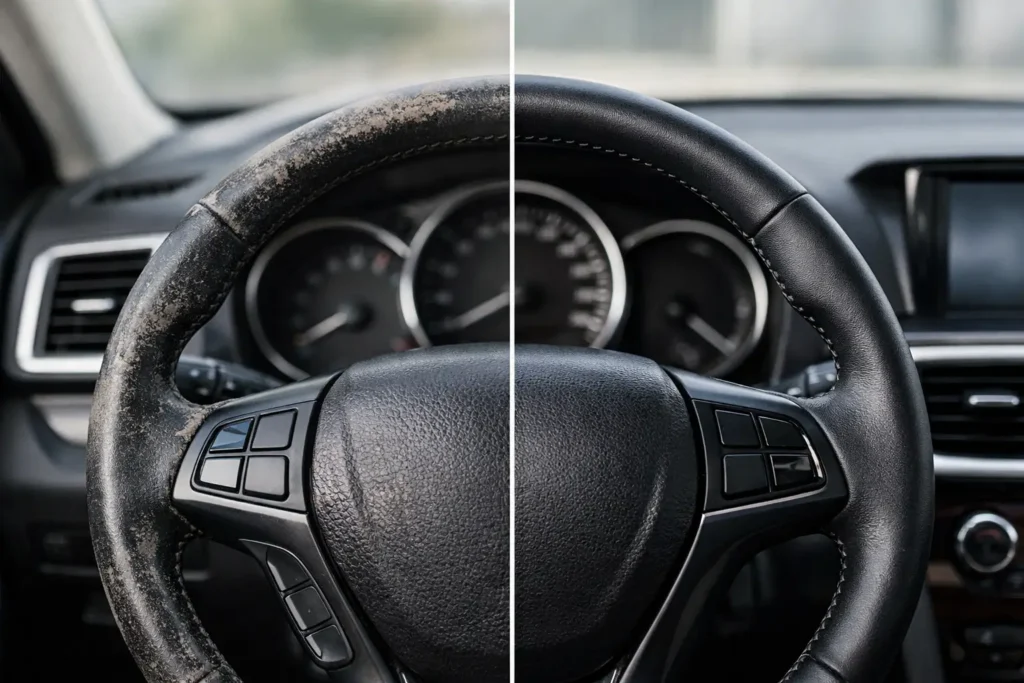
The steering wheel is the one interior surface you see, touch, and judge on every drive. A split leather seam, polished-through finish, sticky coating, faded woodgrain, or worn thumb grips can make an otherwise clean vehicle feel neglected. That is why before and after steering wheel restoration is often one of the most dramatic upgrades an owner can make without changing the character of the vehicle.
The best results do more than cover damage. They return the wheel to the correct shape, texture, color, and feel – or give it a deliberate custom finish that belongs with the rest of the cabin. Whether the vehicle is a collector-grade classic, a luxury daily driver, or a performance build, the difference is immediately visible from the driver’s seat.
What a Worn Steering Wheel Says About a Vehicle
Steering wheels take more abuse than nearly any other interior component. Sun exposure dries leather and fades painted surfaces. Hand oils break down coatings. Rings, watches, and fingernails leave scratches. Heat cycles can loosen leather, crack wood, or cause soft-touch finishes to peel.
On older vehicles, original leather may become hard, smooth, and discolored. Stitching can fray or pull apart at the spokes. Wood-rim wheels may show cloudy clear coat, worn edges, cracks, and missing color. Modern wheels have their own issues: deteriorated painted trim, damaged carbon fiber, faded buttons surrounds, and leather that no longer matches the condition of the seats.
The problem is not just cosmetic. A wheel that feels slick, rough, sticky, or loose in the hand changes the driving experience. For a collector or resale-minded owner, it also draws attention to wear before anyone notices the vehicle’s better features.
Before and After Steering Wheel Restoration: What Changes
A convincing transformation starts with correcting the underlying damage, not hiding it with a quick dye or universal cover. The “before” condition determines the process. Lightly worn leather may need careful cleaning, surface preparation, color correction, and protective refinishing. Cracked, torn, or shrunken leather usually needs to be removed and reupholstered properly.
The “after” result should look intentional from every angle. That means even panel fitment around the spokes, properly aligned seams, consistent stitching tension, clean transitions at trim pieces, and a finish that suits the vehicle’s original interior. The wheel should also feel right in the hands: firm where it should be firm, supple where leather belongs, and free of rough edges or tacky coatings.
A high-quality restoration is especially noticeable in the details owners often overlook until they are wrong. Grain direction, leather thickness, stitch color, perforation pattern, spoke trim color, and the finish level of wood or carbon fiber all affect whether the completed wheel feels factory correct or obviously redone.
Leather Wheels: Repair, Rewrap, or Customize
Leather is forgiving only to a point. Small scuffs, fading, and isolated finish loss can often be addressed through professional restoration. Once the leather is deeply cracked, torn, stretched, heavily worn through, or stiff from age, reupholstery is typically the better long-term choice.
A proper leather rewrap involves more than selecting a black hide and sewing it on. The replacement material must be chosen for durability, grain, color, and compatibility with the intended look. A vintage European wheel, late-model luxury sedan, and modern sports car may each require a different leather character. Smooth leather, perforated leather, suede, contrasting stitch work, colored center stripes, and two-tone designs can all work well when they support the overall interior.
Customization has a trade-off. A factory-style black leather restoration generally protects originality and broad resale appeal. Red stitching, Alcantara-style suede, thicker grip sections, or custom color blocking may better suit a personal build, but they can move the wheel away from an original-spec look. Neither approach is automatically better. The right one depends on whether authenticity, performance feel, or individual style is the priority.
Woodgrain and Painted Wheels Require a Different Standard
Wood-rim and woodgrain steering wheels need patient surface work. A simple topcoat cannot correct deep cracking, discoloration, missing finish, or a rim that has lost its smooth profile. Proper refinishing may involve stabilizing damaged areas, rebuilding the surface, restoring color, and applying a durable finish that brings back depth without looking overly plastic or excessively glossy.
Painted steering wheels and spoke trim need equally careful preparation. Matching interior paint is not as simple as choosing a similar color from a chart. Age, sunlight, and surrounding materials can change how a shade reads inside the vehicle. The goal is a consistent finish that looks correct beside the dash, console, door panels, and gauge trim.
For a custom interior, paint-matched accents can tie a wheel into the rest of the build. For an original restoration, a correct low-gloss or satin finish may be more important than making every surface shine.
Why DIY Fixes Often Look Good Only Briefly
Many owners first try a steering wheel cover, repair kit, touch-up dye, or spray coating. These options may be useful for a temporary improvement, but they rarely produce the fit, durability, or feel of professional work.
A cover adds bulk and can hide the original wheel’s contours. Consumer dyes can transfer color, wear through on high-contact areas, or highlight cracks they were meant to conceal. Adhesive repairs often fail where the driver’s hands rest most. Wood filler and clear coat can also look acceptable in photos while remaining uneven or fragile under regular use.
The restoration process must account for the wheel’s material, existing coatings, level of damage, and intended use. A weekend cruiser can tolerate different choices than a daily-driven truck, track car, or concours vehicle. The point is not to overbuild every wheel. It is to use a process that will hold up to how the vehicle is actually driven.
The Details That Separate a Refinish From a Real Restoration
Before sending out a steering wheel, examine the entire assembly rather than just the rim. The horn pad, airbag cover, switches, paddle shifters, spoke inserts, wiring channels, and rear trim often affect the finished appearance. If the wheel has silver trim that is peeling, a faded center emblem surround, or buttons with worn coating, restoring only the leather can leave the job looking incomplete.
At Craft Customs, steering wheel work is completed in-house so the materials and finish can be evaluated as one interior component, not as separate cosmetic repairs. This is particularly valuable for uncommon, vintage, luxury, and custom parts where an off-the-shelf solution does not exist.
Clear documentation matters as well. Photos of the wheel before shipment help identify existing cracks, missing pieces, and special features. They also establish whether the goal is factory-new appearance, period-correct restoration, or a fully customized upgrade. For rare wheels, retaining original cores and components is often preferable to replacing them with a generic alternative.
Choosing the Right Finish for Your Vehicle
The best finish is the one that makes sense when you open the door six months from now. If the seats, dash, and console are original, a close factory match is usually the most satisfying choice. If the vehicle already has custom upholstery, painted trim, or performance upgrades, the steering wheel can become a focal point that brings those choices together.
Consider the cabin as a whole. A suede wheel may provide excellent grip and a motorsport look, but it needs more frequent care than leather and can show wear from daily use. Gloss carbon fiber can create a sharp, modern contrast, while satin carbon fiber may better suit an understated build. Bright contrast stitching can add character, but subtle tonal stitching is often the smarter choice for a classic or executive interior.
Also consider value. A carefully restored original wheel can support the presentation of a collectible vehicle. A thoughtfully customized wheel can make a modified vehicle feel complete rather than pieced together. In either case, quality workmanship is what keeps the upgrade from becoming a distraction.
A Better First Impression Starts at the Driver’s Seat
A steering wheel restoration is one of those changes that photographs well but feels even better in person. The real payoff comes when the rim no longer catches your eye for the wrong reason, your hands settle naturally into the grip, and the interior finally matches the standard of the vehicle outside.
If your wheel is cracked, faded, peeling, or simply out of step with the rest of the cabin, treat it as a core interior component rather than an afterthought. The right restoration can preserve what makes the vehicle original, refine what has aged, and make every mile feel more worthy of the car you chose to keep.