
A steering wheel can look worn long before the rest of the vehicle does. The leather may be glossy from hand oils, faded on the top rim, or scuffed where a ring repeatedly contacts the surface. In other cases, the leather itself has split, stretched, hardened, or pulled away from the seams. That distinction is what makes the leather dye vs reupholstery decision so important.
Both services can dramatically improve an interior, but they solve different problems. Dyeing restores the finish on leather that is still structurally sound. Reupholstery replaces worn or damaged leather with new material. Choosing the right process protects the part’s appearance, feel, authenticity, and long-term value.
Leather Dye vs Reupholstery: The Core Difference
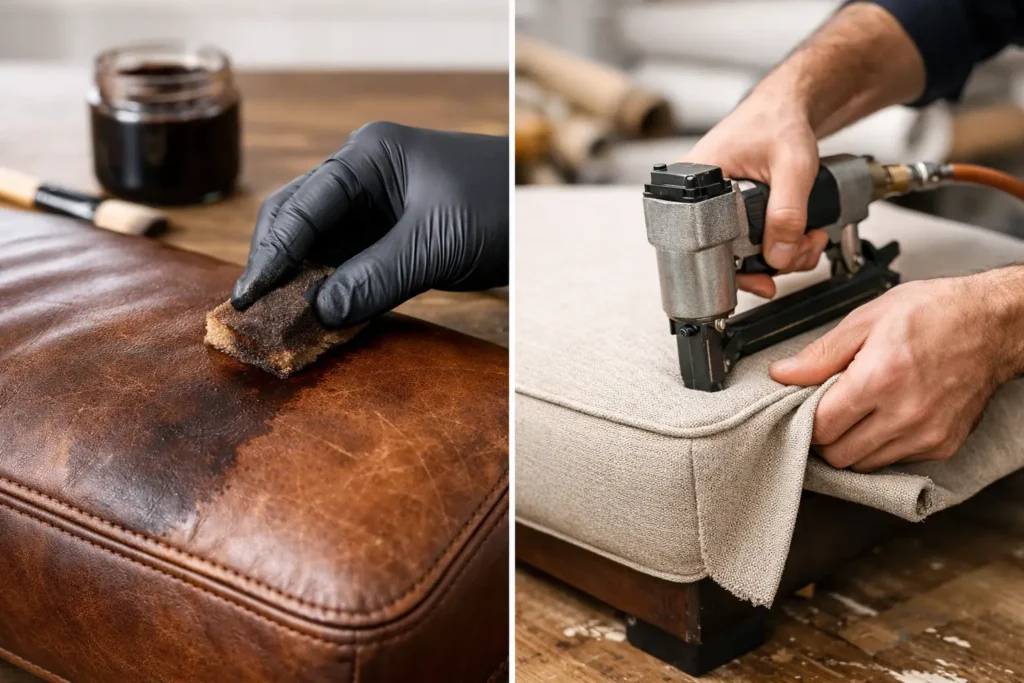
Leather dyeing, often called refinishing or recoloring, addresses the outer surface of an existing leather component. A specialist cleans away embedded oils and contamination, prepares the finish, repairs minor imperfections where appropriate, applies a color-matched coating, and seals the part for a consistent sheen and improved wear resistance.
The goal is not to hide major damage under color. The goal is to restore a faded, scuffed, or discolored finish so the original leather looks properly cared for again. When the leather grain is intact and the material remains flexible, dyeing can preserve the factory upholstery while delivering a substantial visual improvement.
Reupholstery is a material replacement process. The old leather is removed, the underlying structure and padding are inspected, and new leather is cut, stitched, fitted, and installed. On a steering wheel, this may include matching factory seam placement, stitch color, perforation pattern, thumb grips, and the original wheel profile. On armrests, consoles, shifters, and seats, proper fit matters just as much as the material itself.
A simple way to look at it: dyeing restores the skin of the leather; reupholstery replaces leather that can no longer perform as it should.
When Leather Dyeing Is the Better Repair
Dyeing is often the right answer when a part looks tired but feels fundamentally healthy. It is especially effective for steering wheels with faded color, light abrasion, minor surface scratches, dye transfer from clothing, sun fade, and uneven gloss caused by years of hand contact.
A black steering wheel that has turned gray around the 10 and 2 o’clock positions is a classic dyeing candidate. So is a tan armrest with darkened contact areas, provided the leather is not torn or deeply cracked. A correctly prepared and color-matched refinishing process can bring these components back to a clean, uniform factory-style appearance without replacing original material.
Dyeing also makes sense when originality matters. Owners of classic, collector, and low-mileage vehicles may prefer to retain factory leather whenever possible. Preserving an original component can be more valuable than replacing it, particularly when the leather is still in good condition beneath a worn finish.
That said, a color coating cannot repair every flaw. Deep cracking, missing grain, torn seams, and leather that has become stiff or brittle are warning signs that the issue extends below the surface. Refinishing those parts may improve color temporarily, but it will not restore the material’s strength or natural feel.
What a Quality Dye Repair Requires
The durability of a dye repair depends heavily on preparation. Applying color over body oils, silicone dressings, damaged clear coat, or loose material is a short-term cosmetic fix. The finish can wear prematurely, peel, or feel overly thick.
Professional work begins with thorough cleaning and decontamination. The existing finish is assessed, damaged areas are stabilized, and the color is built in controlled layers. The final protective coating must match the part’s intended look, whether that is low-gloss, satin, or a more traditional factory sheen. Color accuracy matters too. Black is rarely just black, and factory tan, red, gray, and brown interiors often vary by model year and trim level.
When Reupholstery Is Worth the Investment
Reupholstery becomes the better choice when the leather itself is failing. Cracks that open when the wheel flexes, tears at high-contact points, flattened padding, loose seams, severe stretching, and sections with missing material cannot be solved with dye alone.
Consider a steering wheel with a smooth, shiny rim and several fine surface cracks. If those cracks are limited to the finish and the leather stays supple, refinishing may be practical. If the cracks expose the backing, catch on your fingertips, or continue around the rim, new leather is the more durable route.
The same principle applies to armrests and console lids. A faded lid may be refinished. A lid with collapsed foam, a split seam, or leather that has shrunk away from the edges needs reupholstery to look and feel right again. Replacing the cover also gives a specialist access to address underlying issues that a surface repair cannot reach.
Reupholstery is also the clear choice for owners who want a new interior direction rather than a restoration of the existing one. You may want perforated leather, contrast stitching, Alcantara-style suede, a thicker steering wheel grip, a factory color change, or a custom color combination that complements new trim. These upgrades require more than recoloring.
Factory-Correct or Fully Custom
New upholstery does not have to mean a non-original look. A skilled shop can recreate factory-style leather, stitch patterns, and fitment for a restoration that looks appropriate to the vehicle. This is especially important on luxury, exotic, and vintage vehicles, where incorrect seam placement or a generic cover can make an otherwise beautiful interior look unfinished.
Custom work opens a different set of possibilities. Contrast stitching can tie a steering wheel to custom seats. Perforated side grips can create a more performance-focused feel. New leather can be paired with refinished woodgrain, painted trim, or carbon fiber conversion for a complete interior update. The key is choosing materials and details that suit the vehicle rather than following a trend that will date quickly.
Compare the Repair by Damage, Budget, and Ownership Plans
The best choice is rarely based on appearance alone. It should account for the condition of the part, how the vehicle is used, and how long you expect to keep it.
| Condition or goal | Usually the better option | |—|—| | Fading, light scuffs, color transfer, uneven sheen | Leather dyeing | | Deep cracks, tears, loose seams, brittle leather | Reupholstery | | Preserve sound original leather on a collector vehicle | Leather dyeing | | Change stitch pattern, material, grip shape, or color design | Reupholstery | | Address flattened padding or damaged backing beneath the cover | Reupholstery |
Dyeing generally costs less because it retains the existing cover and requires less material work. It can be an excellent value when the leather is healthy. But selecting dye solely because it is less expensive can become costly if the part is already beyond surface restoration. A weak cover may need to be replaced later, meaning you have paid for two repairs instead of one correct repair.
Reupholstery usually involves a higher upfront investment because it requires new materials, pattern work, stitching, fitting, and detailed finishing. In return, it provides a new contact surface and a longer-term solution for worn-out leather. For a daily driver with a severely damaged wheel, or a vehicle being restored for sale or show use, that investment can change how the entire cabin is perceived.
The Steering Wheel Test: What Your Hands Can Tell You
Before deciding, use the steering wheel as a practical diagnostic tool. Run your hand around the rim. If it feels smooth but supple, with intact seams and no separation at the spokes, the leather may be a strong candidate for dyeing. If it feels hard, papery, loose, lumpy, or sharp at cracked areas, replacement is more likely warranted.
Look closely at the stitching. Faded thread can sometimes be cleaned or refreshed, but broken stitches and stretched leather near the seam indicate structural wear. Inspect the inside curve of the rim as well. Damage there is easy to overlook, yet it often reveals how much stress the cover has endured.
Photos are useful for an initial assessment, but experienced hands-on inspection is especially valuable for rare, high-end, or heavily worn parts. At Craft Customs, original components can be sent in for in-house restoration, allowing the repair method to be matched to the actual condition of the part instead of guessed from a generic solution.
Do Not Let Maintenance Decide the Outcome
Whether you dye or reupholster, the finished part will last longer with sensible care. Avoid harsh cleaners, greasy shine products, and silicone-heavy dressings that leave residue on leather. Use a cleaner made for automotive leather and keep hand lotions, sunscreen, and sanitizer from building up on the steering wheel where possible.
Heat and sunlight also accelerate deterioration. A windshield shade, covered parking, and regular cleaning make a real difference, particularly in hot climates. The goal is not to constantly treat the leather. It is to keep contaminants from sitting on the surface long enough to break down the finish.
A well-chosen repair should make you want to spend more time behind the wheel. If your leather is intact but faded, professional dyeing can preserve the original character of the vehicle. If the material is cracked, loose, or beyond its useful life, reupholstery gives the interior the clean feel and lasting confidence that a surface fix cannot provide.