
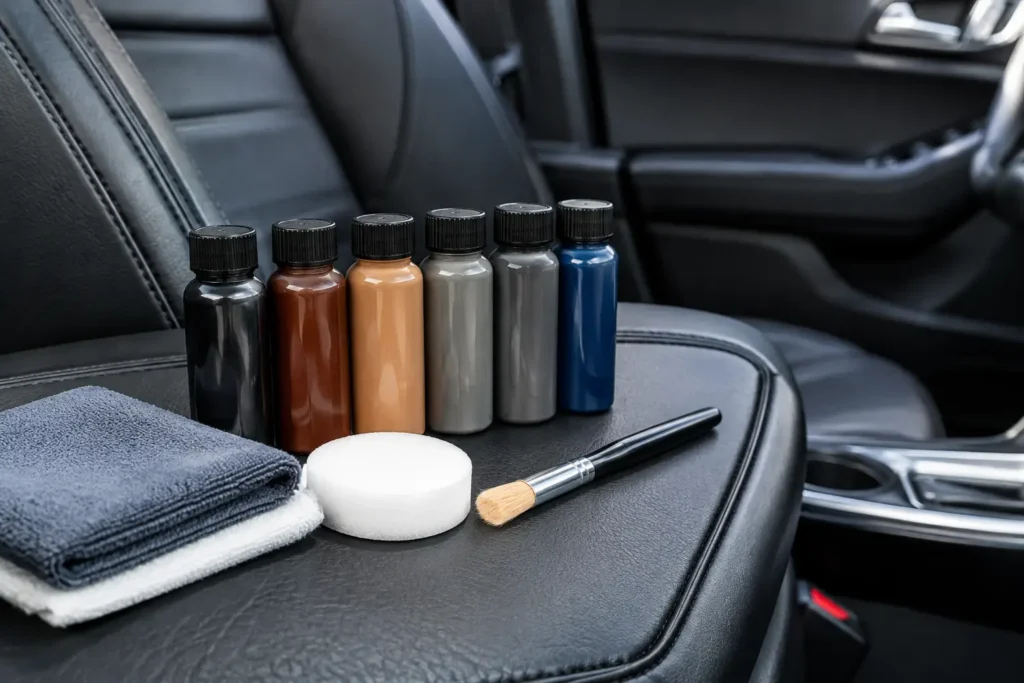
A faded steering wheel, scuffed console, or peeling door-panel finish can make a well-kept vehicle feel worn out every time you get behind the wheel. The best automotive interior dyes do more than cover damage. They restore the correct color, preserve the material’s texture, and hold up to heat, hands, clothing, cleaners, and daily use.
That last part is where many DIY repairs fall short. Interior refinishing products are not interchangeable. A coating that performs well on flexible leather may crack on a hard plastic switch surround. A good color match can still look wrong if the sheen is too glossy. The right product depends on the part, the material, the damage, and the standard you expect when the job is finished.
What Makes an Interior Dye Worth Using?
In automotive restoration, the word “dye” is often used broadly. True penetrating dyes are primarily used on absorbent, unfinished leather. Most modern vehicle interiors require a color coating engineered to bond to a sealed surface such as top-coated leather, vinyl, ABS plastic, or urethane trim.
The best finish has four qualities: proper adhesion, flexibility where needed, accurate color, and the correct factory-style sheen. It should also be compatible with a professional-grade prep process. No color product can compensate for silicone residue, body oils, failing original coating, or deep cracks that have not been repaired first.
A quality system also gives you control. Black is not always just black, and beige interiors often vary substantially from one manufacturer to another. Color, grain, and gloss must work together for a repair to disappear rather than announce itself.
7 Best Automotive Interior Dyes by Material and Repair
1. Water-Based Leather Color Coatings
For sealed automotive leather, water-based leather color coatings are the strongest all-around choice. They are designed to flex with the hide, retain a natural feel, and avoid the stiff, painted texture associated with low-quality refinishing work. Used correctly, they can restore worn bolster areas, armrests, shift boots, seat panels, and leather-wrapped steering wheels.
They are especially effective when the leather is structurally sound but faded, discolored, or lightly scuffed. Heavy cracking needs repair compound and careful sanding before color is applied. On a high-contact steering wheel, the coating should be finished with a compatible protective topcoat selected for the desired matte, satin, or low-gloss factory appearance.
2. Penetrating Leather Dye for Bare, Absorbent Leather
Penetrating dyes are best reserved for leather that is genuinely absorbent and has been stripped of its existing finish. They soak into the fibers rather than sitting on top, which can produce beautiful depth on certain vintage hides and restoration projects.
This is not the default solution for most modern seats or steering wheels. Factory automotive leather is usually pigmented and top-coated, so a penetrating dye will not absorb evenly without extensive preparation. It may also make matching an original OEM color more difficult. Use it when the leather construction calls for it, not simply because the label says dye.
3. Flexible Vinyl and Urethane Coatings
Vinyl and urethane coatings are the right choice for door panels, console side panels, seat backs, soft-touch trim, dash pads, and vinyl-covered armrests. These surfaces move, flex, and expand in changing temperatures, so the finish needs elasticity as well as adhesion.
A dedicated vinyl coating is far better than a general-purpose aerosol paint. It is formulated to avoid immediate peeling and reduce the chance of a hard, plastic-like surface. The key is thorough cleaning. Vinyl holds oils, dressings, and protectants stubbornly, and even a small amount of contamination can cause fisheyes or weak adhesion.
4. Plastic Trim Coatings for Hard Interior Parts
Hard interior plastics need a product made for plastic, plus the right adhesion promoter when the substrate requires it. This category covers radio bezels, center-console trim, pillar covers, seat trim, switch surrounds, cupholder pieces, and many dash components.
The best plastic coatings level smoothly without filling fine texture or obscuring molded details. They should also be sprayed in light, controlled coats. Loading a hard trim piece with too much color at once can create runs, an overly glossy surface, or a finish that chips when the part is reinstalled.
5. Soft-Touch Interior Coatings
Many late-model luxury and performance vehicles use soft-touch coatings on buttons, handles, console trim, and dash components. When that finish becomes sticky, scratched, or peeled, simply spraying color over the failure is not a lasting repair.
The damaged coating must be removed or stabilized first. Once the substrate is properly prepared, a compatible soft-touch coating can restore the muted look and feel that made the interior feel premium when new. This is a specialty repair because the finish must look refined while also surviving repeated contact.
6. Interior Trim Paint for Metallic and Satin Finishes
Some interior parts are meant to look like brushed aluminum, piano black, satin silver, titanium, or a custom accent color. For these applications, interior trim paint provides the controlled finish needed for hard decorative pieces.
This category is ideal for bezels, trim rings, console panels, and select dash accents. It is not automatically suitable for leather or flexible vinyl. A metallic finish also demands extra care because inconsistent spray direction and uneven overlap can create visible striping. Test panels and proper gun technique matter more here than most people expect.
7. Professionally Color-Matched Custom Coatings
For rare interiors, discontinued OEM colors, classic vehicles, and custom builds, a professionally mixed coating is often the best option. Generic beige, red, charcoal, or tan may be close, but close is not the same as correct when the repaired piece sits next to original leather or trim.
Custom color matching accounts for age, fading, surrounding materials, and sheen. That is particularly important on steering wheels, where a small mismatch is always in the driver’s line of sight. It is also the better route when refinishing one component instead of recoloring the entire interior.
Preparation Determines Whether the Dye Lasts
Surface preparation is not the unglamorous step before the real work. It is the real work. A professional result starts with identifying the substrate and removing silicone, oils, waxes, protectants, and old failing coatings. Leather may need cleaning, scuffing, crack repair, and flexible filler. Plastic may need sanding, adhesion promoter, or both.
The part should then be masked carefully and coated in thin, even layers. Each layer needs sufficient flash time before the next one is applied. Rushing this stage can trap solvents, create texture problems, or compromise durability.
Topcoat selection deserves equal attention. A steering wheel generally needs a durable, low-sheen protective finish that resists hand oils. A hard console piece may need a satin topcoat that matches the adjacent trim. The goal is not merely to make the part one color. It is to make it look original, feel right, and remain stable through years of use.
Color Match and Sheen Are the Details People Notice
Owners often focus on color alone, but sheen is what frequently exposes a repair. A glossy black steering wheel beside matte factory trim will look refinished even if the color is perfect. The same is true of a tan armrest that has a different texture or reflectivity than the seats around it.
Whenever possible, match against the actual vehicle part rather than relying only on a color name or code. Lighting changes perception. A color that looks right under shop lights may look too warm or too cool in direct sun. Spray-out cards, test pieces, and controlled comparison prevent expensive surprises.
For custom work, decide whether the goal is factory-correct restoration or a deliberate upgrade. Carbon fiber conversions, suede-wrapped components, painted trim, and contrast-color steering wheels can look exceptional, but the materials and finish levels should be planned as one interior rather than chosen one part at a time.
When a Professional Refinish Is the Better Investment
DIY products can work well on small, low-risk repairs when you have the correct material system and patience for preparation. They are less forgiving on high-touch components, highly visible luxury interiors, vintage steering wheels, and rare parts that cannot be easily replaced.
A professional refinishing service is often the smarter choice when there is cracking, peeling, heavy contamination, damaged grain, a difficult color match, or a need to refinish multiple materials. Craft Customs performs this work in-house, allowing each component to be prepared, repaired, color-matched, and finished as a complete restoration rather than a quick cover-up.
The right interior dye is the one that belongs on your specific part and is applied with the same care you expect from the rest of the vehicle. When the material, color, texture, and sheen are all right, the repair stops looking like a repair and starts looking like the interior was never worn in the first place.