
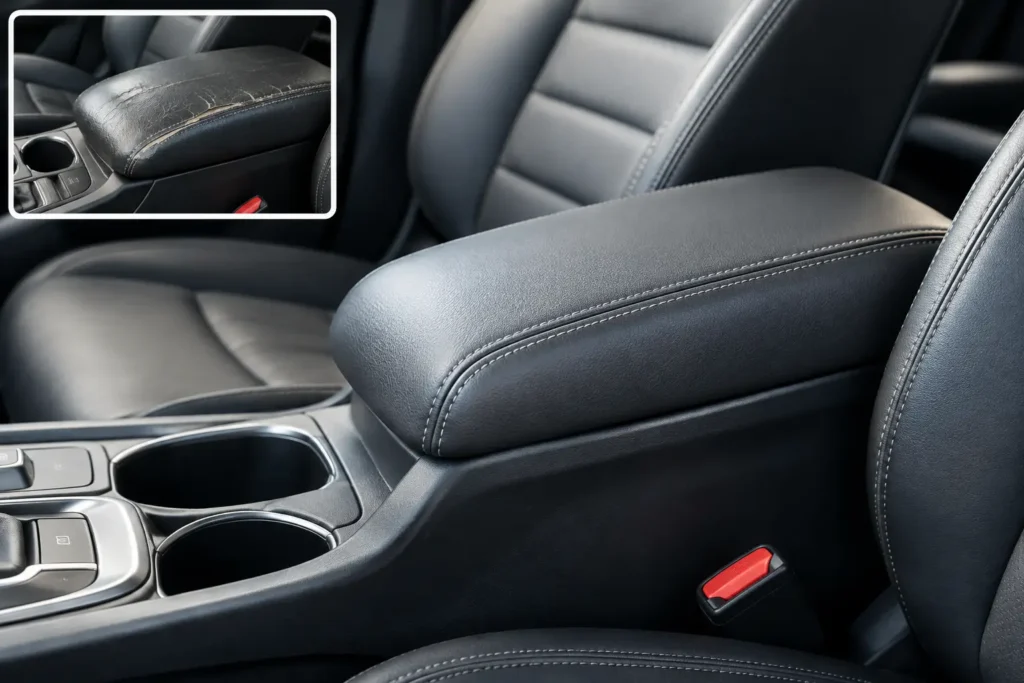
A worn armrest is one of the fastest ways to make a good vehicle feel neglected. It is the surface your elbow, hand, keys, belt buckle, and passengers encounter every day. Professional armrest repair addresses more than an obvious tear or stain. Done correctly, it restores the material, shape, color, texture, and finish so the repaired piece belongs with the rest of the cabin.
For a classic, luxury, performance, or well-kept daily driver, that distinction matters. A quick cover may hide damage for a while. A properly restored armrest can bring the console or door panel back to a factory-new appearance or become part of a complete custom interior upgrade.
What Causes Armrest Damage?
Armrests wear differently from most interior parts because they receive constant pressure and repeated contact. Leather can dry out, crack, stretch, or split along the seam. Vinyl often becomes hard, shiny, faded, or brittle before it tears. Foam padding compresses over time, leaving a sagging surface even when the outer material still looks acceptable.
Sun exposure is another major factor. UV rays fade black, tan, gray, red, and other interior colors at different rates, especially on a center console or door armrest that catches direct light. Heat accelerates the problem by drying adhesives and materials below the surface. On older vehicles, the original substrate may also crack, warp, or break around mounting points.
Spills, body oils, hand lotion, cleaners with harsh chemicals, pet damage, and sharp objects all leave their mark. In many vehicles, the armrest is not a separate cushion. It may be built into a console lid, door panel, rear center armrest, or seat component. That makes accurate restoration more involved, but it also makes a cohesive finish even more valuable.
Armrest Repair Starts With the Right Diagnosis
Not every damaged armrest needs the same service. The first question is whether the existing covering and foundation are structurally sound. Minor color transfer, surface scuffs, light fading, and small abrasions may be candidates for careful cleaning, preparation, and refinishing. This approach retains the original covering when it is still in good condition.
Cracked, peeling, torn, or heavily stretched material usually calls for reupholstery. Re-covering the piece allows the damaged skin to be removed, the foam and base to be inspected, and fresh material to be fitted around curves, seams, latches, and mounting areas. This is often the better long-term choice when vinyl has become brittle or leather has split through its finish.
If an armrest feels flat or uneven, material replacement alone will not solve the problem. The padding may need to be rebuilt or replaced before the new cover is installed. Likewise, a broken plastic base, weak hinge, or damaged latch should be repaired before finishing work begins. A beautiful leather surface cannot compensate for an armrest that does not close correctly or flexes under pressure.
Refinishing vs. Reupholstery
Refinishing is generally best for a solid original surface with cosmetic damage. It can correct fading and restore an even color and sheen without changing the part’s original construction. The trade-off is that refinishing cannot reverse deep cracks, failed backing, missing material, or a collapsed cushion.
Reupholstery is the more complete answer for substantial wear. It provides a fresh outer surface and gives the restorer access to the foam, seams, and substrate. It requires more labor and material, but it produces a more durable result when the original covering has reached the end of its life.
The goal should not be to choose the quickest process. It should be to choose the process that will still look right after regular use.
Matching Color, Grain, and Stitching Matters
An armrest can be technically repaired and still look out of place. Interior restoration depends on the details people notice without realizing it: the grain of the leather or vinyl, the depth of a matte finish, the warmth of a tan, the density of the foam, and the position of a stitch line.
A black armrest is not always simply black. It may have blue, brown, charcoal, or green undertones, and its sheen may range from low-gloss to satin. Tan interiors are even less forgiving. A color that looks close under shop lighting can look too yellow, too orange, or too gray in daylight next to the seats and dash.
For this reason, color matching should account for the surrounding interior, not just a generic color name. A sample, clear photos, or the original part can help determine the proper material and finish. Grain selection is just as important. Smooth leather, OEM-style textured vinyl, suede, Alcantara-style material, and custom perforated leather all create different visual and tactile results.
Stitching also deserves close attention. Factory-style thread color and seam placement preserve an original appearance. Contrast stitching, diamond patterns, colored piping, or a custom leather upgrade can make the armrest a deliberate part of a personalized build. The right choice depends on whether the vehicle is being preserved, refreshed for resale, or built to stand apart at a show.
Center Consoles and Door Armrests Need Different Approaches
Center console lids often suffer from pressure damage, failed hinges, and edge wear where the lid is opened repeatedly. Their curved shape and latch opening require a cover that is stretched and secured correctly. If the material is pulled too tight, it can distort around the latch or place stress on the seams. If it is too loose, it will wrinkle and wear prematurely.
Door armrests face a different set of problems. They are exposed to sunlight, pulled during entry and exit, and often integrate switches, handles, trim inserts, or molded contours. Some must be restored as part of a larger door-panel service to ensure color and finish consistency.
Rear armrests, seat armrests, and truck console components can present their own challenges, particularly when they include cupholders, storage doors, woodgrain trim, painted panels, or electronic controls. The restoration plan should protect these features rather than treating the armrest as a simple flat pad.
Why DIY Armrest Fixes Often Fall Short
DIY repair kits can be useful for a small temporary touch-up, especially on a lower-value daily driver. They are not a substitute for repairing failed material, broken foam, or a damaged substrate. Most quick fixes struggle with color accuracy, texture replication, and long-term adhesion.
Slip-on covers are another common option. They can protect a usable armrest, but they often add bulk, shift during use, and conceal rather than correct the underlying problem. On a collector vehicle or premium interior, the difference between a cover and a fitted restoration is immediately visible.
The most common mistake is applying dye or paint over an improperly prepared surface. Oils, silicone dressings, loose finish, and cracked material prevent a lasting bond. A professional process includes cleaning, surface preparation, repair of underlying damage, controlled color application, and a finish selected for the proper feel and durability.
When an Armrest Upgrade Makes More Sense Than Restoration
A damaged armrest is also an opportunity to improve a cabin that no longer reflects the vehicle owner’s taste. A factory gray console can be reupholstered in black leather, a faded vinyl pad can be converted to suede, or a plain center lid can receive contrast stitching that ties into a restored steering wheel, shift boot, or e-brake handle.
Custom work does involve choices. Suede and Alcantara-style materials offer a premium appearance and soft feel, but they need more regular care than leather or vinyl. Bright colors and contrast stitching make a strong statement, but an OEM-style match may serve resale value better on a rare original vehicle. There is no universal answer. The right finish should suit how the vehicle is driven, displayed, and maintained.
For owners sending parts out for service, remove the armrest or console component carefully, include any relevant hardware if needed, and photograph the surrounding interior before packaging. Those photos help establish the correct color direction, grain, stitch layout, and original configuration. Craft Customs performs this level of work in-house, allowing worn interior components to be restored or customized with attention to the full cabin rather than one isolated piece.
A repaired armrest should feel natural the first time you rest your elbow on it: firm where it should be firm, clean at every seam, and visually at home beside the seats, wheel, and trim. That is the standard worth holding before you put the part back in the vehicle.