
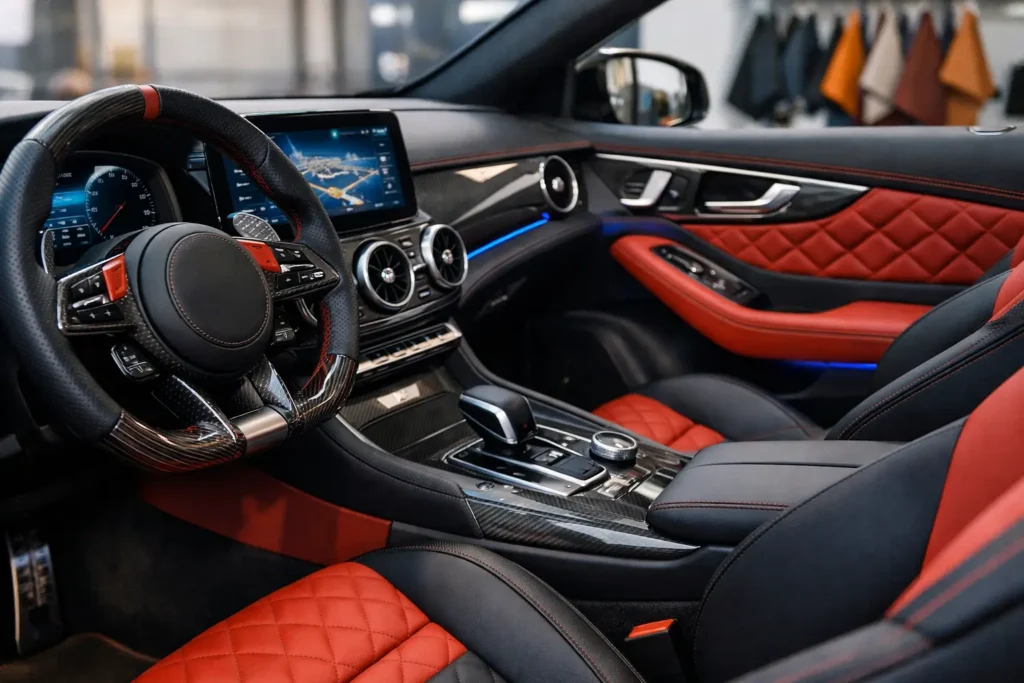
A cracked steering wheel, faded woodgrain, or peeling trim can make a great vehicle feel tired the second you open the door. That is exactly why automotive interior customization trends are moving away from flashy one-off changes and toward upgrades that improve touch, finish, durability, and resale appeal all at once.
Owners are getting more selective about what they change inside a vehicle. The goal is not simply to make a cabin look different. It is to make it feel newer, more premium, or more faithful to the vehicle’s character. For a classic car, that may mean restoring the original steering wheel and dash trim to factory-correct condition. For a late-model performance build, it may mean adding suede grip surfaces, paint-matched trim, or a carbon fiber conversion that looks like it could have come from the manufacturer.
Automotive interior customization trends are getting more refined
One of the clearest shifts in the market is refinement. Customers still want personality, but they are moving away from interiors that look overdone or mismatched. Clean stitching, factory-style contours, correct grain, and consistent color are winning over loud finishes that date quickly.
That change matters because interior parts are seen up close and handled every day. A steering wheel is not a background detail. It is one of the most touched components in the vehicle. The same goes for consoles, armrests, shift knobs, e-brakes, and dash trim. If the finish is off, the color is slightly wrong, or the texture does not match the rest of the cabin, the result feels cheap even when expensive materials were used.
This is why more owners are choosing specialist work over generic upholstery or off-the-shelf replacement parts. Precision is now part of the trend. People want custom results, but they want them executed with factory-level fit and finish.
Premium materials are still leading, but with smarter choices
Leather remains one of the strongest interior upgrades because it changes both the look and the feel of a vehicle. A properly reupholstered wheel or armrest adds softness, grip, and visual depth in a way plastic or worn vinyl cannot. What has changed is how customers are choosing leather.
Instead of defaulting to basic black, many are looking for OEM-style color matching, contrast stitching, perforated sections, or smoother and more natural textures. In luxury and exotic vehicles, the demand is often for a factory-plus result – something cleaner, richer, and more durable than what came out after years of use, but still appropriate for the car.
Suede and Alcantara-style finishes also continue to trend, especially in performance interiors. They offer a more technical, motorsport-influenced look and a different grip feel on steering wheels and shift surfaces. That said, suede is not the right answer for every vehicle. It can show wear faster in daily use, especially on high-contact areas, and it requires more owner care than leather. For a weekend car, it can be a strong visual and tactile upgrade. For a daily driver, leather may be the better long-term choice.
Carbon fiber, woodgrain, and painted trim each serve a different goal
Trim refinishing is one of the biggest growth areas because it can completely change the age and tone of an interior without replacing major components. But the right finish depends on the vehicle and the owner’s priorities.
Carbon fiber conversions continue to attract modern sports car and luxury owners who want a sharper, more aggressive cabin. When done correctly, carbon fiber adds visual contrast and a performance-focused feel. When done poorly, it can look like an afterthought. The trend is moving toward cleaner weave presentation, better gloss control, and more OEM-style integration rather than exaggerated aftermarket appearance.
Woodgrain refinishing remains strong in classics, luxury sedans, and vintage restorations. For these vehicles, the trim is part of the identity of the cabin. Owners are not looking to replace that character. They want to restore depth, gloss, and color accuracy so the interior feels elegant again instead of faded or cracked. There is also growing interest in modernized wood tones that preserve the upscale feel while refreshing an outdated shade.
Paint-matched trim and interior part painting are also gaining traction, especially on newer vehicles where owners want a coordinated, tailored look. Matching trim to exterior paint, factory accent colors, or custom design themes can make an interior feel far more intentional. The trade-off is that color work has to be extremely consistent. A slight miss in tone or gloss level becomes obvious fast inside a cabin.
Restoration-grade customization is replacing simple replacement
A major change in automotive interior customization trends is that more owners are restoring original parts instead of hunting for used replacements. That is especially true for rare, discontinued, classic, and high-end vehicles where replacement components may be unavailable, poorly matched, or lower quality than the originals.
Restoring the original steering wheel, dash trim, console pieces, or armrests has several advantages. Fitment is correct because the part already belongs to the vehicle. The end result can stay faithful to factory design. And if the owner wants customization, it can be built on the right foundation rather than forcing an aftermarket part to work.
This approach also protects value. Collectors and enthusiasts generally understand the difference between a restored original and a generic substitute. Even daily drivers benefit because the cabin looks cared for rather than pieced together.
For many customers, the best result is not full originality or full customization. It is a balanced combination – factory shape, upgraded materials, refined stitching, and corrected wear. That middle ground is where a lot of the best work is happening today.
Smaller touchpoints are getting more attention
Not every interior transformation starts with seats. In many cases, the parts that most affect the driving experience are the smaller touchpoints: steering wheels, shift knobs, e-brakes, center consoles, armrests, and dash trim.
That makes sense. These are the parts drivers see and feel constantly. Rewrapping a worn steering wheel in fresh leather, refinishing peeling console trim, or restoring a faded armrest can make the whole vehicle feel newer without a full interior overhaul. For owners who want a noticeable change with a practical budget, these upgrades often deliver the highest impact.
This is also where craftsmanship shows. Tight seams, proper contour retention, smooth clear coat, color consistency, and durable edge finishing separate professional work from shortcuts. A customized interior only looks premium when the details hold up under close inspection.
OEM-plus is outperforming extreme customization
One of the most durable trends in the market is the OEM-plus approach. Customers want interiors that look better than stock, not disconnected from the vehicle. That means subtle color upgrades, cleaner materials, better trim finishes, and purposeful design choices that respect the original cabin layout.
OEM-plus works because it ages well. A restored woodgrain set, a leather wheel with tasteful contrast stitching, or a carbon fiber conversion on the right model can still look right years later. Extreme color combinations or novelty textures often have shorter appeal and can reduce buyer interest if the vehicle is sold.
That does not mean bold customization is gone. It simply means more owners are thinking about long-term use, long-term value, and whether the interior will still feel right after the first wave of excitement wears off.
What these trends mean for vehicle owners
If you are considering interior work, the trend line is clear: better materials, better finish quality, and smarter customization choices are beating quick cosmetic changes. The strongest upgrades are the ones that solve wear, improve daily feel, and fit the vehicle naturally.
That usually starts with an honest look at what is bothering you most. If the steering wheel is cracked, the trim is peeling, or the dash pieces are faded, start there. The best interior transformations are often built component by component. A specialist shop such as Craft Customs can restore or customize those original parts with the kind of material control and finish accuracy that general repair shops often do not offer.
The real value in following current trends is not chasing what looks popular this month. It is choosing work that makes your interior feel right every time you sit down behind the wheel. When the texture is correct, the color matches, and the finish looks factory-new or better, the vehicle stops feeling worn out and starts feeling finished.