
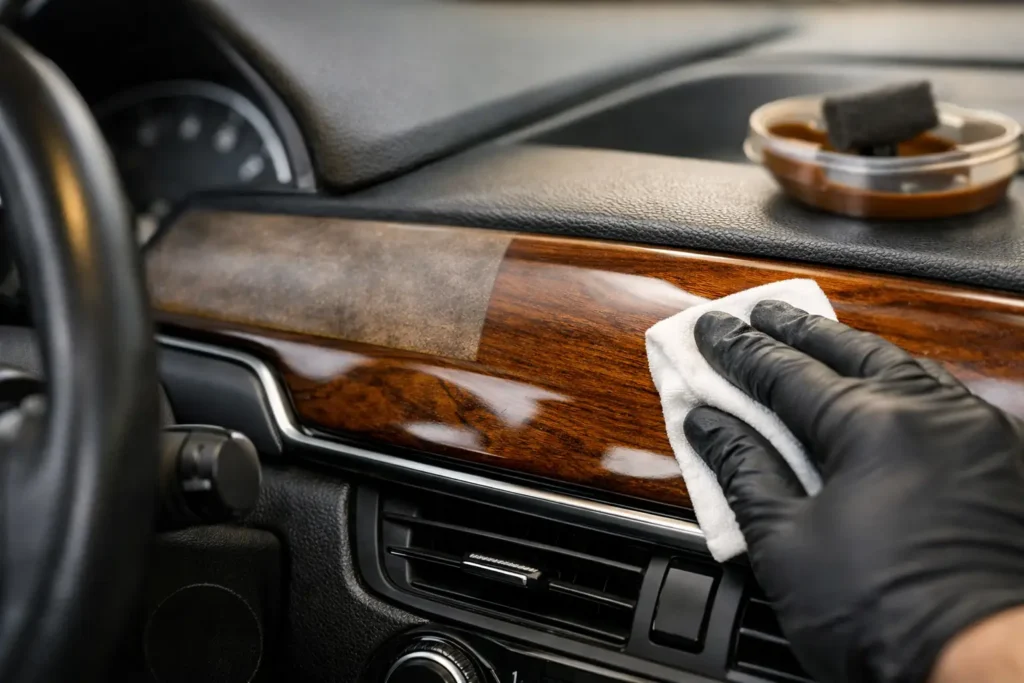
That washed-out, sunburned look on woodgrain dash trim can age an otherwise clean interior fast. If you are looking up how to refinish faded woodgrain dash trim, the real question is not just how to make it shiny again – it is how to restore depth, color, and clarity without creating a finish that looks obviously redone.
Done right, woodgrain trim should look rich, even, and factory-correct or intentionally upgraded. Done poorly, it ends up too orange, too glossy, cloudy under the clear, or peeling within months. The difference comes down to prep, material choice, and knowing whether your trim is real wood veneer, printed faux woodgrain, or a molded plastic part with a tinted topcoat.
Before you refinish faded woodgrain dash trim
The first step is identifying what you actually have. Many owners assume every woodgrain panel is real wood, but a large percentage of OEM dash trim is simulated woodgrain over plastic. Luxury vehicles, classics, and some higher-end packages may use real veneer under clear coat, while many modern trims rely on hydrographic film, printed pattern layers, or molded finishes designed to mimic walnut, burl, or ebony.
That matters because each material fails differently. Real veneer often fades, yellows, or develops lifting under the clear. Faux woodgrain tends to lose surface gloss, wear through at edges, or show cracking and peeling in the printed layer. If the pattern itself is damaged, polishing alone will not fix it. If the clear coat is failing but the grain layer underneath is intact, refinishing is often very successful.
Remove the trim from the vehicle before doing anything else. Trying to sand, spray, or polish woodgrain pieces in the dash almost always leads to overspray, uneven edges, and missed damage around clips and corners. Careful removal also lets you inspect mounting tabs, hidden cracks, and edge wear that are easy to miss when the part is still installed.
How to refinish faded woodgrain dash trim without making it worse
There is a big difference between reviving a tired finish and fully refinishing a failed one. If the trim is only dull from light oxidation and fine scratches, a gentle polish may bring back some gloss. But if the surface is peeling, hazy, deeply scratched, or discolored, polishing can actually expose more damage and leave the panel looking patchy.
Start by cleaning the piece thoroughly with a wax and grease remover that is safe for automotive refinishing. Interior dressings, silicone products, skin oils, and cleaner residue all interfere with adhesion. If contamination stays on the part, the new coating can fisheye or separate.
After cleaning, inspect under strong light. If the clear coat is intact and the woodgrain image below still looks solid, you may be able to scuff the surface and re-clear it. If the clear is cracked or lifting, the failed coating has to come off. If the woodgrain layer itself is worn through, you are no longer doing a simple refinish – you are restoring or recreating the appearance.
Sanding and surface prep
For trim that only needs a new clear coat, use a fine abrasive to level the surface without cutting into the grain layer. The goal is to create mechanical adhesion and smooth out minor defects, not remove the design. On delicate OEM woodgrain, aggressive sanding is where many DIY jobs go wrong.
If the clear is severely damaged, wet sanding may help remove the failing top layer, but it takes a controlled hand. Sand through the printed woodgrain or tinted effect and the part will never look factory again without reprinting, re-veneering, or refinishing in a new style altogether. Edges and raised contours are the danger zones because they burn through first.
Any chips, gouges, or cracks in the base material should be repaired before coating. Even a high-gloss clear will not hide physical damage. In fact, gloss tends to magnify it. A proper trim repair involves leveling the defect so the reflection line stays clean across the panel.
Matching the original look
This is where refinishing gets technical. Factory woodgrain is rarely just brown under clear. It may have amber warmth, red undertones, smoked shading, or a specific gloss level that matches the rest of the cabin. Some trim is high gloss. Some has a softer satin finish. Some luxury interiors use deep piano-style clarity, while classic vehicles may have a more traditional varnished tone.
If you are refinishing one piece in a set, compare it against the surrounding parts before spraying. A perfect finish on the wrong tone still looks wrong. This is especially important on center console lids, shifter surrounds, ashtray doors, and long dash strips where small color shifts become obvious immediately.
Coating options for woodgrain dash trim
In most cases, the finish depends on what condition the original pattern is in.
If the grain image is intact, a quality automotive clear coat is usually the best route. It restores gloss, protects against future UV exposure, and gives the trim that smooth, finished depth people expect from premium interior woodgrain. Automotive-grade products matter here. Household polyurethane and hobby coatings may look acceptable for a short time, but they typically do not hold up well to cabin heat, sunlight, and daily contact.
If the grain layer is damaged, you have three realistic options. You can recreate the original style with specialized refinishing methods, replace the surface with real wood veneer, or convert the part to a different finish such as carbon fiber, paint-matched trim, or a custom wood tone. Which path makes sense depends on the vehicle, the rarity of the trim, and whether originality or customization is the priority.
Spraying clear the right way
Light, even coats are critical. Heavy coats trap solvents, create runs, and can distort the appearance of the grain beneath. The cleaner and flatter the base, the better the final clarity. Between coats, proper flash time matters just as much as spray technique.
Once cured, the finish may need to be color sanded and polished to achieve a factory-level gloss. This step separates a decent result from a premium one. A sprayed part straight from the gun can still have texture, dust nibs, or slight unevenness. Refining the surface after cure gives it that smooth, glass-like look associated with high-end interior trim.
When DIY works and when it does not
If your dash trim is a common part, the fading is mild, and the clear coat is the only issue, a careful DIY refinish can work. The job becomes much less forgiving when the trim is rare, the woodgrain pattern is partially gone, or the part has complex curves and thin edges.
This is especially true for classic, luxury, and exotic interiors. Replacement pieces may be unavailable, discontinued, or expensive enough that one mistake costs far more than professional refinishing would have. The same goes for matched trim sets. If one section ends up darker, glossier, or slightly different in tone, the entire interior can look off.
A professional shop also has an advantage in material identification and finish recreation. Some pieces need clear only. Others need repair, re-toning, grain recreation, or complete refinishing from the substrate up. That is hard to judge from a faded panel sitting on a workbench.
How professionals refinish faded woodgrain dash trim
A proper restoration process is built around preservation first. The goal is to save original detail where possible, not sand everything flat and bury it under thick coating. Professional refinishing starts with part inspection, contamination removal, and careful assessment of whether the original woodgrain can be retained.
From there, damaged clear is removed or leveled, structural defects are repaired, and the surface is refinished with automotive-grade materials designed for long-term heat and UV resistance. If the original look cannot be preserved, the next step is controlled recreation – either to factory appearance or to a deliberate upgraded finish.
That is often the better solution for high-value interiors. A specialist can match adjacent components, maintain correct gloss, and produce a finish that looks intentional instead of repaired. At Craft Customs, for example, that same approach is used across OEM restorations and custom interior conversions because the finish has to make sense with the rest of the cabin, not just on one isolated trim piece.
Common mistakes that ruin woodgrain trim
Most failed refinishing jobs come back to the same issues. The part was not cleaned well enough, the sanding cut through the grain layer, the wrong coating was used, or the gloss level did not match the rest of the interior. Another common problem is rushing reassembly before full cure, which leaves fingerprints, pressure marks, or imprinting around clips and fasteners.
Sun-faded trim also exposes shortcuts fast. What looks acceptable in the garage can turn cloudy, soft, or uneven after a few hot weeks in the car. Interior parts live in harsher conditions than many people expect, especially on dashboards that sit under direct glass all summer.
If your woodgrain dash trim still has its pattern, you may only need a controlled clear coat restoration. If the design is worn, peeling, or already altered by past repair attempts, the right fix is usually more involved. Either way, the best results come from treating the trim like finish work, not just cosmetic touch-up.
A good woodgrain refinish should disappear into the interior and make the whole cabin feel newer, richer, and more complete the moment you open the door.