
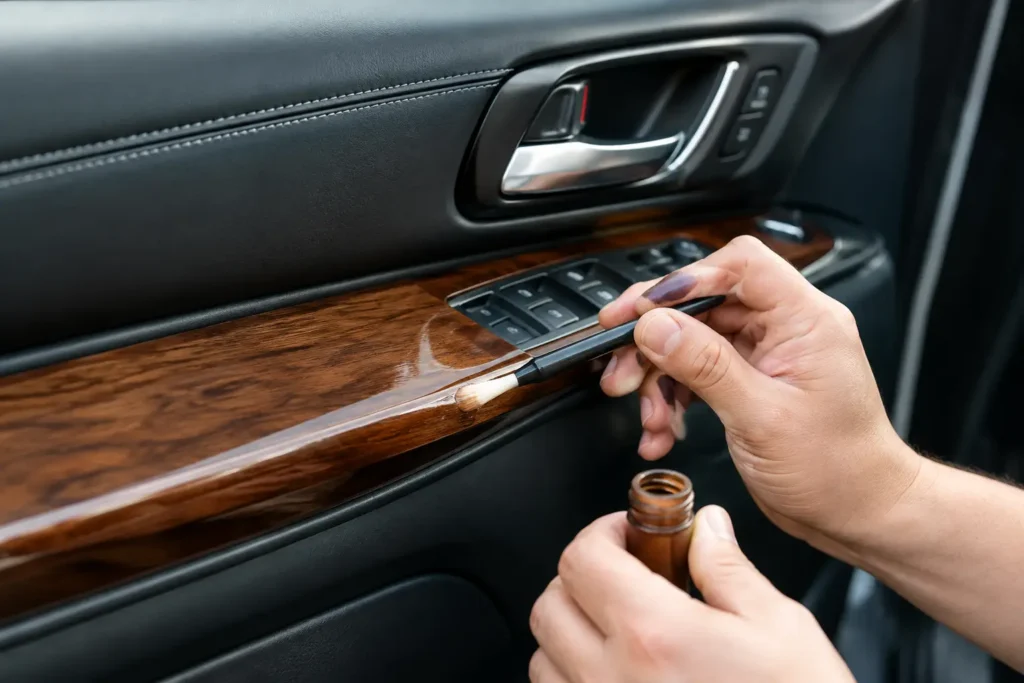
A faded woodgrain steering wheel or cracked dash insert can make a well-kept vehicle feel far older than it is. Woodgrain repair cost is not one fixed number because the right process depends on what the part is made of, how deeply it is damaged, and whether the goal is a clean repair, an authentic restoration, or a full custom upgrade.
For a small trim piece with light surface wear, refinishing may be straightforward. For a rare classic steering wheel, a luxury dash panel, or a woodgrain part with failed clear coat and structural cracking, the work becomes far more involved. The best value comes from repairing the actual problem rather than applying a cosmetic cover that looks good briefly and fails again.
What Affects Woodgrain Repair Cost?
The condition of the original part is the biggest factor. Light haze, minor scratches, and sun-faded clear coat generally require less labor than peeling finish, deep gouges, chips at an edge, water damage, or cracks that extend into the substrate. A specialist must stabilize damaged areas before any new color or clear finish is applied. Skipping that preparation may reduce the upfront price, but it often leaves the repair vulnerable to lifting, cracking, or uneven gloss.
Material matters just as much. Some automotive woodgrain components are genuine wood with a stained and lacquered finish. Others are plastic trim molded with a wood effect, hydro-dipped panels, laminate veneers, or composite pieces with a printed grain beneath clear coat. These materials can look similar from the driver’s seat, but they demand very different repair methods.
Genuine wood may need careful sanding, grain filling, stain matching, and multiple layers of clear finish. A molded plastic panel may require plastic repair, adhesion preparation, color work, and a protective topcoat. An experienced restoration shop identifies the material before quoting the job, rather than treating every brown interior trim panel as if it were the same.
The part itself also changes the price. A removable console insert is usually less complex than a dashboard applique with fragile mounting points. Steering wheels require another level of precision because the repair must hold up to constant hand contact, heat, oils, cleaners, and movement. If a steering wheel has leather, metal spokes, switches, or airbag-related components surrounding the woodgrain section, masking and disassembly add time but protect the original details.
Finish expectations are the final major variable. Some owners want a durable, attractive repair that blends with the remaining interior. Others need a near-original color, grain, and gloss level for a judged restoration or collector-grade vehicle. Matching a warm walnut tone, reddish burl, or high-gloss piano finish against aged original trim can take test panels and custom tinting. That detail work is where a true restoration separates itself from a generic refinish.
Typical Woodgrain Repair Cost Ranges
Most professional woodgrain repairs fall into broad ranges rather than a universal menu price. Small cosmetic repairs or simple refinishing on a single removable piece may start in the low hundreds. More extensive restoration of a steering wheel, console assembly, or dash trim can move into the mid hundreds or higher. Rare parts, multiple matching pieces, complex cracks, and show-quality color matching can increase the total further.
A quote should account for the part’s condition and the desired result, not simply its size. A small steering wheel spoke insert with failed clear coat can take more exacting work than a larger panel with only light scratches. Likewise, restoring a complete matched set of dash, door, and console trim may cost more overall, but refinishing the pieces together provides the best opportunity for consistent color and sheen.
Shipping is another practical consideration for send-in work. Owners should factor in safe packing, insured shipping, and return delivery when comparing repair options. For uncommon trim or original classic-car components, shipping the part to a specialist is often a better decision than trusting irreplaceable pieces to a general repair service that does not regularly work with automotive interior materials.
Repair, Refinish, or Replace?
Replacement sounds simple until you price a new OEM part, search for discontinued inventory, or inspect a used piece closely. Many used woodgrain parts carry the same sun exposure, cracking, fading, or brittle mounting tabs as the one already in your vehicle. A replacement may also have a different shade from the rest of the interior.
Repair is usually the right route when the piece is structurally sound and the damage is limited to the finish, localized chips, scratches, or minor surface defects. Refinishing makes sense when the finish has failed across the entire piece or when the vehicle has several trim components that no longer match. A complete refinish can restore uniformity that spot repair cannot always achieve.
Replacement is worth considering when a part is severely warped, missing material in a highly visible area, or damaged beyond reliable stabilization. Even then, an original part may still be the best restoration candidate if replacements are unavailable or prohibitively expensive. The answer depends on the component, not a one-size-fits-all rule.
Why Cheap Cosmetic Fixes Often Cost More Later
DIY repair kits and quick-touch-up services have their place for very small, low-visibility defects. They can reduce the appearance of a light scratch or temporarily cover faded color. The limitations show up when the part has peeling clear coat, cracks, uneven texture, or years of UV damage.
A surface-only repair may trap unstable material underneath the new coating. It may also produce a gloss level that is noticeably flatter or shinier than the surrounding trim. On a steering wheel, weak coatings can wear through where hands naturally rest. On dash trim, poorly prepared finishes can haze or lift under heat.
Professional restoration costs more than a bottle of touch-up compound because the work is not just about adding color. It involves removing failed material, repairing the foundation, recreating the grain or visual depth where needed, and building a finish designed for automotive use. That process protects the appearance of the repair and preserves the value of the original part.
Getting an Accurate Quote Before You Send a Part
Clear photos make the estimate process faster and more accurate. Photograph the full part, then include close-ups of every damaged area in natural light. Show the front, back, edges, mounting points, and any existing cracks or peeling. If several pieces need work, place them together in one photo so the shop can evaluate color consistency across the set.
It also helps to state whether you want original-style restoration or a different look. A satin factory-style finish, deep high-gloss clear, darker stain, carbon fiber conversion, or a custom color-matched treatment can each require different materials and labor. The year, make, and model are useful as well, especially when a part has known construction details or a distinctive factory grain pattern.
Before approving a repair, ask what preparation is included, whether cracks and peeling areas are stabilized, how the finish will be matched, and what level of durability the coating is designed to provide. The lowest quote is not always the lowest final cost if it excludes damage repair or produces a finish that must be redone.
When Professional Woodgrain Restoration Is Worth It
Professional work is particularly worthwhile when the part is rare, the vehicle is collectible, or the trim sits directly in the driver’s line of sight. It is also a smart choice when the interior is otherwise in good condition. Restoring a worn woodgrain steering wheel or dash insert can change the entire cabin because these components are visual focal points that drivers touch and see every day.
Craft Customs restores and customizes original interior components in-house, allowing owners to keep the fitment and character of their factory parts while correcting the damage that makes an interior feel neglected. That approach is especially valuable for discontinued trim, classic vehicles, luxury interiors, and custom builds where a generic replacement simply will not match.
The right woodgrain repair is not about making a damaged part look acceptable for a few months. It is about bringing back the finish, detail, and confidence you expect every time you open the door and sit behind the wheel.