
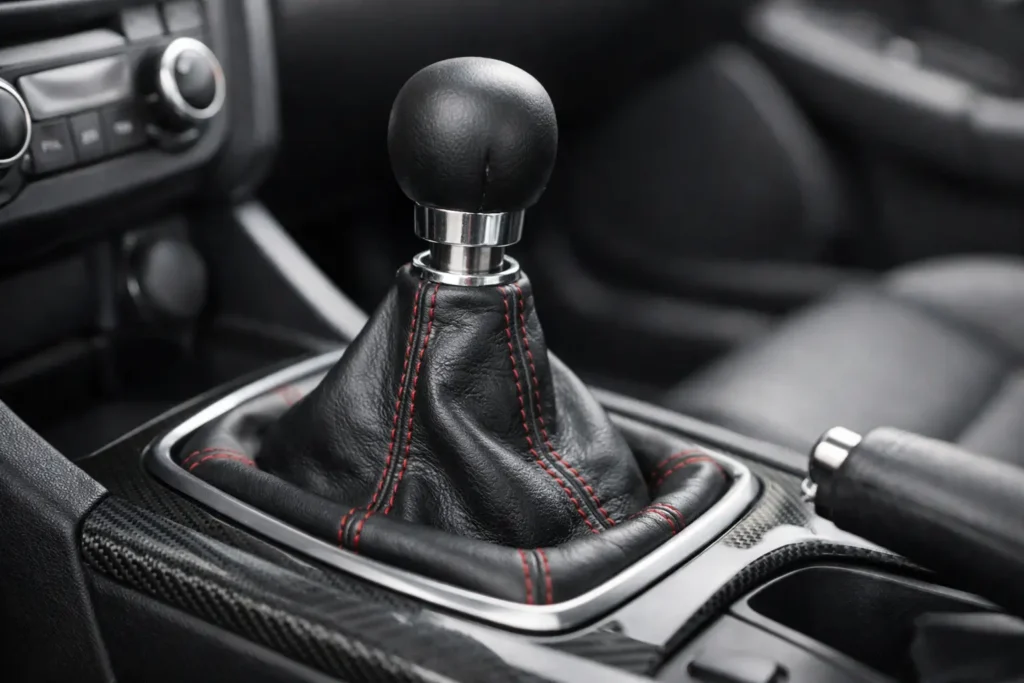
A cracked, collapsed, or sun-faded shifter boot can make the entire center console look neglected, even when the rest of the cabin is clean. Custom shifter boot restoration replaces that tired focal point with properly fitted material, correct stitching, and a finish that belongs with the rest of your interior. It is a small component, but it sits directly under your hand and in the center of your sightline every time you drive.
For a classic restoration, the goal may be a faithful factory-correct replacement. For a modern performance build or luxury interior refresh, the better answer may be hand-selected leather, suede, contrast stitching, or a color that ties the shifter to the steering wheel, seats, and e-brake handle. The difference is not simply the material. It is the pattern, fitment, attachment method, and craftsmanship behind it.
When Custom Shifter Boot Restoration Is Worth It
A shifter boot is usually replaced for one of three reasons: the original material has worn out, the console is being restored, or the owner wants a more intentional custom interior. Leather often dries, stiffens, and cracks along the folds. Vinyl can split at the corners, pull loose from its retaining frame, or develop a glossy, low-quality appearance over time. Suede-like materials may become matted or discolored from years of contact and dust.
The problem is not always obvious in a product photo or from across a parking lot. Inside the vehicle, though, the wear shows immediately. A loose boot bunches around the shifter. An incorrect replacement can leave gaps at the console bezel or interfere with the normal range of motion. Cheap universal boots are particularly prone to this because they are made to cover many applications instead of fitting one specific shifter assembly.
Restoration is worth considering when the boot is original to a collector vehicle, when replacement parts are discontinued, or when the interior has already received higher-end work. A fresh steering wheel or refinished trim can make an old boot look even more out of place. Matching materials across these touchpoints creates a cabin that feels complete rather than pieced together.
Fitment Comes Before Material Choice
The best-looking leather will not compensate for a boot that is cut incorrectly. A proper boot needs to account for the opening in the console, the shape and height of the shifter, the location of the reverse lockout or shift gate, and how the original part is secured. Some boots staple or glue to a plastic frame. Others use a sewn-in base, metal retaining ring, clips, or a molded upper collar beneath the shift knob.
Manual-transmission vehicles tend to show more pronounced folds because the shifter moves through a wider pattern. The boot must have enough material to move naturally without pulling tight in first, third, fifth, reverse, or any other gear position. Too much extra material, however, can cause excessive bunching and make the console look sloppy.
Automatic shifters bring a different set of concerns. Many use a shaped boot that works around a gated selector, trim bezel, or shift indicator. Some are closer to a protective dust cover than a traditional shift boot. In these applications, the original frame and mounting points are often essential to a factory-quality result.
This is why a send-in restoration can be the right choice for rare, vintage, luxury, and unusual applications. Retaining the original boot, frame, or trim surround gives the craftsperson a reliable reference for the pattern and attachment details. At Craft Customs, interior components are completed in-house, allowing the restoration work to be built around the actual part rather than a generic template.
Choosing the Right Material and Stitching
Material selection should match how the vehicle is used and the finish you want from the interior. Genuine automotive leather remains a strong option for most restorations because it wears well, feels substantial, and develops character without looking disposable. It can be selected for a close OEM appearance or used to introduce a richer grain and color.
Suede and microfiber suede offer a softer, more performance-oriented look. They pair especially well with sport seats, a suede-wrapped steering wheel, or a track-focused cabin. The trade-off is maintenance. These materials can show skin oils, dust, and flattening sooner than leather, particularly on a shifter boot that is touched often.
Vinyl may still be the correct choice for an exact period restoration or a vehicle originally equipped with vinyl interior components. A quality automotive vinyl can also be practical in trucks, off-road vehicles, and daily drivers that need easy cleaning. What matters is choosing a material with the correct texture, thickness, and flexibility for the job.
Stitching deserves the same attention. A subtle matching thread is typically best for factory-style restoration. Contrast stitching can add definition and coordinate with seat stitching, steering wheel accents, brake calipers, or exterior paint. Double stitching may suit a performance build, but it can look out of place on a vintage luxury car that originally used a single, restrained seam.
Color matching is equally important. Black is not always simply black. Interiors can have warm charcoal, cool graphite, blue-black, brown-black, and faded original tones that change under sunlight. When the goal is a unified cabin, the shifter boot should be considered alongside the steering wheel, console lid, armrest, and door trim.
Details That Separate a Custom Boot From a Generic Replacement
A quality shifter boot restoration is defined at the edges and seams. The corners need to sit cleanly in the console opening. The upper opening needs to hug the shifter shaft or tuck correctly beneath the knob. The stitch line should remain straight as the boot moves, and the grain direction should look intentional rather than random.
There are several details worth deciding before work begins:
- Whether the finished boot should duplicate the original shape or use a lower, tighter, more tailored profile.
- Whether the shift knob, e-brake boot, steering wheel, or console lid should use matching leather and thread.
- Whether the original plastic frame, bezel, trim ring, or retaining hardware needs repair before reupholstery.
- Whether the vehicle needs OEM restraint or a more visible custom treatment, such as colored stitching or a two-tone design.
Not every modification improves every vehicle. A red stitch can look right in a black performance coupe and completely wrong in a concours-oriented classic. A tall gathered boot may be period-correct for one application but excessive in a modern console with tight, architectural lines. Good custom work respects the vehicle first.
Preparing a Shifter Boot for Restoration
Before removing the part, take clear photos of the console from several angles and photograph the boot in each gear position if it is a manual. These references help document the original orientation, fold pattern, and relationship to nearby trim. If the shift knob must be removed, protect any set screws, clips, collars, or lockout pieces and keep them labeled.
Avoid cutting away the old boot unless necessary. Even a damaged original can provide valuable information about seam placement, material stretch, mounting points, and shape. Include the frame or bezel whenever it is part of the boot assembly. A replacement cover made without the mounting component may fit the general opening but fail to sit correctly once installed.
If the console bezel is scratched, peeling, or broken, address that condition at the same time. A newly restored boot framed by damaged trim will not deliver the full visual transformation. Coordinating related components also makes it easier to establish a consistent material, color, and stitching plan.
Care After the Work Is Complete
A restored boot does not need complicated maintenance, but it benefits from regular light care. Wipe leather gently with a clean, slightly damp microfiber towel when dust accumulates. Use a leather cleaner only when needed, and avoid heavy conditioners that can leave residue near the shift mechanism or make the leather overly soft.
For suede or microfiber suede, use a soft brush to lift the nap and remove dry dust. Do not saturate the material with cleaners. With any boot, keep sharp objects, loose hardware, and abrasive keychains away from the folds. Most premature damage happens from friction, neglect, or poor fitment rather than normal shifting.
The right restored boot makes the shifter feel like a finished part of the interior again – not an overlooked patch of worn material between the seats. Whether you are preserving an original cabin or building a more personal one, start with the actual component, choose materials that suit the vehicle, and insist on fitment that looks right in every gear.