
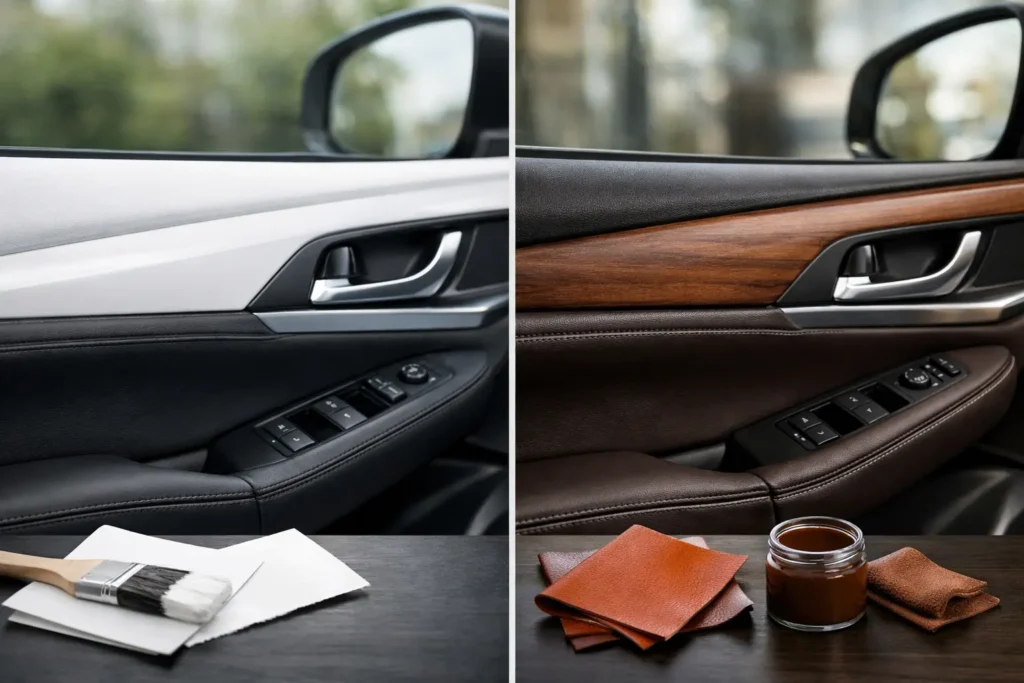
A peeling door pull or sun-faded console can make an otherwise clean vehicle feel neglected every time you get behind the wheel. The choice between painted vs dyed interior trim determines more than color – it affects texture, durability, authenticity, and how well the repair holds up under daily use.
The right answer is rarely as simple as “paint is bad” or “dye is better.” Interior parts are made from different materials, experience different types of wear, and need different preparation before any color is applied. A hard plastic dash bezel, a flexible vinyl armrest, and a leather-wrapped steering wheel should not be refinished the same way.
Painted vs Dyed Interior Trim: The Real Difference
In automotive interiors, the terms paint and dye are often used loosely. That can lead owners to expect a product to behave in a way it cannot.
Traditional paint sits on top of a surface and creates a colored film. On properly prepared hard plastics, metal trim, woodgrain components, and certain composite pieces, a quality automotive coating can produce a clean, even, factory-style finish. It is especially useful when changing a smooth trim piece from beige to black, restoring a faded metallic accent, or customizing an interior with a gloss, satin, or matte appearance.
Dye, in the strictest sense, penetrates porous material. That makes it the natural choice for absorbent leather and some porous vinyl surfaces. In automotive restoration, however, “dye” often refers to a flexible color coating formulated for leather, vinyl, and plastic. It bonds differently than conventional paint and is designed to move with the material rather than crack when a seat bolster, armrest, or steering wheel flexes.
The label matters less than the chemistry, preparation, and material compatibility. A skilled refinisher selects the coating system for the part, not the term that sounds better in a listing.
When Painted Trim Is the Better Choice
Painted finishes are often the strongest option for rigid, smooth interior components. Think hard plastic center-console panels, dash trim bezels, speaker grilles, window switch surrounds, metal accent pieces, and refinished woodgrain or carbon fiber parts.
Hard trim needs a finish that can level out evenly and resist abrasion from rings, keys, fingernails, cleaning, and repeated handling. Properly applied interior paint can also deliver finish control that dye typically cannot. If you want a piano black console, satin-black dash trim, a matched metallic accent, or a custom color with a uniform sheen, paint is usually the more appropriate process.
That result depends on preparation. The part must be thoroughly cleaned to remove silicone, skin oils, dressings, and old protectants. Damaged areas need repair and leveling. The surface may require scuffing, adhesion-promoting products, compatible primers, and carefully built color coats. Skipping these steps is why many do-it-yourself trim jobs scratch easily, fish-eye, chip around edges, or peel in high-touch areas.
Paint also makes sense when the original finish was painted. Many modern interior trim pieces have a factory-applied coating over plastic. Restoring that type of part with an appropriate coating system can preserve the look and performance the manufacturer intended.
Where paint can fall short
Paint is not ideal for every surface. A rigid coating on a flexible vinyl part may eventually crack or separate as the material bends. The same concern applies to leather that is repeatedly compressed and stretched. Paint can also make a textured part look overcoated if it is applied too heavily, filling the grain and leaving a plastic-looking finish.
This is why a paint job should never be judged by color alone. The finish has to retain the correct texture and sheen. A perfect black that feels slick, looks glossy when the surrounding trim is matte, or reveals every scratch under sunlight is not a factory-quality restoration.
When Dyeing Is the Better Choice
Dyeing or refinishing with a flexible leather and vinyl color system is the better route for parts that move, compress, or need to maintain a natural grain. Steering wheel leather, leather shift boots, armrests, door-panel inserts, console lids, seat bolsters, and vinyl trim are common examples.
A quality flexible coating restores faded color without turning the surface into a stiff shell. It is built to work with the material, which is particularly important on a steering wheel. That part is constantly exposed to hand oils, heat, friction, lotions, cleaners, and flexing from grip pressure. The coating must adhere securely while still feeling like leather rather than painted plastic.
Color restoration is also valuable when the goal is authenticity. A rare factory interior may need a close match to its original burgundy, saddle, gray, or tan finish, not a generic off-the-shelf shade. Custom-mixed color and proper finish adjustment can make a repaired section blend with adjacent original material rather than stand out as a fresh patch.
For vinyl and textured plastics, the best dye-style systems preserve the molded grain. That is a major advantage over heavier conventional paint, particularly on older dashboards, door panels, and trim with visible texture.
Dye is not a shortcut for damaged material
Color cannot fix structural failure. Deep cracks, missing foam, torn leather, warped plastic, and peeling factory soft-touch coatings need repair work before refinishing. Dyeing over contamination, loose material, or failed old coatings only hides the problem temporarily.
Likewise, a severely dried or cracked leather steering wheel may need fresh leather rather than recoloring. Reupholstery provides a better long-term result when the original hide has lost its integrity. The right restoration method protects both the appearance and the tactile quality that make the interior enjoyable to use.
Durability Comes From Preparation, Not the Word on the Bottle
The largest difference between a lasting restoration and a short-lived cosmetic fix is surface preparation. Whether a part is painted or dyed, it must be evaluated for its material, original coating, damage, contamination, and use pattern.
A high-touch component requires more durability than a trim panel that is rarely touched. A steering wheel and door pull need a flexible, abrasion-resistant system. A dash bezel needs consistent color and resistance to cleaning chemicals. A console panel may need added scratch resistance. Parts exposed to direct sun require finishes chosen for UV stability, especially in convertibles and vehicles parked outdoors.
Finish selection also has to account for sheen. Factory interiors commonly use low-gloss or satin finishes to reduce reflections. Applying a glossy coating to one repaired part can make it look newer than the rest of the cabin in the wrong way. Matching texture, sheen, and color is the difference between a repair that is merely noticeable and one that looks factory new.
At Craft Customs, that material-by-material approach is central to interior restoration. The goal is not simply to make a damaged piece look better on the workbench. It is to return a part that fits the cabin, performs under real use, and supports the value of the vehicle.
How to Choose the Right Finish for Your Trim
Start by identifying what the part is actually made of. Hard ABS plastic, soft-touch plastic, vinyl, leather, wood, aluminum, and carbon fiber each require a different approach. If the component flexes when pressed, it generally needs a flexible coating system. If it is rigid and smooth, a properly prepared paint finish may be the better choice.
Then consider your objective. A concours-style restoration calls for a close factory color, grain, and sheen match. A custom build may call for color-matched trim, blacked-out accents, suede-wrapped pieces, or a gloss carbon fiber conversion. Neither objective is wrong, but they should not be treated with the same finish strategy.
Finally, be realistic about wear. A lightly used show car can tolerate finishes that would not be ideal for a daily driver. A daily-driven truck with a frequently handled console and steering wheel needs materials selected for constant contact. The best refinishing job is one that still looks right after months of getting in, getting out, cleaning the cabin, and driving in summer heat.
A quality interior finish should not announce itself. It should look correct, feel right in your hand, and make the rest of the vehicle feel worth preserving.