
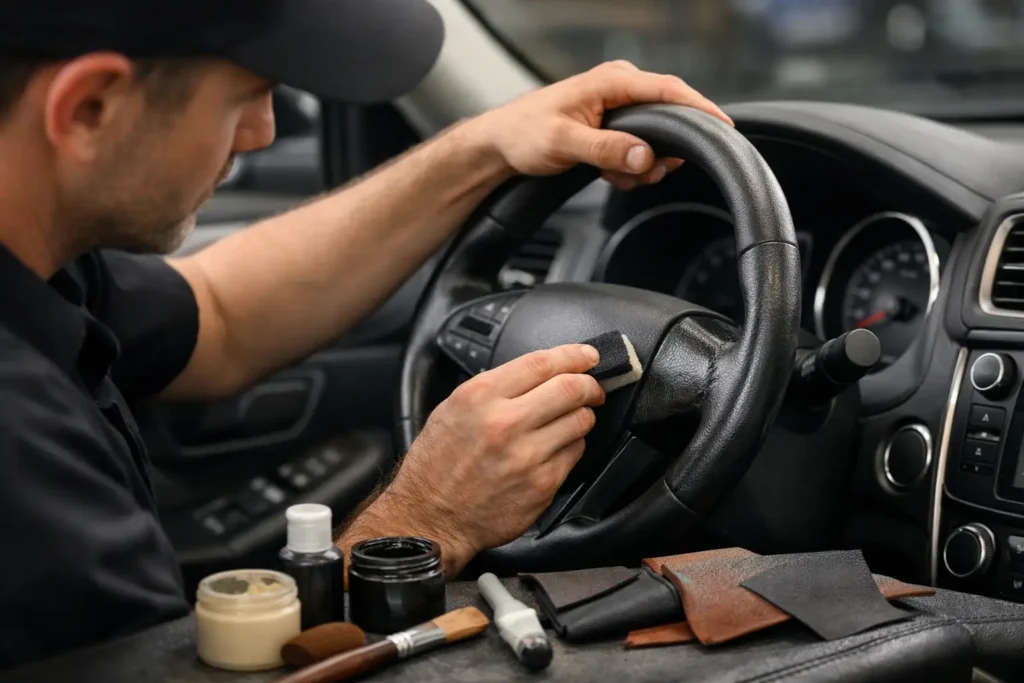
Your steering wheel is the one interior part you touch on every drive. When its leather is slick, cracked, peeling, faded, or worn through at the 10 and 2 positions, it can make an otherwise clean vehicle feel neglected. So, can a worn steering wheel be repaired? In many cases, yes – and a proper restoration can return both the appearance and the hand feel that made the vehicle enjoyable in the first place.
The right solution depends on what is worn, how deeply the damage extends, and whether the wheel has structural or safety-related issues. Surface wear can often be refinished. Torn leather can be reupholstered. Damaged woodgrain can be stripped and rebuilt. But a wheel with a bent frame, damaged mounting points, or airbag-related concerns requires a different conversation.
Can a Worn Steering Wheel Be Repaired Without Replacing It?
A replacement wheel is not always the best answer. For classic, luxury, exotic, and low-production vehicles, finding an original replacement in the correct color, trim level, and condition can be difficult or expensive. Even when a used wheel is available, it may carry the same hidden wear as the one already in your vehicle.
Restoration preserves the original core while addressing the visible and tactile surfaces. That matters when originality, fitment, steering wheel controls, wood species, stitching layout, or factory color matching are priorities. A quality repair should not look like a cover-up. It should look appropriate to the vehicle, feel secure in your hands, and hold up to normal use.
The material makes the biggest difference. Leather, painted urethane, wood, carbon fiber, and suede each need their own repair process. Treating them all with the same quick-fix kit is where disappointing results usually begin.
What Type of Steering Wheel Damage Can Be Restored?
Worn, shiny, or faded leather
Leather steering wheels commonly become smooth and glossy from hand oils, heat, and friction. On lighter interiors, dye transfer and dark staining are also common. If the leather is still intact and has not become brittle, cleaning and refinishing may be enough to restore a more natural, factory-correct appearance.
When the leather has cracks, split seams, deep abrasions, or missing material, refinishing alone will not solve the problem. The durable option is reupholstery. The old cover is removed, the underlying foam is assessed and repaired as needed, and new automotive-grade leather is patterned, stitched, and fitted to the wheel. This is also an opportunity to change the leather color, add perforated leather, select contrasting stitching, or upgrade grip sections.
A professional rewrap is especially valuable when the wheel has thumb grips, a thick rim, integrated switches, or unusual spoke shapes. Those details separate a fitted restoration from a loose aftermarket cover.
Peeling or sticky painted finishes
Many modern steering wheels use molded urethane, plastic, or coated trim sections. Over time, the painted surface can become sticky, peel around the spokes, or fade from sunlight. These surfaces can often be repaired through careful preparation, adhesion work, color matching, and refinishing.
The prep work is not optional. Oils, failed coatings, and damaged edges have to be removed or stabilized before new finish is applied. A fresh topcoat over peeling material may look better briefly, but it will usually fail from the same weak layer underneath.
Cracked, faded, or cloudy woodgrain
A classic wood-rim wheel or luxury wood-and-leather wheel can often be restored even when the finish is badly faded, scratched, or checked. The process may include stripping failed clear coat, repairing cracks, rebuilding the finish, and polishing the surface to the appropriate gloss level.
Not every wood wheel should be made mirror-shiny. A period-correct restoration may call for a softer sheen, a specific grain appearance, or a finish that matches the original dash trim. Custom work can take a different direction, including darker stains, paint-matched wood accents, or a revised leather-and-wood combination.
Frayed suede and Alcantara-style material
Suede and Alcantara-style steering wheel coverings are popular in performance cars because they provide excellent grip. They also show wear quickly, particularly on high-contact areas. Light matting and surface contamination may respond to careful cleaning, but thin, bald, or torn material needs replacement.
Rewrapping is often the better long-term choice for a track-focused or performance vehicle. The key is using the correct material and fitting it tightly enough to retain the intended grip and contour.
When Repair Is Not the Right Answer
Cosmetic restoration and structural repair are not the same thing. A wheel should be replaced or professionally evaluated if its metal frame is bent, cracked, corroded, or loose on the steering column. The same applies to damaged splines, mounting hardware, wiring connections, or switch housings that affect safe operation.
Airbag-equipped steering wheels deserve extra care. The airbag module, clockspring, wiring, and mounting points must remain compatible and undamaged. Cosmetic work on the rim or trim should never interfere with airbag function, steering wheel controls, or proper reinstallation. If a collision has occurred or warning lights are present, diagnose those issues before treating the wheel as an appearance project.
There is also a point where a missing or severely damaged core becomes impractical to rebuild. In that case, sourcing a sound replacement core for restoration may be the smarter path. The goal is not to save every part at any cost. It is to produce a wheel that is safe, correct, and worth putting back in the vehicle.
Why DIY Steering Wheel Repairs Often Fall Short
Small leather repair kits and spray dyes can be useful for minor temporary touch-ups, especially on a daily driver. They can reduce the appearance of a scuff or improve a faded spot. But they rarely deliver the durability, texture, and color consistency expected from a premium restoration.
The most common problem is applying color without properly removing oils and failed finish. Another is using a coating that is too glossy, too thick, or the wrong shade. On leather, a repair can feel stiff or plasticky. On painted trim, the new finish may chip at high-contact edges. On wood, poorly controlled sanding can flatten the grain or remove details that cannot be recreated easily.
Reupholstery has its own challenges. The pattern must account for the wheel’s circumference, spoke geometry, grip contours, seam placement, and material stretch. Hand stitching also needs even tension. A wheel cover that shifts, wrinkles, or bunches near the spokes will be visible every time you drive.
Choosing Between Restoration, Reupholstery, and Customization
If the original leather is sound and you want the vehicle to remain factory-correct, refinishing may be the most efficient option. If the leather is cracked or worn through, reupholstery is the more durable repair. If the wheel is fundamentally sound but the interior style feels dated, customization can transform it without changing the vehicle’s original fitment.
That may mean matching a restored wheel to newly refinished dash trim, console pieces, armrests, shifters, or e-brake handles. It may mean a factory-style leather color with upgraded stitching, or a performance-oriented combination of perforated leather and suede. The best choice is guided by how the vehicle is used. A concours classic, a weekend exotic, and a daily-driven truck do not need the same finish or material.
For owners shipping a steering wheel for professional work, document the vehicle year, make, model, interior color, and any desired changes before the part is removed. Clear photos of the wheel and surrounding trim help establish the correct finish direction. At Craft Customs, restoration work is completed in-house so material choice, color matching, stitching, and refinishing can be evaluated as one complete project rather than as disconnected steps.
How to Keep a Restored Steering Wheel Looking New
Once restored, a steering wheel needs simple, consistent care. Clean leather with a product designed for automotive leather rather than household cleaners, which can dry out or discolor the surface. Avoid heavy silicone dressings that create an artificial shine and attract more dirt.
Use clean hands when possible, especially after applying lotion, sunscreen, hand sanitizer, or grease. Park out of direct sun when practical, or use a windshield shade to reduce heat and ultraviolet exposure. These habits will not stop normal wear forever, but they can substantially slow the return of the glossy, worn look.
A worn wheel does not have to remain the part that dates the entire cabin. Start with an honest assessment of the material and the damage, then choose a repair that respects the vehicle and the way you drive it. When the work is done correctly, the first thing you notice is simple: the wheel feels like it belongs in the car again.