
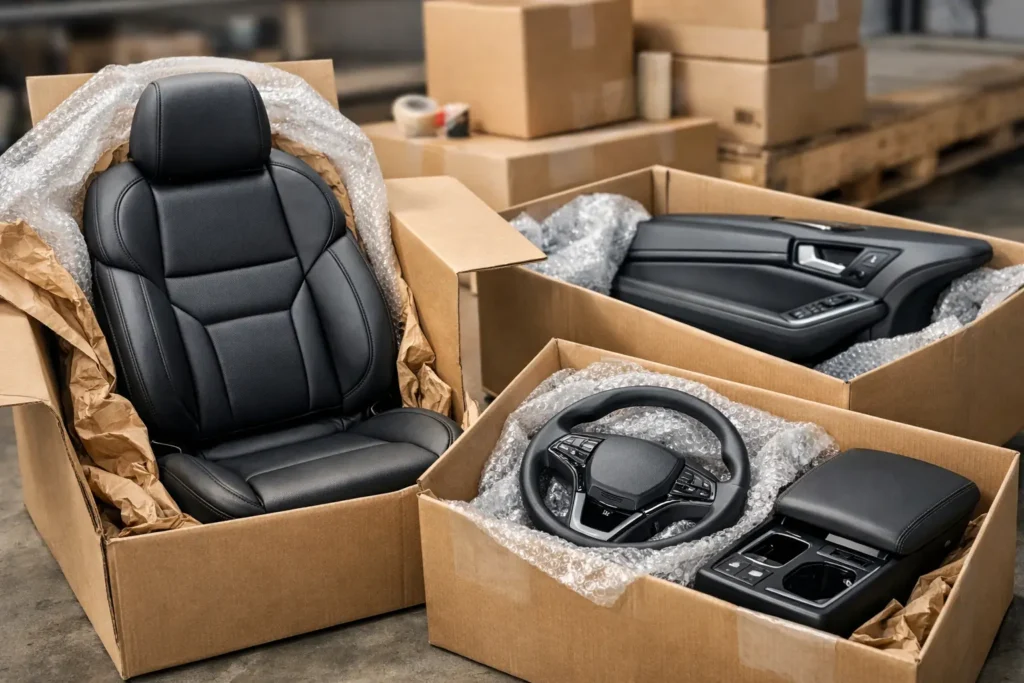
A steering wheel with cracked leather, a faded woodgrain dash panel, or a console with peeling finish can make an otherwise exceptional vehicle feel worn out. Sending that original part to a specialist is often the right move, but only if it reaches the shop in the same condition it left your hands. This guide to shipping car interior parts covers the preparation and packing details that protect valuable interior components during transit.
The goal is not simply to get a box from point A to point B. It is to prevent pressure marks, broken mounting tabs, bent trim, moisture damage, and avoidable disputes over condition. A few careful steps before shipment can protect an irreplaceable factory part and help the restoration process begin without delays.
Start With Documentation, Not Packing
Before removing or boxing anything, photograph the part from every angle. Capture close-ups of existing cracks, scratches, missing clips, damaged mounting points, peeling material, and electrical connectors. Take one photo that shows the entire part and several that clearly show its condition.
This documentation serves two purposes. First, it gives the restoration specialist an accurate picture of what is being sent and what work may be needed. Second, it establishes the part’s pre-shipment condition if a carrier claim becomes necessary. For rare steering wheels, vintage wood trim, and luxury-car components, this is especially worthwhile.
Include a written note inside the box with your name, return address, phone number, email address, vehicle year, make, and model, plus a clear description of the requested work. If you have selected a leather color, paint color, stitch pattern, woodgrain finish, or carbon fiber style, write that down as well. The outside shipping label can be damaged or separated from the package. Your contact details inside the box keep the part identifiable.
Remove Parts Carefully Before Shipping
Many shipping problems begin in the garage, not at the carrier counter. Avoid forcing trim panels, prying against visible surfaces, or pulling a component loose by its wiring. A small broken tab can turn a straightforward restoration into a repair that requires additional labor or replacement material.
Use proper trim tools where possible and place screws, bolts, clips, and small brackets in a labeled bag. If hardware belongs with a specific part, tape the sealed bag to a protected area of the component or place it in a clearly marked inner box. Do not let loose metal hardware ride around inside the main carton. It can gouge leather, chip paint, or crack fragile trim during shipment.
For steering wheels, remove the wheel only after following the correct service procedure for your vehicle. If the wheel includes controls, paddles, harnesses, or a clock spring-related component, protect those areas from bending and note what is included. When in doubt, send only the component requested for restoration, not unrelated electronics or hardware.
Never Ship Airbag Modules With Interior Parts
Airbag modules, seat belt pretensioners, and other pyrotechnic safety devices require special handling and may be subject to carrier restrictions. Do not place an airbag in the same box as a steering wheel or ship it as an ordinary interior part. Remove and retain it according to the vehicle’s proper service procedure, or have a qualified technician handle the removal.
The same caution applies to components with leaking batteries, damaged wiring, or fluid contamination. A restoration shop needs a clean, stable part to produce a factory-new finish and to safely return it to service.
Guide to Shipping Car Interior Parts: Build Protection in Layers
The best package uses multiple layers of protection rather than one oversized box filled with loose material. Start by cleaning off loose dirt and wiping the part dry. Do not apply fresh dressings, silicone products, or cleaners immediately before shipping, since residues can transfer to packaging or complicate refinishing work.
Wrap the component first with clean, non-abrasive material. Soft packing paper, foam sheeting, or a clean microfiber layer can prevent bubble wrap texture from pressing into soft leather or delicate painted surfaces. Then add a protective outer wrap of bubble wrap, securing it with tape only to the wrapping material, never directly to the part.
Use extra padding around high-risk areas: steering wheel spokes, trim corners, woodgrain edges, switch openings, mounting tabs, shifter bezels, and console lids. These are the points most likely to take an impact if the box is dropped. A steering wheel should be protected as a three-dimensional object, with padding around the rim, spokes, and hub, rather than laid flat with a single layer of bubble wrap.
Choose a new, rigid corrugated box whenever possible. Reused boxes can work for light, low-value parts, but they are a poor choice for vintage trim, large consoles, or heavy steering wheels. If the box has old creases, soft corners, torn flaps, or weakened tape seams, replace it.
The part should fit inside the carton with at least two to three inches of dense cushioning on every side. Once packed, gently shake the box. Nothing inside should shift, slide, or knock against the walls. If it moves, add more packing material before sealing it.
For especially valuable, unusually shaped, or fragile components, use a box-in-box method. Pack the wrapped part securely in a smaller inner carton, then suspend that carton inside a larger box with cushioning around all sides. This added protection is useful for thin dash trim, brittle classic plastic, and rare original wood pieces that cannot be easily replaced.
Choose the Right Box Size and Carrier Service
Bigger is not always better. An oversized carton creates empty space, which allows the part to build momentum when the package is handled. A too-small box leaves no room for impact protection. The right box is large enough for proper padding but compact enough to keep the part stable.
Select a carrier service with tracking and delivery confirmation. For a high-value interior component, consider signature confirmation and insurance that reflects the part’s realistic replacement value, not just the cost of the restoration. A discontinued steering wheel, original classic-car trim panel, or rare luxury component can be worth far more than a carrier’s default coverage.
Insurance is not a substitute for proper packaging. Claims can take time and may depend on proof of value, photos, and evidence that the package was packed correctly. Think of insurance as a final layer of financial protection, not permission to use less padding.
Clearly print the shipping and return addresses. Put a duplicate address label inside the package. Avoid writing vague descriptions such as “car parts” if a more accurate description is available. “Steering wheel for restoration” or “interior dash trim” helps identify the contents without overstating value or creating confusion.
Avoid These Common Packing Mistakes
The most frequent mistake is wrapping the part well but failing to immobilize it inside the carton. A beautifully bubble-wrapped steering wheel can still be damaged if it repeatedly strikes the box walls. The second is allowing metal fasteners, clips, or screws to contact finished surfaces.
Other avoidable mistakes include using newspaper directly against leather, applying tape to painted or woodgrain surfaces, shipping damp components, and reusing weak boxes. Do not rely on “Fragile” labels to do the work of cushioning. Labels can help communicate care, but a package must withstand ordinary sorting and handling on its own.
If you are shipping a large console, dash piece, or armrest, pay close attention to unsupported panels. Foam blocks or carefully formed cardboard braces can keep a broad plastic component from flexing. Excessive flexing is how old plastic develops new cracks in transit.
What to Send With a Restoration Part
Send the main component, necessary attached pieces, and any hardware essential to reassembly. Keep original keys, personal items, garage remotes, toll tags, loose electronics, and unrelated accessories at home. If an item is not needed to restore, refinish, reupholster, or color-match the part, it is usually safer not to send it.
For color-sensitive work, a removable sample can be valuable when available. A small trim piece, a clean swatch, or a clearly identified reference component may help achieve a closer match. Discuss special matching needs before shipment, particularly when working with aged leather, faded interiors, custom colors, or factory woodgrain finishes that vary from vehicle to vehicle.
At Craft Customs, careful packaging helps protect the original components our technicians restore by hand. It also allows us to focus immediately on the details that matter: leather texture, stitching, grain direction, finish depth, paint match, and the clean fit of every completed piece.
Before handing the box to the carrier, take a final photo of the sealed package and save the tracking number. Then give the shipment the same care you would give the restoration itself. The right packing job protects more than a part – it protects the originality, feel, and value of the vehicle you are bringing back to life.