
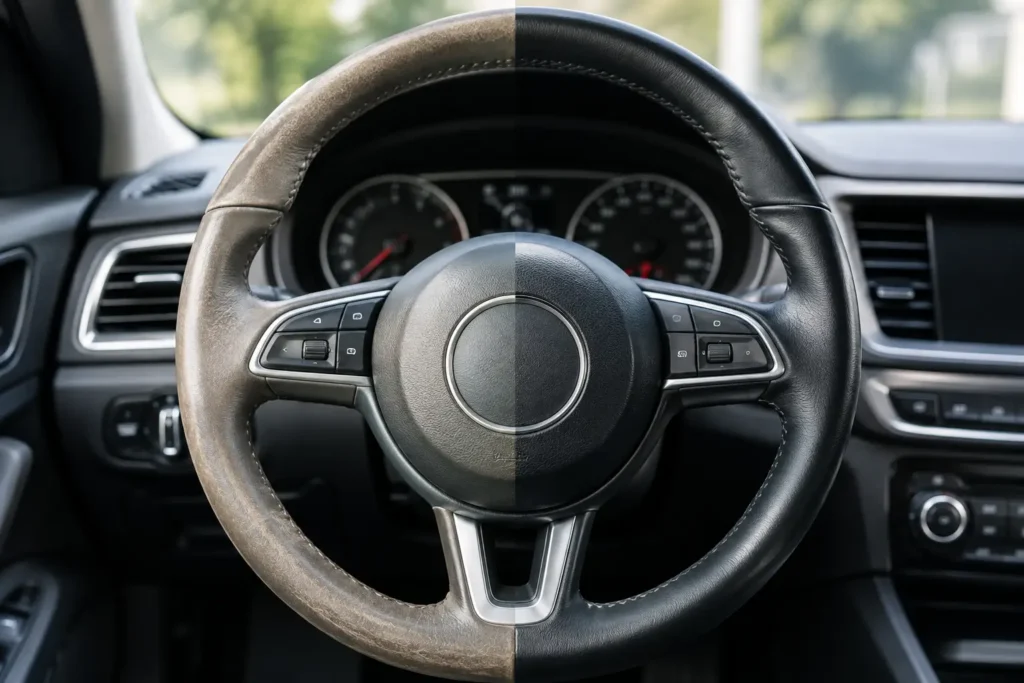
A steering wheel can make a well-kept vehicle feel neglected long before anything mechanical needs attention. The rim is where hands, skin oils, sunlight, rings, and daily driving leave their mark. Leather wheel recoloring is often the right answer when the original leather is still structurally sound but the finish has faded, worn through, become shiny, or no longer matches the rest of the interior.
Done properly, recoloring restores the wheel’s original character without adding the thickness or changing the grip of a replacement cover. Done poorly, it can leave a wheel stiff, overly glossy, mismatched, or prone to peeling. The difference comes down to assessing the leather honestly, preparing it correctly, and using a finish system designed for automotive use.
What Leather Wheel Recoloring Can Fix
Most steering wheels do not fail all at once. The damage usually starts at the high-contact areas: the upper rim, the 9 and 3 o’clock positions, and the lower section where a driver rests a hand. Black leather may turn gray or brownish. Tan and gray wheels may develop dark, shiny patches. Light-colored wheels can collect dye transfer from denim, makeup, sunscreen, or dirty hands.
Recoloring is designed to address surface-level wear. It can correct fading, discoloration, light scuffs, uneven sheen, minor abrasion, and old repairs that no longer blend with the rest of the wheel. It is also an effective way to refresh an outdated interior color when the owner wants a subtle custom change without replacing the original wheel.
The strongest candidates are wheels with leather that remains supple and firmly attached to the underlying frame. If the grain is visible, the seams are intact, and the leather has not stretched or split, a professional refinishing process can produce a major visual improvement while preserving the factory wheel.
When Recoloring Is Not Enough
Color cannot repair missing material. If leather has deep cracks, torn seams, large worn-through sections, severe shrinkage, or loose padding beneath the wrap, the wheel needs more than a new finish. In those cases, leather repair or complete reupholstery is the more durable choice.
A common mistake is treating every cracked wheel as a dye job. Fine surface cracking may be repairable if the damage is limited to the old coating. But cracks that run through the leather itself will continue to move as the wheel flexes. Covering them with color may improve the appearance briefly, but it will not create a lasting restoration.
The same applies to steering wheels with damaged foam, warped wood sections, broken spokes, or failing trim components. A proper restoration should address the part as a whole, not hide the most visible symptom. That is especially important on collector vehicles, luxury models, and performance cars where an incorrect repair can hurt both appearance and value.
The Professional Leather Wheel Recoloring Process
Cleaning Comes Before Color
A steering wheel absorbs years of contamination. Body oils, conditioners, silicone dressings, hand lotion, and residue from previous repairs can all interfere with adhesion. The surface must be thoroughly cleaned and decontaminated before any sanding, repair, or color work begins.
This is why a wheel that looks clean can still require extensive preparation. If contamination remains in the grain, new color may fish-eye, dry unevenly, or separate from the leather over time. Professional work starts by removing what is on the wheel, not simply applying color over it.
Surface Prep Determines Durability
After cleaning, the worn finish is carefully leveled to remove gloss, loose coating, and rough transitions around damaged areas. Minor scuffs and shallow abrasions can be repaired and blended so they do not show through the new finish.
The goal is not to aggressively sand away healthy leather. Automotive leather is thin, especially on older steering wheels. Skilled preparation preserves as much original material as possible while creating the proper surface for the new coating to bond.
Color Matching Is More Than Picking a Name
Factory interior colors vary more than most owners expect. A color labeled black may have a warm brown cast, a blue undertone, or a low-sheen charcoal appearance. Beige, gray, red, and saddle interiors can vary by model year, trim package, sun exposure, and the age of surrounding materials.
The best result comes from matching the actual vehicle component, not relying only on a color name. A quality restoration also accounts for sheen. A correct color with the wrong gloss level can make a wheel look just as out of place as an incorrect dye match. Most factory wheels have a controlled satin appearance, not a wet shine and not a chalky matte finish.
Flexible Color and Protective Finish
Automotive leather colorants are applied in controlled, thin layers to build even coverage without burying the grain. The leather should still look and feel like leather afterward. Thick coatings may hide flaws at first, but they can create an artificial texture and are more likely to crack under constant hand contact.
A compatible protective topcoat helps resist abrasion, oils, UV exposure, and routine cleaning. It also establishes the final feel of the wheel. The right finish should be smooth and durable without making the rim slippery or plastic-like.
What Affects the Final Result
The age and condition of the original leather matter, but so does the intended use of the vehicle. A weekend-driven classic stored indoors faces a different environment than a daily-driven truck parked outside year-round. Recolored leather can hold up extremely well, but no finish is immune to neglected maintenance, harsh cleaners, or repeated contact with abrasive jewelry.
Color also affects the process. Moving from a dark wheel to a lighter shade generally requires more correction and more careful coverage than refreshing a faded black or charcoal rim. Bright custom colors require precision because even small inconsistencies are easy to see. For owners seeking a factory restoration, retaining the original color is usually the most straightforward path to an authentic result.
The condition of adjacent components should be considered too. Recoloring a steering wheel to factory-new condition can make a faded shift boot, armrest, console lid, or dash trim stand out immediately. That is not a reason to avoid restoring the wheel. It is simply a reason to plan the interior as a coordinated project when needed.
Recoloring Versus Reupholstering a Steering Wheel
Recoloring keeps the original leather in place. It is the preferred option when the leather is healthy and the owner wants to preserve factory stitching, original contours, and the stock feel in hand. It is particularly valuable for rare wheels where replacement parts are difficult to find or where originality matters.
Reupholstery replaces the leather wrap. It is better suited to wheels with serious cracking, torn leather, damaged seams, or a customer who wants a significant material change. New leather, perforated sections, contrasting stitching, suede, Alcantara-style material, and thicker performance grips are all possible with a full rewrap.
Neither option is automatically better. A sound factory leather wheel often deserves restoration rather than replacement. A badly deteriorated wheel deserves a new wrap rather than a cosmetic fix that cannot last. The right choice depends on what is underneath the worn finish.
Why DIY Wheel Dye Jobs Often Disappoint
Consumer repair kits can improve a small scuff, but complete wheel recoloring is less forgiving than it appears. Steering wheels are handled constantly, so weak prep and incompatible products are exposed quickly. Peeling near thumb grips, uneven color around stitching, a sticky feel, and excessive gloss are common signs that the process was rushed.
Masking is another challenge. Modern wheels may include airbags, switches, trim bezels, paddle shifters, heating elements, and delicate stitching. Removing or protecting these pieces without causing damage requires care. On an older wheel, the challenge may be preserving aged leather and fragile original materials.
For owners who want factory-level color, texture, and durability, a specialist process is usually the better value. Craft Customs performs steering wheel restoration and interior refinishing in-house, allowing the work to be evaluated, color-matched, refinished, and inspected as a complete component rather than treated as a quick cosmetic repair.
Caring for a Recolored Steering Wheel
Once restored, keep maintenance simple. Use a clean microfiber towel and a leather-safe cleaner when needed, rather than heavy dressings or high-shine protectants. Avoid household cleaners, solvent-based products, and aggressive scrubbing. These can strip protective finish layers or leave residue that attracts more dirt.
Clean hands make a real difference. Sunscreen, hand sanitizer, lotion, and oils build up quickly on a steering wheel, especially in warm climates. Wiping the wheel down periodically prevents that buildup from becoming embedded in the grain. If the vehicle sits outdoors, a windshield shade also reduces heat and UV stress on the entire interior.
A properly recolored wheel should not call attention to itself as a repair. It should make every drive feel like the interior finally matches the condition and value of the vehicle around it.