
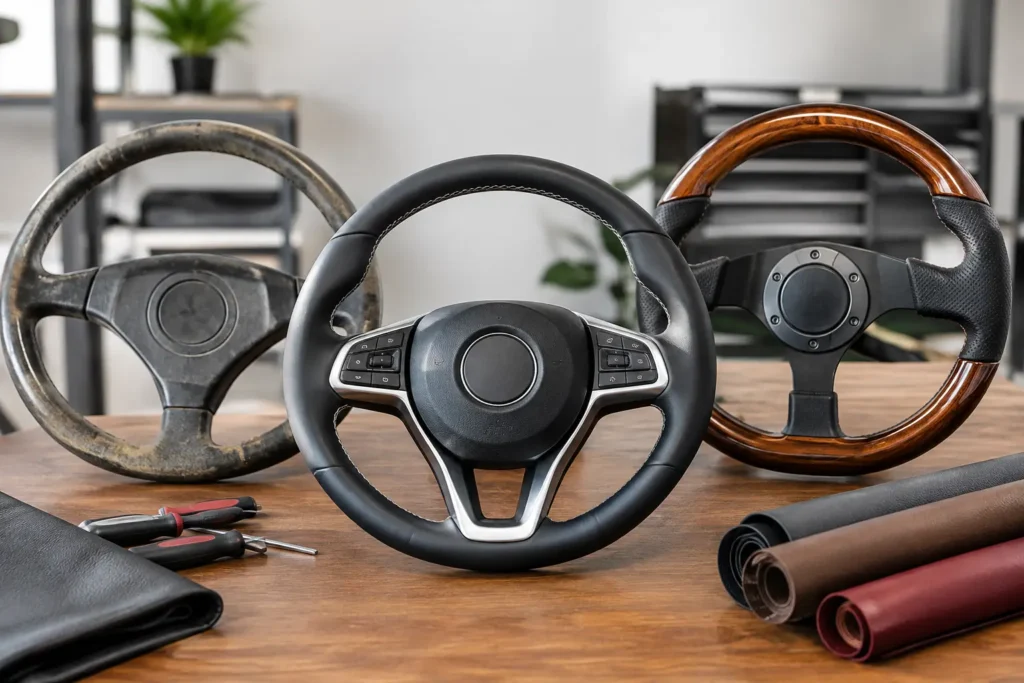
A worn steering wheel can make a well-kept vehicle feel neglected every time you drive it. Cracked leather, a sticky factory coating, faded wood, loose stitching, or peeling finish sits directly in your hands and stays impossible to ignore. For collectors, luxury owners, and anyone restoring a vehicle properly, steering wheels deserve the same level of attention as paint, seats, and trim.
The right solution depends on the wheel’s construction, its current condition, and what you want the finished interior to say. Some wheels need careful factory-correct restoration. Others are ideal candidates for upgraded leather, suede grips, refinished woodgrain, color-matched stitching, or carbon fiber. The best work preserves the wheel’s fit, safety features, and original character while making the driving experience feel new again.
When Steering Wheels Need Professional Attention
Wear usually begins where hands naturally rest at the top and sides of the rim. Body oils, heat, UV exposure, hand sanitizer, cleaning chemicals, rings, and years of friction gradually break down leather and factory coatings. On modern vehicles, the surface may become shiny, slick, sticky, or visibly worn through. On older vehicles, leather may shrink and split, while woodgrain may crack, cloud, or lose its clear finish.
Not every flaw calls for the same repair. A small scuff on a painted spoke may be correctable with precise refinishing. A leather rim that is cracked across multiple sections generally needs to be stripped and rewrapped, not covered with a universal slip-on cover. Wood that has lifted, separated, or developed deep cracks needs restoration at the substrate level before new color and clear coats are applied.
A professional assessment also matters because many late-model wheels contain airbags, buttons, heating elements, paddle shifters, vibration motors, or driver-assistance controls. A quality restoration should respect every mounting point, opening, seam, and contour. The goal is not simply to make the wheel look better in a photo. It should feel right in the hands and reinstall correctly in the vehicle.
Restore or Customize Your Steering Wheel?
Factory-style restoration is the right path when originality matters most. This is especially true for classic cars, rare trims, collector vehicles, and luxury models where a mismatched grain, incorrect wood tone, or non-original stitch pattern can reduce the authenticity of the interior. Accurate restoration focuses on matching the original material type, color, sheen, texture, and overall profile as closely as possible.
Customization makes sense when the factory wheel is structurally sound but no longer fits the owner’s vision. A black leather wheel can be rewrapped in a richer automotive hide with contrast stitching. A performance build may benefit from Alcantara-style suede at the grip zones. Wood sections can be refinished in a deeper tone, a high-gloss finish, or a color that ties into custom dash trim. Carbon fiber conversion can give a modern performance-oriented cabin a more technical, tailored appearance.
The trade-off is straightforward. Factory-correct restoration tends to protect originality and broad resale appeal. Custom work creates a more personal cabin and can elevate a vehicle that is already being built around a specific color scheme or performance theme. Neither approach is automatically better. It depends on whether the vehicle is being preserved, shown, driven daily, or built to stand apart.
Leather Rewrapping: The Most Common Transformation
Leather rewrapping is often the most dramatic improvement available for an aging wheel. Proper work begins by removing failed material and preparing the underlying rim. New automotive leather is then cut, fitted, and hand-stitched to follow the wheel’s original shape. The quality of that fit is what separates a true rewrap from a bulky cover that shifts, wrinkles, or feels oversized.
Material selection affects both appearance and durability. Smooth leather offers a clean, refined factory look. Perforated leather adds visual detail and can provide a slightly different grip. Suede and Alcantara-style materials create a motorsport feel but require more deliberate care, particularly on a daily-driven vehicle. Lighter colors can look exceptional in a coordinated interior, although darker shades generally hide everyday handling better.
Stitching is not a minor detail. Stitch color, stitch spacing, thread thickness, and seam location all influence whether the finished piece looks original, subtle, or intentionally custom. Matching the seat stitching can create a cohesive interior. A contrasting red, blue, or silver stitch can be effective in a performance car, but it should work with the rest of the cabin rather than become an isolated accent.
Woodgrain and Carbon Fiber Require Different Skills
Wood steering wheels and wood-trimmed wheels demand a different process than leather. The restorer must address cracks, failed clear coat, discoloration, and damaged veneer without losing the shape or visual flow of the original piece. Wood tone is particularly sensitive. A finish that is slightly too red, too dark, or too glossy can look out of place next to the dash and console.
Carbon fiber work requires the same attention to contour and finish. The visual appeal comes from clean material alignment, consistent weave presentation, properly finished edges, and a clear coat that complements surrounding trim. Gloss carbon fiber makes a strong statement and photographs well, while satin or matte finishes can better suit a restrained modern interior. Either option should be chosen with the dash trim, console, and door accents in mind.
What Quality Steering Wheel Restoration Should Include
A steering wheel is a high-touch component, so durability matters as much as color. The finished surface should resist normal use, feel secure in the hands, and retain a consistent appearance through changing temperatures. That requires suitable automotive materials, thorough surface preparation, accurate color work, and controlled finishing processes.
Look closely at the details when evaluating restoration work. Seams should follow the wheel evenly. Leather should sit tight around the rim without ripples or excessive thickness. Spoke transitions should be clean. Painted or dyed areas should have even coverage and correct sheen. Woodgrain and carbon fiber should not have obvious distortions, cloudy clear coat, or rough edges.
The process matters, too. A true specialist works from the original part rather than trying to make a generic replacement fit. This preserves the factory mounting design and gives the craftsperson the opportunity to match the wheel to the vehicle’s specific trim. For rare, vintage, high-end, and unusual applications, that level of part-specific work is often the difference between acceptable and exceptional.
Plan the Wheel as Part of the Whole Interior
The strongest interiors are coordinated rather than overdone. Before choosing materials, consider the seats, dash, console, armrest, shifter, e-brake handle, and door trim. A wheel rewrapped in black perforated leather with a colored stitch can look complete when the shifter boot and console accents repeat the same theme. A wood restoration becomes more convincing when the dash trim receives matching attention.
This is also where paint matching and dye work can make a major difference. A faded wheel is rarely the only tired component in an older interior. Restoring related touchpoints at the same time prevents the newly finished wheel from making every adjacent worn surface stand out. Craft Customs approaches these parts as a complete visual system, whether the goal is factory-new refinement or a fully tailored custom interior.
For send-in work, document the wheel before removal and protect it carefully for shipping. Include clear photos of the vehicle interior, especially if color matching or trim coordination is part of the project. If the wheel has controls, heated features, or special trim, identify those details upfront so the restoration plan accounts for every component.
A properly restored steering wheel changes more than the view from the driver’s seat. It restores confidence in the vehicle every time your hands meet the rim, and that is a detail worth getting right.