
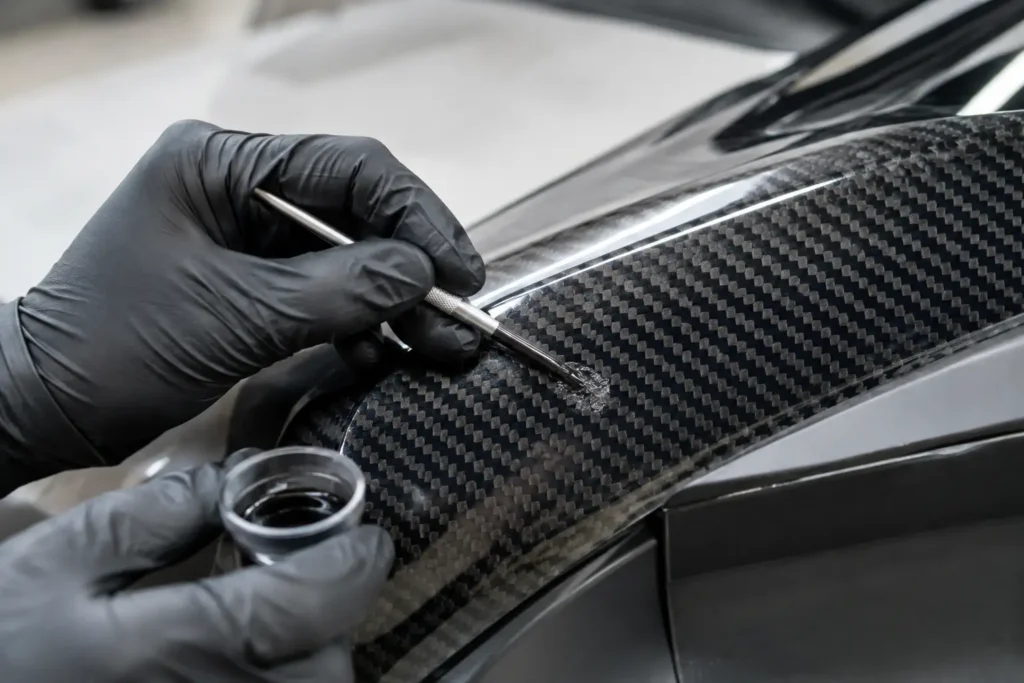
A cracked, cloudy, or peeling carbon fiber panel can make an otherwise well-kept cabin look neglected fast. The good news is that can carbon fiber trim be repaired is usually not a simple yes-or-no question. Many damaged pieces can be restored to a clean, high-end finish. The right repair depends on whether the damage is limited to the clear coat, affects the carbon weave itself, or involves a carbon-look finish rather than true carbon fiber.
For interior trim, a proper repair is about more than making the damage less visible. It needs to look consistent under direct sun, match adjacent pieces, feel smooth to the touch, and hold up to daily use. That takes careful material identification, controlled refinishing, and realistic judgment about when a part is a good restoration candidate.
Can Carbon Fiber Trim Be Repaired Without Replacement?
Yes, carbon fiber trim can often be repaired without replacing the original part. Light surface scratches, faded clear coat, hazing, minor chips, and peeling protective finishes are commonly repairable. A specialist can level damaged coatings, repair small imperfections, re-clear the piece, and polish it to the appropriate gloss level.
The answer changes when the actual carbon structure is damaged. Deep gouges that cut through the resin and weave, delamination, crushed corners, or broken mounting tabs may require structural composite work. Those repairs can be possible, but they are more involved, and the finished appearance may not be indistinguishable from an untouched panel when the weave has been disrupted.
Interior trim is usually more forgiving than exterior carbon fiber because it does not carry aerodynamic or structural loads. Still, trim parts often have thin edges, complex curves, molded tabs, and factory finishes that need a precise approach. A repair that looks acceptable on a flat panel can look poor around a shifter surround, steering wheel insert, dashboard strip, or door trim if the gloss, weave alignment, or color tone is inconsistent.
First, Identify What You Actually Have
Not every black woven-looking interior panel is real carbon fiber. This distinction matters because the repair process is different.
Genuine carbon fiber trim has a woven fabric embedded in resin and protected by a clear finish. Depending on the vehicle and manufacturer, it may be a full composite piece, a carbon veneer over a molded substrate, or a thin carbon skin bonded to plastic. Surface refinishing is often effective as long as the weave and resin below remain stable.
Carbon-look trim may instead be printed plastic, hydro-dipped film, vinyl, or a decorative laminate. These finishes can be repaired or refinished in some cases, but sanding aggressively can erase the pattern altogether. Peeling film, lifting edges, or damaged printed graphics may call for stripping and applying a new finish rather than trying to spot-repair the original surface.
A close inspection usually reveals the difference. Real carbon fiber has depth beneath the clear coat and a consistent woven pattern that follows the part. Printed or dipped trim can appear flatter, may repeat its pattern, and can show film edges or peeling around corners. If there is any doubt, the part should be evaluated before work begins.
Damage That Usually Responds Well to Refinishing
Clear-coated carbon fiber commonly develops fine scratches from cleaning, jewelry, keys, fingernails, or routine use. It can also become dull or hazy from ultraviolet exposure, harsh cleaners, or failed factory clear coat. These issues are often surface-level and can be corrected through careful sanding, polishing, and refinishing.
Small stone-like chips and shallow nicks can also be filled and leveled if they have not damaged much of the weave. The key is avoiding a visible low spot or a repair that catches light differently than the surrounding area. On a gloss carbon panel, even a minor contour change can be obvious from the driver’s seat.
Peeling clear coat is another common issue, especially on older performance and luxury interiors exposed to heat. Once the clear begins separating, polishing will not solve it. The failed coating needs to be removed correctly, the underlying surface stabilized, and the part refinished with a durable automotive-grade clear coat.
When the work is done properly, repaired trim can regain the deep, wet-looking finish owners expect from carbon fiber. The panel should look intentional, not merely covered up.
When Carbon Fiber Trim Repairs Have Limits
A damaged weave is the biggest visual challenge. If a scratch has cut through the resin and severed or frayed fibers, the pattern may no longer reflect light evenly. Resin can fill the damage and protect the area, but it cannot recreate the original woven strands perfectly without more extensive composite restoration.
Delamination is another concern. This happens when layers of composite material begin to separate, sometimes after heat exposure, impact, moisture intrusion, or a failed bond between the carbon skin and its backing. A loose or bubbling surface should not simply be coated over. The underlying adhesion issue must be addressed first, or the new finish can fail with it.
Broken tabs, cracked mounting points, and warped substrates are repairable in certain situations, but durability should drive the decision. A trim piece that looks good on a workbench but cannot withstand installation is not a successful restoration. For rare, discontinued, or expensive OEM panels, careful tab repair may be worthwhile. For readily available parts, replacement can sometimes be the more reliable value.
Why DIY Repairs Often Leave a Visible Result
Carbon fiber looks simple from a distance, but its finish exposes mistakes. Sanding through the clear coat too far can cut into the resin or weave. Hand-applied coatings can leave texture, fisheyes, dry spray, uneven gloss, or dust trapped in the finish. A mismatched clear coat can also make one panel look noticeably different from the rest of the interior.
Heat is another risk. Carbon fiber itself tolerates high temperatures, but the adhesives, plastic substrates, decorative layers, and factory bonding methods used in interior parts may not. Using heat to force a film down, speed curing, or reshape a panel can warp the piece or loosen bonded sections.
Spot repairs are particularly difficult on glossy trim. A small repair may be physically sound yet remain visible because the edge of the blend reflects light differently. In many cases, refinishing the complete visible face of the part produces a cleaner and more durable outcome than attempting to disguise one tiny section.
The Professional Repair Process
A proper carbon fiber trim restoration starts with inspection. The technician determines whether the panel is genuine carbon fiber, a carbon veneer, or a decorative carbon-look finish. They also check the backside for broken tabs, warped plastic, prior repairs, adhesive failure, and areas where the finish may be lifting.
Next comes controlled surface preparation. Failed clear coat, oxidation, scratches, and damaged material are removed only as far as necessary. Deep defects may be filled and leveled, while damaged edges and mounting points are addressed before the cosmetic finish is applied.
The panel is then refinished to suit the desired look. High-gloss carbon fiber is the familiar factory performance appearance, but satin and matte finishes can be the better choice for a modern, low-reflection cabin. The finish should be durable, even across the entire face, and compatible with the part’s material and use.
After curing, the piece is inspected for clarity, smoothness, color consistency, and fit. This is especially critical when several trim panels are being restored together. Carbon fiber on a dash, console, doors, and steering wheel should read as one coordinated interior, not a collection of slightly different finishes.
Repair, Refinish, or Convert the Look?
Owners do not always need to preserve the original carbon fiber appearance. If the base trim is sound but the finish is tired, refinishing may be enough. If a carbon-look panel is peeling or outdated, a new carbon fiber conversion, paint-matched finish, woodgrain restoration, or suede wrap can be a more compelling upgrade.
The best choice depends on the vehicle and the goal. A collector-grade car may benefit from preserving its original factory carbon fiber trim. A custom build may call for a darker weave, a different gloss level, or a coordinated interior treatment that ties the dash, console, and steering wheel together. A daily driver may simply need a durable finish that makes the cabin feel new again.
Craft Customs evaluates interior parts as complete components, not just surfaces. That means considering the finish, the substrate, the mounting points, and how the restored piece will look alongside the rest of your vehicle’s interior.
Before you replace a damaged trim panel, look closely at the type and extent of the damage. Original parts often have better fit, better grain or weave alignment, and more value than an aftermarket substitute. When the foundation is sound, skilled refinishing can give that original carbon fiber trim the crisp, premium appearance the rest of the vehicle deserves.