
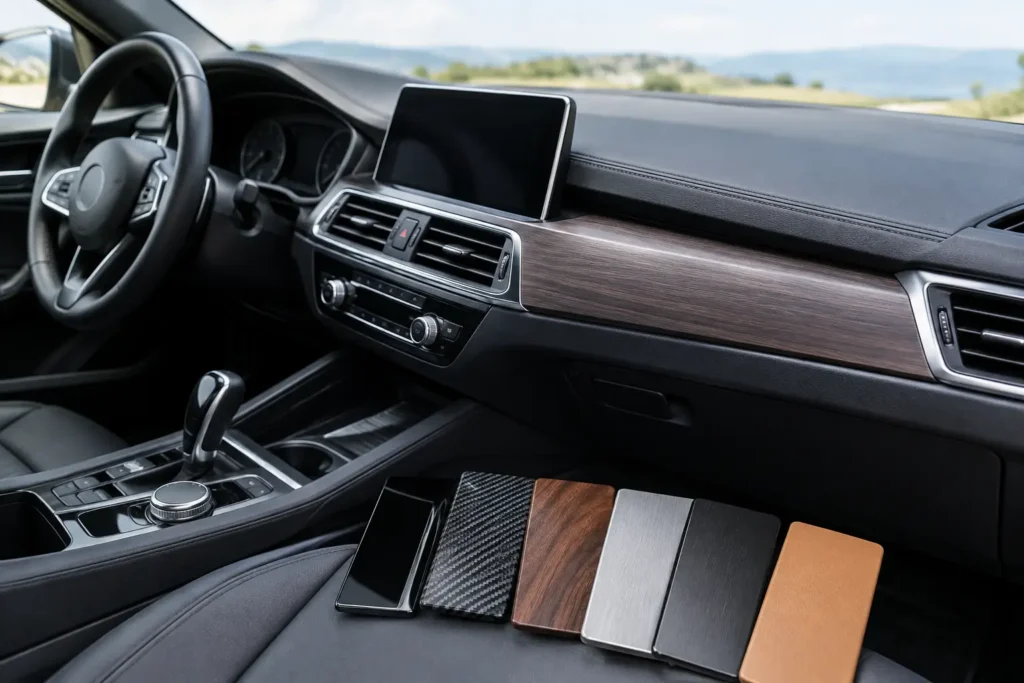
A dashboard can make an otherwise excellent vehicle feel neglected fast. Sun fading, peeling coating, sticky soft-touch surfaces, cracked vinyl, dated woodgrain, or mismatched trim all sit directly in the driver’s field of view. The right choice from the top custom dashboard finish options does more than cover damage. It restores the cabin’s visual balance, improves the way the interior feels every time you drive, and can protect the value of a vehicle that deserves better than a quick cosmetic fix.
For a classic restoration, the goal may be factory-correct grain, sheen, and color. For a modern luxury build, the best answer may be color-matched leather, real carbon fiber, or a satin-painted finish that ties the dash into the rest of the cabin. The material matters, but so do preparation, texture, UV stability, and how the new finish works with surrounding parts.
Start With the Dashboard’s Condition and Your Goal
A custom dashboard project should begin with an honest look at the original part. A dash with light fading may only need refinishing. A part with deep cracks, lifting vinyl, warped substrate material, or failed soft-touch coating may require repair work before any finish can last. Applying paint, dye, or upholstery over an unstable surface simply transfers the problem underneath the new appearance.
The desired result also changes the correct finish. Owners preserving a numbers-matching muscle car generally want original-style vinyl grain and a low-gloss factory appearance. An owner updating a newer performance car may prefer forged carbon accents, Alcantara-style suede, or paint matched to exterior details. Neither approach is automatically better. The best finish is the one that fits the vehicle, the way it is used, and the standard you expect when you open the door.
Top Custom Dashboard Finish Options Explained
Factory-style dyeing and refinishing
Professional dashboard dyeing is often the strongest option for vinyl, plastic, and certain coated interior surfaces that are faded, scuffed, or the wrong color. It preserves the original form and, when properly prepared, can preserve the original grain as well. This makes it especially valuable for classic vehicles and luxury interiors where replacement dash parts are unavailable, expensive, or no longer produced in the correct color.
The difference between a durable refinished dash and a short-lived result is surface preparation. Old dressings, oils, silicone residue, failing coatings, and embedded grime must be removed. Repairs need to be leveled and textured before color is applied. The finish then needs to be selected for the appropriate sheen. Most factory dashboards are not glossy, and too much shine can make a restored interior look incorrect while creating windshield glare.
Dyeing is ideal when you want a clean factory-new appearance or a coordinated color change without covering the dash in a different material. It is less suitable when the dashboard structure itself is badly distorted or when you want a dramatic texture change.
Color-matched interior paint
Painted dashboard trim gives custom builds a precise, controlled appearance. This option works particularly well for hard trim pieces, bezels, glovebox doors, console panels, vents, and accent sections around the main dashboard. A satin or matte finish can look understated and OEM-inspired, while a carefully matched body-color accent can create a more aggressive show-car look.
Paint matching is more complex than choosing a color from a chart. Interior colors shift over time, and adjacent materials reflect light differently. Black leather, black vinyl, and black plastic may all appear different in direct sun. A quality custom finish accounts for the vehicle’s existing materials and selects gloss level as carefully as color.
For daily drivers, satin and low-gloss finishes are usually practical choices because they hide minor dust and fingerprints better than high gloss. High-gloss painted trim can be striking, but it needs thoughtful placement. It tends to show fine scratches and may look out of place across a large dashboard surface.
Leather-wrapped dashboards
Leather brings warmth, tactile quality, and a premium appearance that molded plastic cannot duplicate. It is a natural fit for luxury vehicles, restomods, exotics, and custom builds where the steering wheel, console, armrest, and shift boot are also being upgraded. A leather dash can be executed in a factory-style color and grain or made more personal with contrast stitching, perforated sections, or carefully placed accent panels.
This finish is not only about appearance. Leather needs correct patterning, clean edge work, and proper tension around vents, seams, curves, and instrument openings. Poorly fitted material can bunch, lift at edges, or interfere with trim reinstallation. On vehicles with passenger-side airbags, the work also requires specific knowledge of the dash design and safety system. That is not a place for improvised upholstery work.
Leather is best for owners seeking a substantial upgrade in feel and presentation. It does require care and can be more sensitive to heat and neglect than painted plastic, especially in vehicles that spend years parked outdoors.
Suede and Alcantara-style wrapping
Suede and Alcantara-style materials give a dashboard a focused, performance-oriented character. They reduce reflected light on the windshield and pair naturally with sport seats, headliners, steering wheels, and door inserts. In black, charcoal, or dark gray, the look can be subtle. In a bold color, it becomes a deliberate centerpiece.
This option is popular in track-inspired builds, but it is not maintenance-free. Light colors can show marks, and the nap can change direction with contact. The material also demands careful wrapping around complex shapes to avoid visible seams or uneven tension. It is usually most effective when used across a dash top, gauge surround, or selected trim areas rather than everywhere at once.
Restored or custom woodgrain
Woodgrain trim can either elevate a cabin or make it look dated, depending on the vehicle and the execution. On classic luxury cars, vintage trucks, and certain European or Japanese platforms, properly restored woodgrain is part of the vehicle’s character. Refinishing faded, cracked, cloudy, or peeling wood trim can return depth and richness that plastic imitation pieces rarely achieve.
Custom woodgrain also offers room to tailor the interior. A darker stain may complement black leather. A lighter, warmer tone may suit tan upholstery. The clear finish must be even, durable, and appropriate for the amount of gloss the original design carried. Excessively shiny wood can look disconnected from a factory interior, while a dull finish can hide the grain that makes the material special.
Woodgrain makes the most sense where the vehicle’s design supports it. Adding it to a dashboard built around carbon-look plastics and sharp modern lines may feel forced. In the right cabin, though, it is one of the most value-forward restoration choices available.
Carbon fiber conversion and carbon-style finishes
Carbon fiber has become a favorite for performance builds because it adds technical texture without adding visual clutter. It works well on dashboard trim, gauge bezels, center stacks, console pieces, and door accents. Depending on the project, the finish may use genuine carbon fiber, hydrographic-style patterns, or a custom carbon conversion designed for the original part.
Genuine carbon offers real material depth and a distinctive weave, but it comes at a higher cost and needs careful fitment. Carbon-style finishes can provide a similar design direction at a more accessible level. The key is consistency. A dashboard with several carbon pieces should use matching weave direction, tint, and gloss level. Mixing a high-gloss blue-tinted pattern with dry-looking matte trim will make even quality parts look accidental.
For street-driven cars, satin or matte carbon is often easier to live with than a deep gloss finish. It reduces glare and makes small surface marks less obvious. Gloss carbon remains a strong choice for show vehicles and high-end cabins when the rest of the build supports it.
Details That Separate a Lasting Finish From a Temporary One
A dashboard is exposed to heat, UV light, skin oils, cleaning products, and repeated contact. That is why the visible finish is only the final stage of the job. Cracks need proper repair. Peeling soft-touch material must be removed or stabilized. Damaged texture needs to be recreated. Adhesion promoters, primers, color systems, and topcoats must suit the underlying substrate.
Color is equally important. A custom red dash may look impressive in isolation but overpower a cabin with stock beige seats and gray carpeting. Small sample areas, material swatches, and photos taken in natural light help prevent a choice that looks different once installed. For restoration work, matching original color, grain, and sheen is usually more valuable than choosing the flashiest option.
At Craft Customs, dashboard and trim work is approached as part of the entire interior, not as an isolated panel. That perspective helps ensure a refinished dash belongs with the steering wheel, console, door trim, and seats when everything is back in the vehicle.
Choosing the Right Finish for How You Drive
A concours-level classic benefits from factory-style refinishing or authentic wood restoration. A luxury daily driver often gains the most from leather, refined dye work, or satin-painted trim that will hold up to regular use. A performance build can support suede or carbon fiber, especially when those materials are repeated in the steering wheel and console.
Before choosing from the top custom dashboard finish options, look at the cabin as a complete environment. Consider sunlight, driving frequency, existing interior colors, cleaning habits, and whether originality or personalization matters more. A finish should still look right after the excitement of the first reveal fades. Choose the one that makes you want to sit behind the wheel years from now, not just take a photo on installation day.