
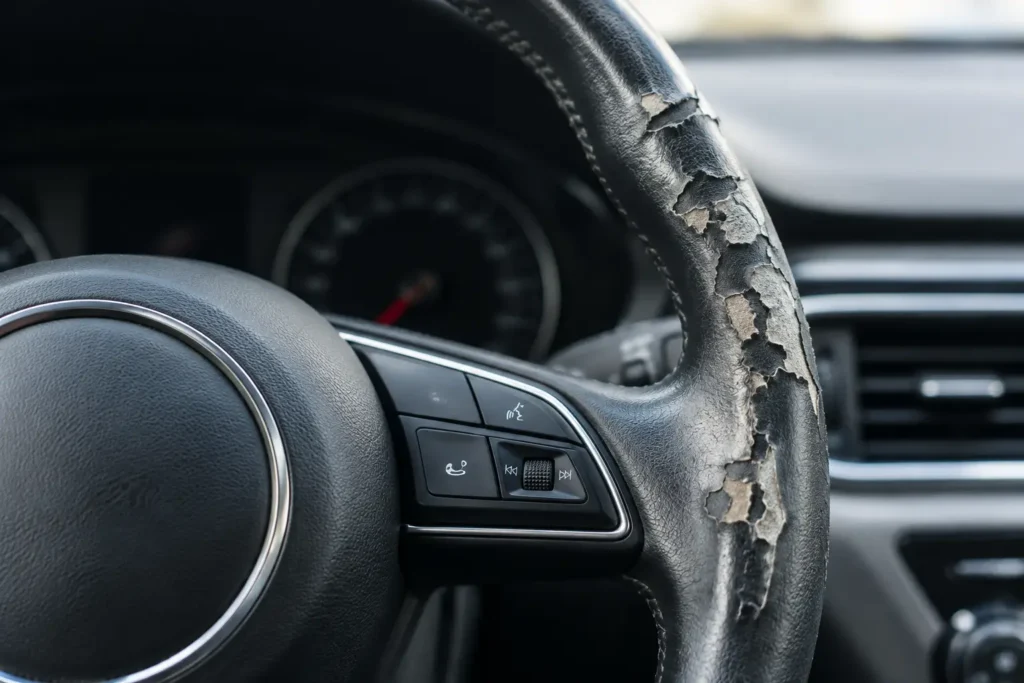
A steering wheel can make an otherwise clean, well-kept vehicle feel instantly tired. The surface flakes onto your hands, the color rubs away at the usual grip points, or a thin layer begins lifting around the spokes. So, what causes steering wheel leather peeling? In many cases, the material underneath is not actually peeling at all. What you are seeing is a failing factory coating, color layer, or previous repair that has lost its bond to the leather.
That distinction matters. A steering wheel is one of the most frequently touched parts of any interior, and it takes far more abuse than a seat panel or door insert. Properly identifying the failed layer is the difference between a short-lived cosmetic cover-up and a restoration that looks right, feels right, and holds up to daily use.
What Causes Steering Wheel Leather Peeling?
Most modern leather steering wheels are not simply bare, dyed hides. They are typically finished with pigments, protective topcoats, and texture coatings designed to create a uniform factory appearance. Those layers protect the leather from moisture, oils, abrasion, and ultraviolet exposure. Once the finish begins breaking down, it can crack, rub off, become sticky, or peel away in sheets.
The root cause is usually cumulative wear rather than one isolated event. Heat dries and stresses the finish. Skin oils and hand lotion soften or contaminate it. Aggressive cleaners strip protection. Constant friction at the 10 o’clock and 2 o’clock positions wears through the surface. Add a previous low-quality repair, and the coating may fail long before the leather itself reaches the end of its usable life.
Heat and UV exposure
Sunlight is hard on every interior material, but steering wheels receive a concentrated dose. A vehicle parked outdoors or sitting near a windshield for years experiences repeated heat cycles that expand and contract the finish. Over time, that movement can make coatings brittle and reduce adhesion.
High cabin temperatures also accelerate the breakdown of oils, conditioners, and cleaning residues left on the wheel. This is why peeling often appears worse on vehicles driven in hot climates, even when the owner takes reasonable care of the interior. A windshield shade and covered parking help, but they cannot reverse a finish that has already begun separating.
Skin oils, sweat, sunscreen, and lotions
Your hands leave more behind than most people realize. Natural skin oils, sweat, hand sanitizer, sunscreen, lotion, hair products, and food residue all transfer to the steering wheel. Over thousands of drives, these contaminants work into the protective topcoat.
The damage is often most obvious where the driver naturally grips the wheel. The finish may turn shiny first, then become smooth, sticky, discolored, or worn through. Once the protective barrier is compromised, moisture and oils can reach deeper layers and cause the color coating to release.
This does not mean you need to treat your steering wheel like a museum piece. It means regular, gentle cleaning is more effective than occasional heavy scrubbing after years of buildup.
Harsh cleaners and the wrong conditioning products
One of the fastest ways to damage a leather steering wheel is using a cleaner that is too strong for automotive leather finishes. Household degreasers, bleach-based products, alcohol-heavy cleaners, harsh disinfectants, and abrasive detailing brushes can strip the protective coating or leave it dry and vulnerable.
Even products marketed for leather can be the wrong choice if they are overly oily, waxy, or intended for unfinished furniture or work boots. Automotive steering-wheel leather needs a clean, non-slippery finish. Heavy conditioners may leave residue that attracts dirt, affects grip, and interferes with coating adhesion during future repair.
A mild interior leather cleaner applied to a soft microfiber towel is usually the safer approach. Spray the towel rather than soaking the wheel, clean lightly, and avoid saturating seams or perforations. If the surface is already flaking, stop scrubbing. Cleaning will not reattach a failed finish, and aggressive effort can enlarge the damaged area.
Friction and daily driving wear
A steering wheel is constantly subjected to abrasion. Rings, watches, fingernails, rough work gloves, and even a driver’s normal hand position gradually wear down the factory finish. Performance cars, trucks, commuter vehicles, and rideshare vehicles can all show accelerated wear for different reasons, but the common factor is repeated contact.
Leather can also wear unevenly because the driver has a dominant hand or rests a thumb in the same location. That is why one section may look faded or peeled while the rest of the wheel still appears acceptable. Spot repairs can sometimes improve isolated damage, but they may not match the surrounding grain, sheen, or color well enough for a premium interior. When the wheel has widespread wear, a complete reupholstery or professional refinishing process generally produces the more convincing result.
Low-quality prior repairs
Not every peeling wheel has a factory failure. Many have been repaired before with inexpensive dye kits, spray coatings, or products that were applied over contamination and inadequate surface preparation. The repair may look good briefly, then lift, crack, or rub off when exposed to normal hand oils and friction.
Proper leather refinishing is preparation-intensive. The damaged coating must be assessed and stabilized. Contamination must be removed. The surface needs correct sanding and adhesion procedures, followed by flexible color and protective coatings matched to the wheel’s original look. When leather is severely cracked, stretched, hardened, or missing, refinishing alone may not be the durable answer. Reupholstery is often the correct repair.
Is It Really Leather That Is Peeling?
This is one of the most useful questions to ask before choosing a repair. Genuine leather generally does not peel in thin, paint-like flakes the way a finished coating does. It may dry out, crack, lose color, become rough, or wear through, but sheet-like peeling often points to a failed surface layer.
Synthetic leather, vinyl, polyurethane wraps, and some lower-grade bonded materials can peel more dramatically because their top layer separates from the backing. These materials are common in some vehicles and aftermarket wheel covers. Their repair options differ from genuine leather, and a professional should identify the substrate before recommending a process.
There are also steering wheels with wood, carbon fiber, painted trim, suede, or mixed-material sections. A peeling area near the spokes may be a failing trim coating rather than leather damage. The right restoration plan depends on the exact material and how the original part was constructed.
When Cleaning and Conditioning Are Enough
If the wheel is merely dull, lightly dirty, or slightly dry, careful maintenance may improve its appearance. Clean it with an appropriate automotive leather cleaner, wipe it dry, and use a light, non-greasy protectant only if it is suitable for coated automotive leather.
But maintenance cannot repair material that is actively lifting, cracking deeply, or exposing the leather beneath. Once the coating has failed, adding conditioner can make the wheel look temporarily darker while doing nothing to restore its durability. In some cases, it can make a later refinishing job more difficult by adding more contamination to remove.
A simple rule applies: if color comes off on your towel, flakes collect in your lap, or the wheel feels tacky after cleaning, it is time to move beyond at-home products.
Choosing the Right Steering Wheel Repair
The best repair depends on the wheel’s condition, its original material, and the level of finish you expect. Minor surface wear may be a candidate for professional refinishing. Leather with major cracking, torn seams, missing sections, or years of heavy wear usually benefits from being reupholstered in new automotive-grade leather.
For classic, luxury, exotic, and collector vehicles, accuracy matters just as much as durability. Grain pattern, stitching style, thread color, perforation layout, thumb grips, and factory sheen all affect whether the finished wheel looks correct in the cabin. Custom work adds another layer of choice, from color-matched leather and Alcantara-style suede to carbon fiber conversion and contrasting stitch details.
At Craft Customs, steering wheel restoration is handled as a component-level craft, not a quick coating job. The goal is to return a worn original wheel with a finish that belongs in the vehicle, whether that means factory-correct leather or a fully customized interior upgrade.
The best time to address peeling is before the damaged surface spreads across the wheel. Remove the temptation to hide it with a bulky cover, protect the original part, and choose a repair method that matches the vehicle you plan to keep driving, showing, or preserving.