
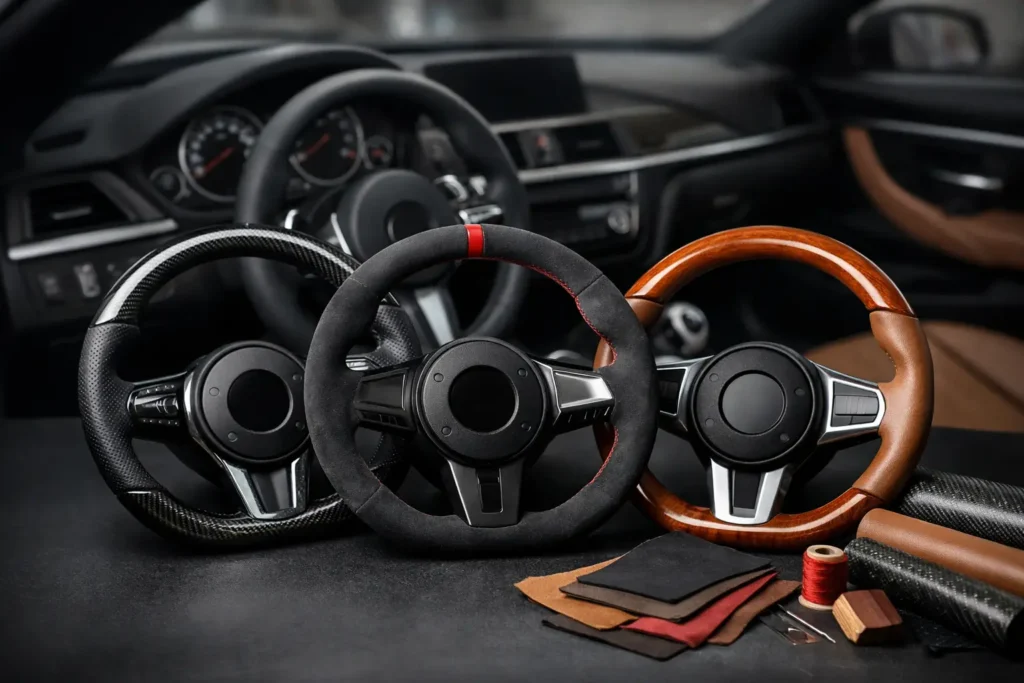
A steering wheel is the one interior part you see, hold, and judge on every drive. That is why a guide to custom steering wheel materials should start with more than appearance. The right material needs to match the vehicle, the way it is driven, the climate it lives in, and the level of originality or customization you want to achieve.
A cracked leather rim can make an otherwise clean luxury car feel neglected. Faded wood can take years off a classic. A glossy carbon fiber conversion may look right at home in a modern performance build but out of place in a period-correct restoration. Material choice is where the finished result is decided long before the first stitch is sewn or the first coat of finish is applied.
A Guide to Custom Steering Wheel Materials That Fits the Vehicle
The best steering wheel material is not always the most expensive option. It is the option that feels correct in your hands and belongs in the cabin. A concours-oriented classic may call for restored wood and factory-style leather, while a track-driven sports car may benefit from grippy Alcantara with a leather top band for durability.
Start by deciding what matters most: factory-correct restoration, everyday comfort, performance grip, visual impact, or resale value. Those priorities can overlap, but they do not always point to the same finish. A wheel built to preserve originality should follow original grain, color, seam placement, and material transitions as closely as possible. A fully customized wheel has more freedom, but it still needs to work with the seats, dash, shift boot, console, and trim.
Leather: the benchmark for comfort and longevity
Automotive leather remains the most versatile choice for custom steering wheels. Quality leather has a substantial feel, warms up quickly in cold weather, and develops character without looking worn when it is properly finished and maintained. It is also the closest match for the majority of factory steering wheels in luxury, domestic, European, and classic vehicles.
The details make the difference. Smooth leather creates a refined factory appearance and is easy to clean. Perforated leather adds visual movement and can feel cooler in warm climates. Textured or embossed automotive leather offers more grip and hides minor handling marks better than a smooth finish. Different hides also vary in firmness, grain, and stretch, which affects how cleanly they wrap around spokes and finger contours.
Leather is a strong choice for a daily driver because it balances grip, comfort, durability, and resale appeal. It does need occasional care. Oils, sunscreen, hand lotion, and harsh cleaners can darken, dry, or wear down the finish over time. A professional reupholstery job addresses more than the surface material – it accounts for padding condition, stitch tension, spoke transitions, and the original wheel shape.
Alcantara and suede: maximum grip, higher maintenance
Alcantara and automotive-grade suede-style materials give a steering wheel a distinctly performance-focused feel. They are soft, low-glare, and exceptionally secure in the hands. For many drivers, especially those who enjoy spirited driving or track use, no other material provides the same tactile connection.
The trade-off is maintenance. These materials can show darkened contact areas from skin oils and become matted without routine cleaning. Light colors are particularly demanding. For a weekend car, performance build, or properly maintained show vehicle, that may be a worthwhile compromise. For a commuter that sees constant use, leather often offers a more practical long-term result.
Placement matters as much as the material itself. Full Alcantara works well in a dedicated performance interior. A mixed-material layout can be smarter for a road car, with Alcantara at the 9 and 3 o’clock grip areas and leather along the upper and lower rim. This preserves the look and grip drivers want while reducing wear in the highest-contact zones.
Wood: restoration accuracy with a custom finish
Wood steering wheels have a presence that modern materials cannot duplicate. They are especially fitting for vintage European cars, American classics, luxury sedans, and collector vehicles where the interior was designed around natural woodgrain. However, wood restoration is far more involved than applying a fresh clear coat.
Cracks, sun fading, loose grain, failed varnish, and previous repair work must be evaluated before refinishing begins. A proper restoration may require stripping damaged coatings, stabilizing the substrate, rebuilding missing areas, correcting color, recreating grain effects where appropriate, and applying a durable finish with the right depth and gloss.
Gloss level is a major decision. A high-gloss wood wheel creates a formal, period-rich look, but it can show scratches and fingerprints more readily. Satin finishes reduce glare and create a more understated custom appearance. Wood can also be combined with leather, creating a rim that retains classic style while improving comfort and control at the grip points.
Carbon fiber: a modern performance statement
Carbon fiber gives a steering wheel a technical, high-performance appearance that pairs naturally with modern sports cars, exotics, and custom builds. It can be finished in traditional black weave, tinted color, forged-style patterns, or paint-matched effects that coordinate with exterior accents or interior stitching.
The key question is whether the carbon fiber should look factory-inspired or intentionally custom. A subtle weave under a deep gloss can complement an OEM-plus interior. Bright tint, colored forged patterns, or contrasting stripe details make a stronger statement. Neither is wrong, but the rest of the cabin should support the choice.
Carbon fiber also has practical considerations. Gloss finishes offer depth and visual drama but can reflect sunlight. Satin or matte finishes are lower glare and often suit performance cabins better. The material must be applied and finished with careful attention to contours, seams, switch openings, airbag fitment, and any controls integrated into the wheel.
Material Combinations Create the Best Custom Results
Many of the best steering wheels are not made from one material. A leather and carbon fiber wheel can modernize a luxury sedan without making the interior feel overly modified. Wood and leather can preserve the spirit of a classic while making it more enjoyable to drive. Leather, perforated leather, and colored stitching can add depth without changing the original design language.
Contrast stitching is one of the most effective finishing details because it can tie the wheel to seat piping, seat belts, brake calipers, or exterior paint. It should be selected carefully. A subtle factory-style thread color generally ages better than a highly contrasting color used throughout an otherwise stock interior. Center stripes, colored thumb grips, and unique seam patterns can work well too, particularly when the vehicle already has a performance-oriented character.
When selecting combinations, consider visual weight. Dark materials can make a wheel feel smaller and more technical. Light leather can brighten a cabin but will require more care. Gloss wood and gloss carbon fiber draw the eye, so using both heavily in the same interior can become visually busy. A professional material plan keeps one finish as the focal point and lets the others support it.
Feel, Climate, and Daily Use Matter
A steering wheel is not a dash insert. It is a working surface, and the conditions of ownership matter. In hot regions, dark leather and glossy finishes can become uncomfortable after prolonged sun exposure. In cold climates, leather is generally more comfortable than exposed wood or carbon fiber at startup. Drivers who wear rings, work with their hands, or frequently get in and out of the vehicle should favor materials and finishes that tolerate regular contact.
Wheel thickness also changes the result. Fresh leather can restore a fuller, more confident grip to a wheel that has become thin from years of wear. Added padding may improve comfort for some drivers, but it should not erase the original wheel profile or interfere with ergonomic contours. On rare, collector-grade vehicles, preserving those original dimensions is often as important as restoring the material itself.
Why Professional Preparation Matters
Premium materials cannot compensate for poor preparation. The old covering must be removed without damaging the wheel frame, foam, spoke surfaces, trim, or control mounting points. Cracked substrates need proper repair. Old adhesive, degraded padding, damaged seams, and broken trim components need attention before the new material is installed.
This is also where color matching separates a general upholstery repair from a finished interior restoration. The new wheel should not merely look good on its own. It should coordinate with the existing seats, dash, console, door panels, and trim. Craft Customs works with extensive material and color options so owners can pursue a faithful factory look or a fully coordinated custom interior rather than settling for a close-but-not-quite match.
For vehicles with airbags, heating elements, paddle shifters, multifunction buttons, or unique trim pieces, precision is non-negotiable. Every seam, opening, and reassembled component must fit correctly and function as intended. A steering wheel should leave the shop looking transformed, not altered in a way that compromises its fit or usability.
The best choice is the one you will appreciate every time your hands meet the wheel. Choose the material that respects the car’s character, suits your driving habits, and gives the interior a finish worthy of the miles ahead.