
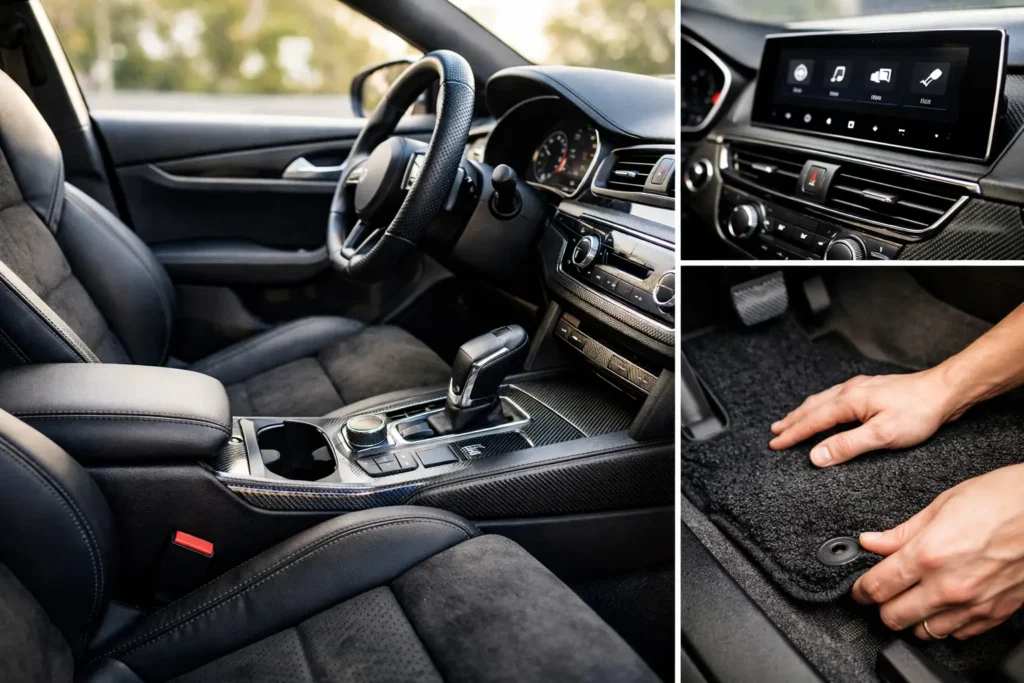
A car can run perfectly and still feel tired every time you open the door. A shiny exterior does little to offset a steering wheel that is slick, cracked, or peeling in your hands, faded dash trim, or an armrest worn through at the edges. The best upgrades for worn car interiors focus first on the components you see and touch most. Done properly, they make the cabin feel newer, more valuable, and far more enjoyable without replacing the vehicle itself.
The right order matters. Start with high-contact surfaces and prominent trim before spending money on small accessories. A professionally restored original part usually fits better, preserves more value, and looks more convincing than a generic replacement.
Start With the Steering Wheel
The steering wheel is the most transformative interior upgrade because it is always in view and always in your hands. Years of sunlight, hand oils, heat, rings, and cleaning chemicals can leave leather shiny, stiff, discolored, or split. On older vehicles, wood rims may crack, separate, or lose their original depth. Painted spokes can chip, and factory color accents can fade unevenly.
Reupholstering a worn wheel in quality automotive leather restores the grip and visual weight the interior had when new. For a restoration-minded owner, matching the factory leather grain, stitch pattern, thread color, and original wheel shape is usually the right move. For a custom build, a two-tone layout, contrasting stitching, perforated leather, Alcantara-style suede, or a thicker hand-shaped rim can make the cabin feel purpose-built.
There is a trade-off: not every custom steering wheel belongs in every vehicle. A bright contrast stitch or carbon fiber treatment can look excellent in a modern performance car but may undermine the authenticity of a survivor classic. The best choice supports the vehicle’s character and the way you plan to use it.
Preserve the Original Core When You Can
Original steering wheels often have details that replacement parts miss, including correct airbag fitment, spoke geometry, switch locations, and factory contours. Restoring the original core keeps those details intact. It can also protect the value of collector vehicles, where correct components matter as much as a clean finish.
For rare, discontinued, or high-end wheels, sending in the original component for professional restoration is often safer than searching for an unknown used replacement with its own hidden wear.
Restore the Dash and Interior Trim
Faded, peeling, scratched, or sticky trim can age an interior faster than worn seats. Dash bezels, console surrounds, door trim, vent rings, and decorative panels occupy a large part of the driver’s sightline. Once their finish breaks down, the whole cabin can look neglected.
The proper repair depends on the material and damage. Painted trim can be refinished and color-matched. Woodgrain can be restored to a deep, even finish rather than covered with a temporary overlay. Carbon fiber trim with damaged clear coat may need refinishing, while plain factory pieces can be converted to carbon fiber for a more technical look. Suede wrapping is another strong option for selected dash panels and pillars, particularly in sports cars and custom builds.
Avoid treating every surface the same way. A glossy carbon fiber console can look appropriate beside performance seats and metal pedals, but it may clash with a traditional wood-and-leather luxury interior. Likewise, a high-gloss finish can create glare on upper dash areas. Material choice should account for daylight, touch points, and the original cabin design.
Refinish the Console, Armrest, and Shifter Area
The center console is where daily use leaves the clearest record. Cup holders scratch, storage lids crack, armrests discolor, shift boots collapse, and e-brake handles lose their finish. These are small parts individually, but together they make a car feel used up.
A reupholstered armrest and matching shift boot can bring back a unified factory appearance. If the console itself is scratched or coated in deteriorating soft-touch material, refinishing it is generally a better long-term solution than hiding it under adhesive trim. Paint and dye work must be prepared correctly to hold up against hands, keys, beverages, and constant movement.
When choosing colors, match the original interior code whenever authenticity is the goal. If you are modernizing the cabin, repeat one accent color in no more than two or three places – for example, steering wheel stitching, shift boot stitching, and an armrest detail. Too many competing colors make even expensive materials look aftermarket.
Repair Leather Before It Reaches the Foam
Seat leather, door inserts, and armrests should be addressed when they first become dry, discolored, or lightly cracked. Once leather tears and the foam beneath it begins to break down, the repair becomes more involved and the finished result may require reshaping as well as reupholstery.
A careful recoloring or dye restoration can be a practical option when the leather remains structurally sound. Reupholstery is the stronger answer when seams have separated, panels are stretched, the surface is deeply cracked, or previous repairs have left mismatched color and texture. The goal is not simply to make leather look darker. It is to restore consistent color, grain, softness, and durability across the affected area.
Seat work deserves special consideration in vehicles with integrated airbags, occupancy sensors, heating elements, or ventilation systems. Those features demand proper handling. A bargain upholstery job that ignores factory construction can create fitment problems and compromise the look of an otherwise excellent interior.
Choose Upgrades That Improve Value, Not Just Appearance
Not every interior investment returns value in the same way. If you own a collector car, factory-correct restoration typically has the broadest appeal. Correct leather colors, original woodgrain tone, and period-appropriate materials help buyers see the car as properly cared for rather than heavily modified.
For a daily driver, the calculation is more personal. A repaired steering wheel, restored console, and refreshed armrest can deliver a noticeable improvement every day, even if you never sell the car. For a modern luxury vehicle, repairing peeling trim and restoring worn leather can also prevent a relatively clean vehicle from being judged as neglected at trade-in.
Custom upgrades are most valuable when they are executed with restraint and quality. A well-designed carbon fiber conversion, paint-matched trim, or suede-wrapped component can elevate a performance build. Poorly fitted covers, mismatched finishes, and inexpensive stick-on accents usually do the opposite.
Prioritize the Best Upgrades for Worn Car Interiors
If the budget will not cover a full cabin restoration, prioritize the areas that deliver the strongest visual and tactile return. The following order works for most vehicles:
- Restore or reupholster the steering wheel first.
- Refinish highly visible dash, console, and door trim.
- Repair the armrest, shifter, e-brake handle, and shift boot.
- Address cracked, faded, or torn leather seating surfaces.
- Replace small finishing items such as worn emblems, buttons, clips, and trim fasteners.
This sequence is not absolute. A badly torn driver’s seat may need immediate attention, while an otherwise clean classic with a cracked wood steering wheel should start there. The point is to avoid spending on decorative accessories while the core contact surfaces still look worn out.
Why Professional Refinishing Makes the Difference
Interior restoration is detail work. The eye catches inconsistent sheen, incorrect grain, uneven color, loose stitching, and poor edge fit immediately, especially on luxury and classic vehicles. Professional work also begins with the right preparation: cleaning, repair, surface stabilization, color matching, and durable finishing rather than a cosmetic cover-up.
Craft Customs restores and customizes original interior components in-house, including steering wheels, woodgrain, carbon fiber, consoles, armrests, shifters, e-brakes, and trim. That level of specialization matters when the part is rare, the color is difficult to match, or the finished piece needs to look at home beside untouched factory materials.
A worn interior does not need a complete replacement to feel exceptional again. Start with the part your hands and eyes meet first, choose materials that belong in the vehicle, and invest in workmanship built to hold up long after the first drive.