
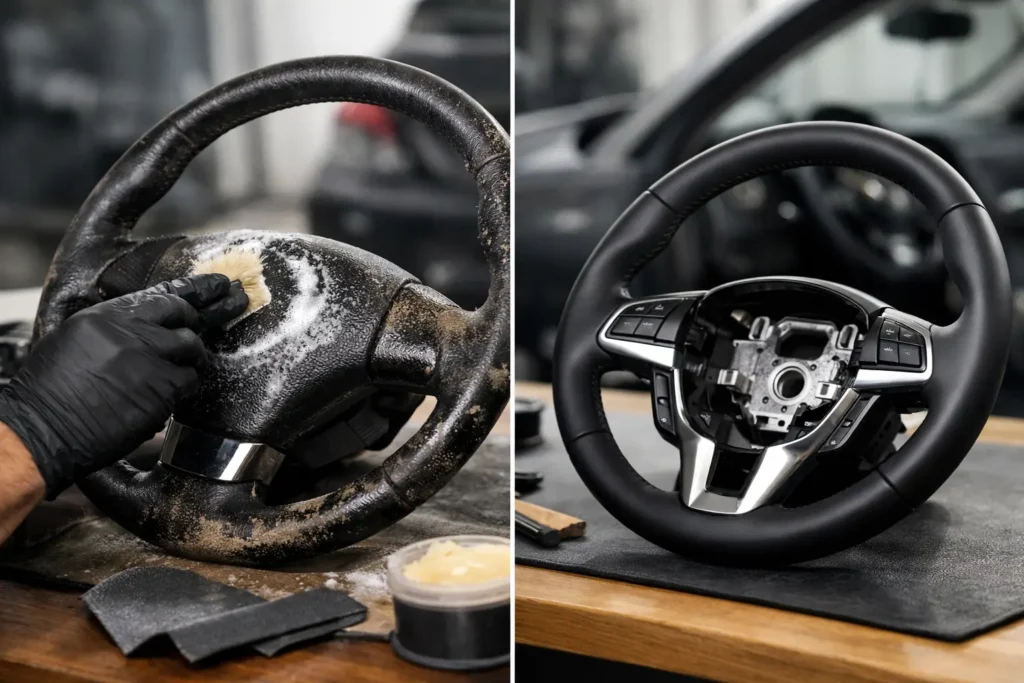
A worn steering wheel changes the whole feel of a vehicle. You notice it every time you drive – the slick leather, the cracked rim, the faded woodgrain, the loose wrap, the thumb grips that no longer feel right. When owners start comparing restoration vs replacement steering wheel options, the real question is not just cost. It is which path gives you the best result for your specific vehicle, your standards, and the way you use it.
Restoration vs replacement steering wheel: what is the real difference?
Replacement sounds simple. You remove the old wheel and install another one. That replacement might be a new OEM wheel, a used factory wheel, an aftermarket wheel, or a lower-cost reproduction. In some cases, that works well. In many others, it creates new compromises.
Restoration keeps your original steering wheel core and rebuilds its finish, structure, and appearance. Depending on the wheel, that can mean repairing cracks, refinishing wood or plastic, rewrapping leather, rebuilding foam, repainting trim, or updating the design with premium materials and custom stitching. The biggest advantage is fit. Your original wheel already belongs to the vehicle, so the foundation is correct from the start.
That distinction matters more than most owners expect. Steering wheels are not just round parts you hold. They affect airbag fitment, switch alignment, trim match, diameter, grip thickness, driving comfort, and resale value. A replacement can solve one problem while creating three more.
When restoration is the better choice
If you own a classic, luxury, exotic, or hard-to-source vehicle, restoration is often the smarter move. Original wheels on older vehicles can be difficult to replace correctly, especially if the factory design has been discontinued or the available used pieces are in similar condition to yours. Even when a replacement is technically available, it may have wear, discoloration, or hidden damage that only becomes obvious after installation.
Restoration is also the right move when you care about preserving originality. Collectors and enthusiasts know the difference between a correct interior and one that looks close enough. A properly restored original wheel keeps the vehicle more authentic while removing the tired, neglected look that drags down the entire cabin.
For newer vehicles, restoration makes sense when the structure is good but the surface is not. Leather that is peeling, glossy from wear, or split at the seams can often be rebuilt into a factory-new or upgraded finish. Woodgrain trim that has faded or cracked can be refinished. Painted sections can be color-matched. If the wheel is fundamentally the right wheel, there is no reason to start over with an unknown part just because the outer layer is worn out.
There is another advantage many owners overlook: customization. Replacement usually locks you into whatever finish the part comes with. Restoration gives you control. You can stay stock, or you can upgrade to perforated leather, suede, carbon fiber, contrast stitching, thicker grips, painted trim, wood refinishing, or a combination that better suits the vehicle.
When replacement makes more sense
There are cases where replacement is the practical answer. If the wheel has severe structural damage, missing sections, bent metal, broken mounting points, or damage that compromises safety, replacing it may be necessary. The same applies if critical internal components cannot be restored reliably.
Replacement can also make sense when a brand-new OEM wheel is readily available at a reasonable price. That is more common on certain modern vehicles than on older or specialty platforms. If the new part is truly correct, complete, and cost-effective, it can be a clean solution.
Aftermarket replacement has a narrower use case. It may fit a custom build or track-focused vehicle where originality is not a priority and the owner is intentionally changing the look and feel of the cockpit. But for most street vehicles, especially those with airbags, steering wheel controls, and integrated trim, aftermarket options often fall short in fit, finish, or overall compatibility.
Used replacement wheels are where buyers get burned most often. Photos can hide shiny leather, repaired cracks, fading, or mismatched trim. You may end up paying for another worn wheel that still needs work. At that point, restoring your own original part would have been the cleaner path.
Cost is only part of the decision
People often approach restoration vs replacement steering wheel decisions by asking which one is cheaper. That is understandable, but it is not the best way to measure value.
A low-priced used wheel can become expensive once you factor in shipping, installation, airbag or trim transfer, and the risk that it arrives in worse condition than expected. A new OEM wheel may be excellent, but the price can climb quickly, especially on luxury and performance vehicles. Some parts are simply no longer available.
Restoration is more labor-intensive, but that labor is where the result comes from. You are paying for surface preparation, material matching, refinishing, rewrapping, and detail work that restores the wheel you already know fits your vehicle. If done correctly, the result often looks better than a used replacement and can be tailored far beyond what a factory part offers.
The better question is this: what gets you the right finish, the right feel, and the right long-term result with the fewest compromises?
Fit, finish, and feel matter more than people think
A steering wheel is one of the most touched parts of the interior. That makes poor workmanship obvious. If the grain is wrong, the stitching is uneven, the leather is loose, the gloss level does not match, or the grip shape feels off, you notice it immediately.
That is why restoration quality matters so much. A specialist can rebuild the wheel with attention to material type, seam placement, color match, contour, and durability. On a factory restoration, the goal is to make the wheel look like it never wore out. On a custom build, the goal is to make the upgrades look intentional and properly finished, not improvised.
Replacement parts, especially used or aftermarket ones, often miss on exactly these details. The wheel may fit the splines but not the cabin. The leather may not match the seats. The trim sheen may be off. The grip may feel thinner or bulkier than stock. Small differences add up fast in a vehicle interior.
Originality, resale, and vehicle value
If you plan to keep the vehicle long-term, the right wheel improves your daily experience. If you plan to sell it, the right wheel protects value. Buyers notice worn steering wheels immediately because they are a visual shortcut for how the rest of the vehicle has been treated.
On collector cars and premium vehicles, keeping the original wheel and restoring it properly is often the stronger value play. It shows care without introducing questionable parts. On customized vehicles, a professionally refinished wheel can help tie the interior together in a way a random replacement never will.
There is also a trust factor. An interior with one obviously mismatched steering wheel can make buyers wonder what else was cut short. A wheel that looks correct, feels solid, and matches the rest of the cabin gives the opposite impression.
How to decide between restoring and replacing
Start with condition. If the wheel is structurally sound and the issues are cosmetic or surface-related, restoration is usually the best place to look. If the damage goes deeper into the frame or mounting structure, replacement may be necessary.
Next, consider availability. If a true OEM replacement is discontinued, overpriced, or only available used in questionable condition, restoring your original wheel becomes far more attractive. Then look at your goals. If you want factory-correct appearance, that calls for a different approach than a custom interior refresh.
Finally, be honest about standards. If you care about exact fit, tactile quality, trim match, and a finish that holds up, the work needs to be done by a specialist who handles steering wheels every day. That is where the difference shows.
At Craft Customs, this is exactly where owners see the payoff of keeping the original part and rebuilding it the right way. The best choice is rarely the fastest or cheapest option on paper. It is the one that makes the interior feel right again every time your hand hits the wheel.