
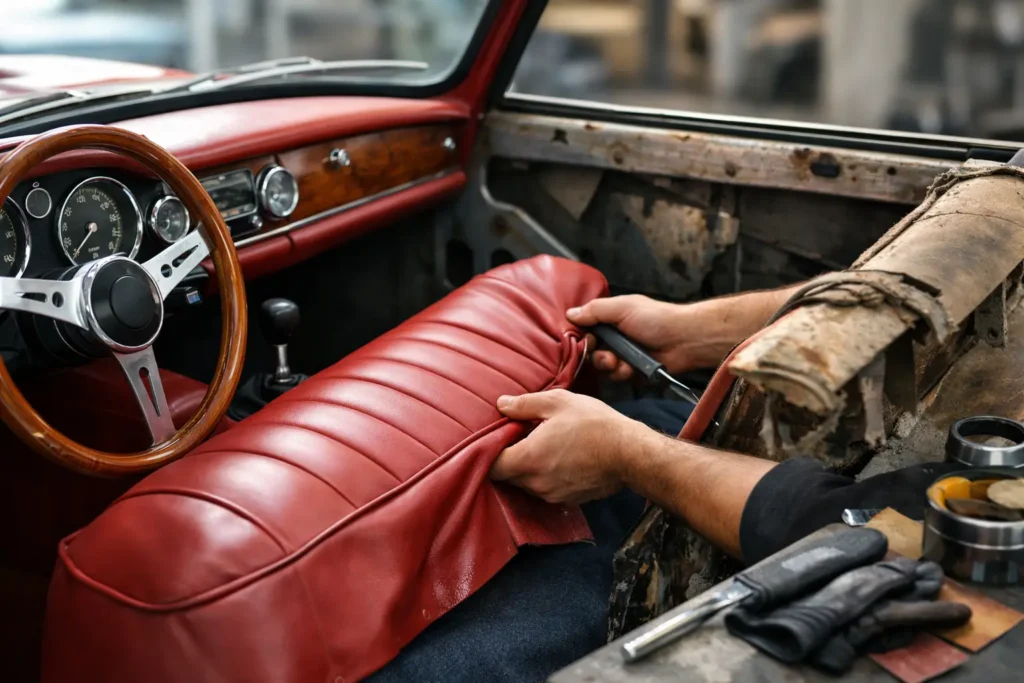
A cracked steering wheel, sun-faded dash, and dry split upholstery can make a valuable classic feel tired the second you open the door. This classic car interior restoration guide is built for owners who want more than a quick cosmetic cleanup. If you care about originality, drivability, and long-term value, the interior needs the same level of attention as the paint and drivetrain.
Interior restoration is where a lot of classic builds either come together or fall apart. A fresh exterior can hide problems from ten feet away. The cabin cannot. You touch the wheel, see the dash up close, and notice every mismatch in grain, gloss, stitching, and color. That is why good interior work is less about replacing parts at random and more about making the right decisions in the right order.
How to approach a classic car interior restoration guide the right way
The first step is not buying parts. It is figuring out what kind of restoration the car actually needs. Some interiors need a factory-correct restoration with original textures, stock colors, and era-appropriate finishes. Others need a cleaner, upgraded version of the original, with better materials and subtle refinements that improve durability without changing the character of the car.
That distinction matters because it affects every choice after that. If you are restoring a high-value collector car, originality may outweigh convenience. If you have a driver-quality classic that sees regular road time, improved leather, refinished trim, and a restored steering wheel with better wear resistance may be the smarter investment. Neither path is automatically right. It depends on how the car will be used and what matters most to you.
Before any work starts, inspect the interior as a system. Seats, wheel, dash trim, console, armrests, shifter, e-brake handle, headliner, carpet, and door panels all age differently. The wheel may be cracked from heat, while the console finish may be peeling from hand oils and friction. The seat foam might be collapsed even if the upholstery still looks decent in photos. Looking at one part in isolation usually leads to an uneven result.
Start with the parts you see and touch most
If the budget is not unlimited, start where wear is most obvious. In most classics, that means the steering wheel, dash components, and the primary seating surfaces. These are the areas that immediately shape how the car feels.
A steering wheel restoration can transform the cabin faster than almost any other single repair. Hairline cracks, faded color, missing finish, loose wraps, and worn woodgrain all stand out because the wheel sits directly in your line of sight. More importantly, it affects the driving experience every second the car is moving. A properly restored wheel should look right, feel solid in hand, and match the period of the vehicle.
Dash trim is another major visual anchor. Woodgrain delamination, chalky paint, peeling coatings, and warped plastic make even a strong build look unfinished. The right repair depends on the substrate. Real wood trim needs a different process than molded plastic with simulated grain. Metal-backed components require another. This is where shortcuts tend to show. A finish can look fine in a listing photo and still fail quickly if the prep work underneath was weak.
Seats and consoles deserve the same scrutiny. Torn seams and dry leather are obvious, but foam density and panel fit are just as important. A seat that looks newly upholstered but sits unevenly or feels dead has not really been restored well. The best interior work restores shape, support, and surface quality together.
Material choice matters more than most owners expect
One of the biggest mistakes in classic interiors is using materials that are technically new but visually wrong. Leather grain that is too modern, vinyl that is too glossy, or wood finishes that are too orange can make the whole cabin feel off. It may be cleaner than before, but it no longer fits the car.
That does not mean every restoration has to be strictly stock. It means upgrades should be intentional. If you want to add suede sections, change stitching, refinish trim in piano black, or convert pieces to carbon fiber, the execution has to be consistent with the rest of the cabin. A classic interior can handle tasteful customization very well, but random upgrades usually lower the perceived quality.
Color matching is another place where experience shows. Old interiors rarely fade evenly. The dash may have one tone, the rear panels another, and the wheel something else entirely. Restoring one component without accounting for surrounding color shift can create an obvious mismatch. Sometimes the correct move is exact factory color. Sometimes it is blending adjacent parts so the entire interior reads as one finished package.
Restore before you replace when the original part matters
Many classic owners assume replacement is faster and cheaper. Sometimes it is. Often it is neither. Original interior parts usually fit better than aftermarket reproductions, and on rare or desirable cars, preserving original components can help protect value.
This is especially true for steering wheels, dash bezels, consoles, and trim pieces that are difficult to source in good condition. Reproduction parts can have slight shape differences, weak finish quality, or incorrect detailing. On a casual build, that may be acceptable. On a serious restoration, it stands out immediately.
Restoration also keeps the car’s identity intact. The original wheel core, the factory trim piece, the correct grain pattern on a console lid – those details matter when the goal is a cabin that looks right instead of just newer. A specialist who works on interior components every day can often save parts that owners assume are beyond repair.
The hidden issue in most classic interiors
Surface damage gets attention, but structural deterioration is what separates a temporary improvement from a lasting one. Seat foam breaks down. Plastic mounting tabs get brittle. Adhesives fail. Wooden trim bases dry out. Underlayment and backing materials absorb moisture over decades.
That is why cosmetic work alone can disappoint. Fresh dye over weak prep may wear fast. New upholstery over tired foam can still look sunken. Refinished trim installed on damaged mounting points can rattle or sit crooked. Good restoration work addresses what supports the finish, not just the finish itself.
This is also where send-in part restoration can make sense. Smaller interior components such as steering wheels, trim sections, bezels, armrests, shift knobs, and console pieces often require specialized repair, refinishing, wrapping, or paint-matching equipment. A dedicated shop can usually deliver a much cleaner result than a general local upholstery repair trying to handle every type of interior problem under one roof.
A practical classic car interior restoration guide for planning the job
If you want the project to go smoothly, map it before spending. Start by defining the goal of the car. Is it a concours-level restoration, a weekend cruiser, a restomod, or a sale prep project? That answer determines how far you should go.
Next, document every interior part with clear photos in natural light. This helps you spot mismatch, prioritize damage, and avoid restoring one area only to realize the surrounding parts now look worse. It also helps when discussing repair options with a specialist.
Then group the work by type. Soft trim includes leather, vinyl, suede, stitching, and padding. Hard trim includes wheels, dash panels, bezels, consoles, painted parts, and woodgrain pieces. Doing this helps you understand where specialty work is required and where a standard upholstery refresh may be enough.
Budget with realism. Full interior restoration costs vary wildly based on rarity, material choice, and part condition. Trying to cut every corner usually means paying twice. It is smarter to restore the most visible original components properly, then phase in additional work as budget allows.
For owners shipping parts out for refinishing, labeling and packing matter more than expected. Protect mounting points, photograph each piece before boxing, and keep hardware organized. Precision restoration starts with preserving the part before it ever reaches the workbench.
When customization adds value
Not every classic interior needs to stay frozen in time. Some upgrades genuinely improve the cabin without hurting the vehicle’s character. A thicker wheel grip wrapped in leather, a better-matched custom dye, refinished woodgrain, or upgraded materials on high-wear surfaces can make the car more enjoyable to drive and easier to maintain.
The key is restraint and consistency. Custom touches should look intentional, not borrowed from three different vehicles. If the steering wheel gets a premium leather wrap, the shift handle and brake handle may need the same level of finish. If the dash trim is updated, the console should not be left looking twenty years older than the rest of the interior.
This is where a specialist like Craft Customs can be especially useful – not just for repairing damage, but for helping owners decide what should remain original and what can be upgraded without losing the soul of the car.
Classic interiors reward patience and punish guesswork. If you treat each component as part of one finished cabin, the result feels right every time the door opens, the key turns, and your hands land on the wheel.