
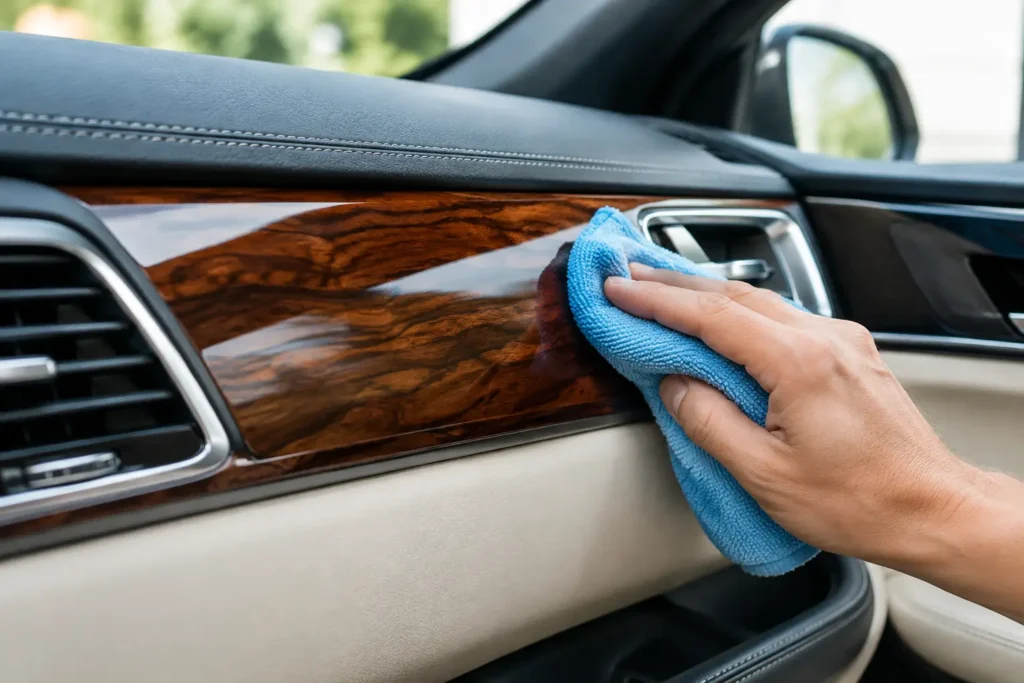
A worn steering wheel can make an interior feel tired, but damaged woodgrain trim often does even more to date a vehicle. Sun-faded panels, yellowed clear coat, cracks around switch openings, and peeling faux wood finishes pull attention away from an otherwise well-kept cabin. On a classic luxury car, a truck with upscale trim, or a modern performance vehicle, the difference between neglected and properly restored woodgrain is immediate.
The right repair is not simply about making a panel shiny again. It is about restoring the correct depth of color, grain pattern, gloss level, and fit so the piece belongs in the vehicle. Whether your trim is real veneer, simulated wood, or a painted woodgrain finish, the restoration method needs to match the material and the condition of the part.
Why Woodgrain Trim Fails
Interior trim lives in a harsh environment. Direct sunlight, heat cycles, skin oils, cleaning products, moisture, and regular use slowly break down finishes that once looked rich and polished. Vehicles parked outside or driven in hot climates commonly develop clear-coat checking, faded color, and lifting around edges first.
Real wood veneer has its own challenges. The veneer can dry out, split, lift from its backing, or darken unevenly beneath old clear coat. If moisture reaches the substrate below it, the panel may warp or separate. A quick surface coating can temporarily hide some damage, but it will not stabilize failing material underneath.
Faux woodgrain trim can be just as difficult to repair correctly. Many later-model vehicles use a printed film, hydrographic pattern, molded plastic texture, or painted finish under a clear coating. Once that surface begins peeling or cracking, aggressive sanding may erase the pattern entirely. The repair has to account for the trim’s construction before any refinishing begins.
Real Wood, Faux Wood, and Painted Grain
The first question is simple: what are you actually restoring? The answer determines whether a part should be repaired, refinished, recreated, or replaced with a custom alternative.
Real wood veneer
Genuine wood trim is found in many classic, luxury, and collector vehicles. It may be walnut, burl walnut, mahogany, oak, maple, rosewood, or another veneer selected to complement the cabin. The grain is naturally irregular, which gives authentic wood its depth and character.
Restoring veneer often involves carefully removing failed clear coat, repairing small cracks or lifted areas, correcting discoloration, and applying a durable finish. The goal is not to make every panel look artificially identical. It is to preserve the natural grain while bringing back a consistent, factory-appropriate appearance across the set.
Simulated woodgrain finishes
Many OEM panels are plastic or composite pieces finished to resemble wood. These can still look premium when restored properly, especially when the color and gloss match the rest of the interior. Depending on the damage, a specialist may repair the substrate, recreate the woodgrain effect, and protect it with a finish suited to automotive use.
This is where generic DIY products often fall short. A stain intended for household furniture, for example, is not designed for dashboard heat, UV exposure through a windshield, or repeated cleaning in a vehicle cabin.
Custom woodgrain conversions
Sometimes the original finish is beyond saving, or the owner wants a different look entirely. A darker burl, a more contemporary satin finish, or a custom color tone can transform the cabin without changing its core design. Custom work requires restraint. The best result still looks intentional next to the seats, steering wheel, console, and dash rather than like an unrelated add-on.
What a Proper Woodgrain Trim Restoration Involves
A high-quality result begins before refinishing. Every part needs to be inspected for cracks, broken mounting points, missing tabs, delamination, previous repairs, and damage around vents, switches, and shifter openings. Cosmetic work is only one part of the job. A beautiful panel that cannot be reinstalled securely is not a complete restoration.
The old finish is then addressed using methods appropriate to the material. On genuine veneer, that may mean controlled removal of deteriorated clear coat while protecting the wood beneath it. On simulated wood trim, surface preparation must avoid flattening details or damaging an existing pattern that can still be retained.
Repairs come next. Small splits, chips, and surface defects need to be stabilized and leveled before color or grain work begins. If a section of veneer has lifted, it must be properly re-bonded rather than covered over. If plastic has cracked, the repair needs enough strength to handle handling and reinstallation.
Color matching is where experience shows. Wood has natural variation, and automotive interiors often combine several tones at once: warm brown seats, black dash material, bronze accents, or tan carpeting. A finish that looks right under shop lighting can look too red, too orange, or too dark in daylight. Matching the overall cabin matters more than chasing a generic wood color sample.
Finally, the trim receives its protective finish. High gloss works beautifully on many traditional luxury interiors, while satin can better suit modern cabins or performance-oriented builds. The correct gloss level should coordinate with nearby components. A mirror-like wood panel beside matte black switch surrounds can look out of place, even when the panel itself is flawlessly finished.
Repair, Replacement, or Customization?
Not every damaged part needs replacement. Original trim is often worth preserving because it retains the correct fit, grain character, mounting points, and value for the vehicle. This is especially true for rare classics, limited-production models, and interiors where replacement pieces are unavailable or difficult to match.
Replacement may make sense when a panel has severe warping, extensive missing material, or damage that compromises its structure. Even then, owners should be cautious with used replacement trim. A part may look acceptable in a listing photo but arrive with hidden fading, brittle tabs, or a finish that does not match the rest of the set.
Customization is the right direction when originality is less important than a cohesive upgraded interior. A woodgrain steering wheel section, console trim, dash panels, and shifter surround can be finished as a coordinated set. For some vehicles, a carbon fiber, painted, or suede conversion may better match the owner’s vision. It depends on whether the goal is concours-correct restoration, daily-driver renewal, or a fully personalized cabin.
Common Mistakes That Ruin Interior Trim
The biggest mistake is treating automotive trim like furniture. Household varnishes, heavy stains, and off-the-shelf spray clears can react poorly to heat and UV exposure. They also tend to create excessive thickness around edges and openings, making trim look coated rather than restored.
Another common issue is refinishing only one piece without considering the full interior. A freshly restored dash strip can make adjoining door trim look worse if the colors, gloss, or grain direction do not align. When possible, assess the complete set before deciding which pieces to send out.
Owners should also avoid forcing brittle trim out of the dashboard. Older panels can crack around clips or screw points during removal, and replacement mounting tabs may not be readily available. Taking clear photos before removal, labeling hardware, and protecting delicate edges during shipping can save time and prevent new damage.
Sending Trim Out for Professional Refinishing
A send-in restoration service is practical for owners who want specialist-level work without finding a local shop that understands their specific vehicle. Carefully remove the trim, package each piece separately to prevent rubbing, and include clear notes about your goals. Photos of the vehicle interior are especially useful when color, grain tone, or gloss needs to match existing components.
Craft Customs restores and customizes interior components in-house, including woodgrain panels, steering wheels, consoles, and related trim. That matters because the work can be evaluated as a complete visual system rather than as a single isolated part. For rare, high-end, vintage, and heavily worn pieces, experienced handling makes a measurable difference in the final fit and finish.
Before approving any work, be clear about whether you want an original-style restoration or a custom appearance. Mention prior repairs, missing pieces, peeling finishes, and any areas that must match. The more accurately the condition and desired outcome are defined at the start, the better the finished trim will serve the vehicle.
Keeping Restored Trim Looking Its Best
Once restored, woodgrain trim needs simple, consistent care. Use a soft microfiber cloth and a mild interior-safe cleaner when needed. Avoid harsh solvents, abrasive pads, and oily dressings that can leave residue or alter the appearance of the clear finish.
Sun protection is equally valuable. A windshield shade, covered parking, and regular interior cleaning reduce the heat and UV exposure that cause fading and clear-coat failure. If a new chip, crack, or lifting edge appears, address it early. Small issues are usually easier to correct before moisture and repeated heat cycles turn them into larger repairs.
Well-restored trim does more than improve a dashboard photo. It changes how the entire cabin feels every time you get behind the wheel. When the grain, color, gloss, and craftsmanship are right, the interior regains the level of care the vehicle deserves.