
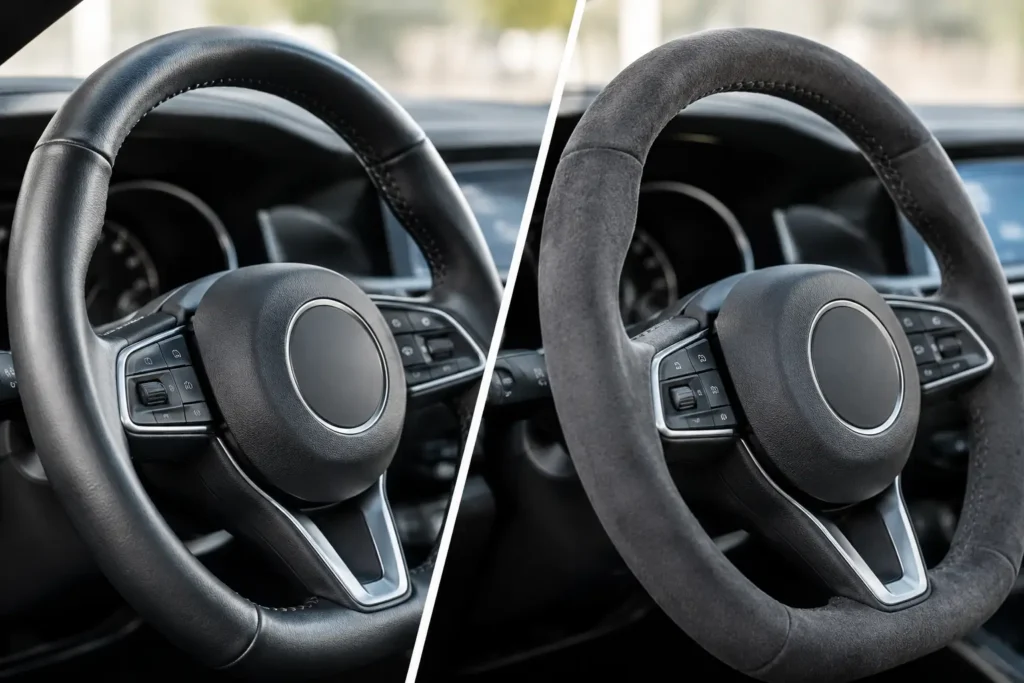
A steering wheel can look clean from the driver’s seat and still feel wrong every time you touch it. If the factory leather is slick, cracked, faded, or simply no longer fits the character of the vehicle, the leather wrap vs suede wrap decision changes far more than appearance. It affects grip, maintenance, comfort in different weather, and how well the wheel holds up to the way you actually drive.
For most owners, leather is the proven all-around choice. Suede brings a more focused, performance-oriented feel, but it also asks more of the owner. The right material depends on whether the vehicle is a daily driver, weekend build, classic restoration, track car, luxury cruiser, or a combination of all four.
Leather Wrap vs Suede Wrap: The Core Difference
Leather is a durable natural hide finished for automotive use. On a steering wheel, it delivers a refined feel, consistent grip, and strong resistance to the oils and moisture that hands transfer during normal driving. It is familiar for a reason: quality leather wears in gradually and can be cleaned and conditioned to preserve its appearance.
Suede has a soft, napped surface. It feels warmer and more tactile than smooth leather, with a surface that naturally resists slipping when dry. For performance driving, that texture can make the wheel feel more connected to the driver. Suede also creates a distinctly custom look, especially when paired with contrast stitching, a colored center stripe, carbon fiber, or painted trim.
The trade-off is simple. Leather generally tolerates everyday use better. Suede provides a more specialized feel but shows oils, dirt, and wear faster if it is not maintained correctly.
Grip and Driving Feel
A well-wrapped leather steering wheel has controlled, predictable grip. It is comfortable bare-handed, works well with driving gloves, and remains easy to reposition during parking, commuting, and long highway miles. Perforated leather is often a strong middle ground for drivers who want more texture without moving to suede. It adds grip and visual interest while keeping leather’s easier-care advantage.
Suede has a more immediate, planted feel. Its fibers create friction against the palm, which is why it is closely associated with motorsports and high-performance interiors. On a spirited road car or track-focused build, suede can reduce the slick feeling some drivers experience with smooth leather, especially when their hands are dry.
That extra grip is not automatically better for every vehicle. In a daily driver that sees frequent one-handed steering, stop-and-go traffic, school runs, or long commutes, smooth or perforated leather usually feels more natural over time. Suede is at its best when the driver values precise input and is prepared to keep the material clean.
How Gloves Change the Decision
If you regularly drive with gloves, either material can work well. Leather offers a traditional, premium feel with most glove materials. Suede often feels exceptionally secure with quality driving gloves, particularly during aggressive driving.
For bare-handed use, personal preference matters more. Some drivers love the dry, grippy texture of suede. Others prefer leather because it feels smoother, more substantial, and less likely to catch on dry skin or rough calluses.
Daily Durability and Wear Patterns
Leather is generally the stronger option for a vehicle driven every day. Premium automotive leather resists normal hand oils, sunscreen residue, lotion, sweat, and repeated contact better than suede. It can still wear prematurely if it is neglected, exposed to harsh cleaners, or left under intense sun, but it is more forgiving.
As leather ages, it may develop a softer feel and slight patina. On a properly restored or reupholstered wheel, that aging can look appropriate rather than worn out. The key is proper preparation, quality materials, correct stitching, and a tight, even fit around the wheel frame.
Suede tells a different story. The nap can flatten with use, particularly at common hand positions around 9 and 3 o’clock. Oils can darken the surface, and a neglected suede wheel may develop shiny patches that reduce the clean, uniform look owners chose it for in the first place. This does not mean suede is a poor material. It means it is a material that rewards the right application and regular care.
For a garage-kept weekend vehicle, show build, or performance car with limited mileage, suede can remain striking for years. For a work truck, family SUV, rideshare vehicle, or daily commuter, leather will usually deliver better long-term value with less attention.
Heat, Cold, and Year-Round Comfort
Both leather and suede can become uncomfortable in extreme cabin temperatures, but they behave differently. Smooth leather can feel hot after a vehicle sits in direct summer sun and cold on winter mornings. A quality wrap softens that contact compared with a damaged or deteriorated factory wheel, but it does not eliminate temperature transfer.
Suede often feels less slick in heat and less cold to the touch initially because of its textured surface. That can be appealing in a warm climate or in a vehicle that is driven hard. However, suede is also more vulnerable to moisture and sweat. Repeated damp-hand contact can leave the material looking matted if it is not brushed and cleaned carefully.
For an open-top vehicle or a car regularly parked outside, leather is usually the safer choice. It better handles changing weather, UV exposure, and the practical realities of getting into a hot or wet vehicle without thinking twice about your hands.
Cleaning and Maintenance Requirements
Leather is straightforward to maintain. Use a cleaner made for automotive leather, wipe away residue with a clean microfiber towel, and avoid heavy, greasy conditioners that can make a steering wheel slippery. Regular light cleaning is more effective than waiting until grime is visibly built up.
Suede requires a gentler approach. It should be cleaned with products designed for suede or Alcantara-style materials, depending on the exact material used. A soft brush helps lift and restore the nap. Harsh leather cleaners, oils, conditioners, and wet wipes can damage the texture or leave uneven spots.
Owners who enjoy detailing their vehicles often have no issue maintaining suede. Owners who want a factory-new result with minimal upkeep are usually happier with leather. Material selection should be honest about the ownership experience, not just the first impression in a photo.
Style, Originality, and Resale Considerations
Leather is the most versatile visual choice. It can be matched to factory black, tan, gray, red, blue, or nearly any interior color. It can also be finished in smooth, perforated, textured, or two-tone layouts with stitching that matches the original design or creates a purposeful custom accent.
For classic cars, collector vehicles, and luxury models, leather is often the best route when preserving an original-correct appearance matters. A carefully selected grain, color, and stitch pattern can make a tired wheel look factory new without making the interior feel modified.
Suede makes a bolder statement. It works especially well in sports cars, restomods, track builds, and custom interiors with carbon fiber, bright stitching, racing seats, or performance cues. A suede wheel with a center stripe can also provide a quick visual reference for wheel position during spirited driving.
If future resale is a concern, think about the buyer. A factory-style leather restoration has broad appeal. Suede can be a major selling point to the right enthusiast, but it is more personal. The best choice is the one that fits the vehicle’s intended use and the standard of finish throughout the cabin.
When Leather Is the Better Choice
Choose leather when the vehicle is driven frequently, parked outdoors, shared with multiple drivers, or expected to retain a factory-style interior. It is also the stronger option for owners who want premium feel without frequent specialized care. Perforated leather is worth considering when you want more grip and a sportier appearance while keeping daily-driver durability.
Leather is particularly well suited to luxury sedans, trucks, SUVs, classics, and high-mileage vehicles where the wheel needs to stay attractive through years of use.
When Suede Is the Better Choice
Choose suede when driving feel is the priority and the vehicle is maintained as an enthusiast-owned build. It is an excellent fit for track cars, weekend sports cars, garage-kept customs, and interiors where a motorsport-inspired finish is intentional rather than an afterthought.
It is also a strong option for drivers who already use gloves, detail their vehicles regularly, and understand that the material will need more attention to stay fresh.
A steering wheel restoration should feel right every time you take the wheel, not just look good in a before-and-after photo. Whether the answer is durable leather, tactile suede, or a custom combination of both, the best result comes from choosing the material around your driving habits and having it fitted with the same precision as the rest of the interior. Craft Customs can help turn that choice into a finish that looks intentional, wears properly, and brings the whole cabin back into focus.