
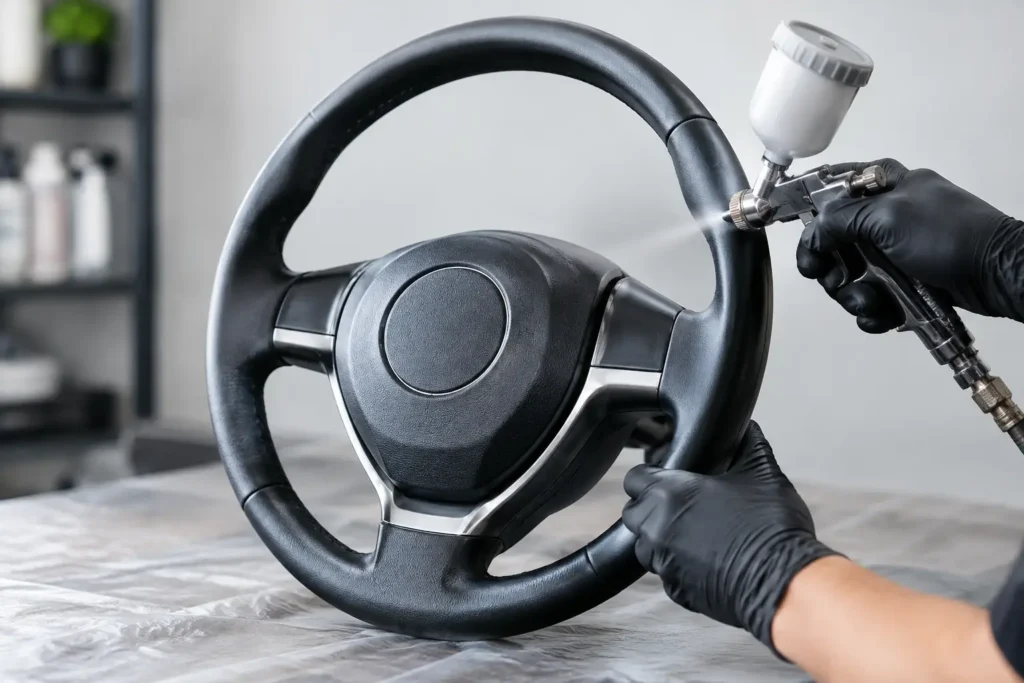
A steering wheel can make an otherwise clean cabin feel worn out fast. It is the interior part you see, touch, and judge on every drive, so peeling paint, faded trim, sticky coatings, and scuffed spokes are hard to ignore. Can steering wheels be repainted? Yes, many can, but a durable result depends far more on the wheel’s material, preparation, and finish system than on the color itself.
A properly refinished wheel can restore an original appearance or support a complete custom interior update. A rushed paint job, however, often looks good for a few weeks before it chips at the thumb grips, turns glossy, or begins to peel around switches and seams. The difference is craftsmanship built around the specific part.
Can Steering Wheels Be Repainted Successfully?
Steering wheels with painted plastic, metal spokes, molded urethane sections, and certain trim inserts are strong candidates for repainting. These parts can often be cleaned, repaired, prepped for adhesion, color-matched, and protected with a durable coating that holds up to regular use.
The answer changes when the wheel is covered in leather, wood, suede, carbon fiber, or soft-touch material. These surfaces may need a different restoration process entirely. Leather, for example, is usually recolored with flexible automotive coatings after careful cleaning and repair, not treated like a rigid plastic spoke. A wood-rimmed wheel may require stripping, grain repair, staining, clear coating, and polishing. Carbon fiber needs a process that preserves or intentionally changes the weave’s appearance.
That distinction matters because the steering wheel is a high-contact component. Your hands transfer oils, lotion, sunscreen, moisture, and friction to the same few areas thousands of times. A coating that works on a door panel or center console may not be the right formula or preparation method for a wheel rim.
The Material Determines the Right Repair
Before any refinishing begins, the wheel needs a close inspection. What appears to be paint failure may actually be deteriorated soft-touch coating, damaged leather pigment, cracked urethane, failed clear coat, or previous repair work that was not properly bonded.
Painted Plastic, Urethane, and Metal
Many late-model steering wheels use molded plastic or urethane for spokes, switch surrounds, lower trim, and structural rim sections. These can often be refinished effectively when the base material is stable. The surface must be thoroughly cleaned and decontaminated, then sanded or otherwise prepared to create consistent adhesion. Scratches, gouges, and small chips need repair before color goes on.
Color matching is especially important on two-tone interiors. A black wheel may look simple, but black comes in many undertones and gloss levels. Charcoal, blue-black, warm black, and satin black can look noticeably different beside the airbag cover, dash trim, and console. The final sheen should also match the vehicle’s original design. A gloss finish on a factory satin wheel will look incorrect and can create distracting glare.
Leather-Wrapped Steering Wheels
Leather is one of the most commonly misunderstood surfaces. Minor color wear and fading can often be corrected with a flexible recoloring process, but heavily cracked, stretched, hardened, or torn leather usually needs reupholstery. Painting over failing leather does not restore the underlying hide or improve the feel in your hands.
A quality leather restoration begins with removing embedded oils and old dressings. The surface may need light smoothing, crack treatment, flexible color application, and a protective topcoat chosen for the correct feel and sheen. When leather has reached the end of its service life, a new leather wrap is the better investment. It provides the clean seam work, padding, texture, and long-term durability that surface recoloring alone cannot deliver.
Woodgrain and Carbon Fiber
Classic and luxury steering wheels often include real wood, simulated woodgrain, or carbon fiber sections. These materials can be restored or customized, but they should not be approached as ordinary painted trim.
Cloudy wood clear coat, cracks, and faded color may require a complete refinishing process. The goal is to rebuild depth and clarity without hiding the natural grain or making the wheel look over-restored. Carbon fiber can be repaired, refinished in clear, color-tinted, or converted to a different visual style depending on the part and desired result. The work must preserve a smooth transition at the edges where carbon fiber meets leather, plastic, or metal.
What a Durable Steering Wheel Repaint Requires
The visible color is the final step, not the whole job. Long-lasting refinishing comes from controlled preparation and compatible materials.
First, the wheel is inspected for structural issues, loose trim, broken mounting points, damaged switch areas, and severe cracks. Cosmetic refinishing should never cover a safety concern. If the rim is split, the core is compromised, or an airbag-related component is damaged, the part needs proper evaluation before any cosmetic work moves forward.
Next comes deep cleaning. Silicone-based dressings, skin oils, hand sanitizer residue, and prior touch-up products can all interfere with adhesion. Then damaged areas are repaired and leveled. On rigid sections, that may mean filling and shaping chips. On leather, it means using flexible repair materials that move with the surface.
After the surface is properly prepared, color is applied in controlled coats rather than one heavy pass. This helps preserve texture, prevents runs, and produces an even appearance around curves, seams, button openings, and spoke edges. A suitable topcoat then establishes the final gloss level and wear resistance. Proper cure time is not optional. Handling or reinstalling a wheel before the finish has stabilized can leave marks and reduce durability.
When Repainting Is Not the Best Answer
Repainting is not a cure-all, and a good restoration shop should say so. If the wheel has deep leather cracking, loose stitching, missing padding, sharp exposed edges, or severe rim deformation, surface refinishing may only delay the inevitable. Reupholstery or replacement can provide a better result.
The same applies to sticky soft-touch coatings that have broken down throughout the part. Simply spraying over the tacky layer without removing or stabilizing it can lead to new failure. Heavily crazed wood clear coat may need to be stripped and rebuilt instead of covered with a quick topcoat.
Modern steering wheels also contain switches, heating elements, paddle shifters, wiring, sensors, and airbag components. These features require careful masking, disassembly knowledge, and reassembly discipline. Cosmetic work should not compromise fitment, button operation, or safety systems. If you are removing a wheel from the vehicle, follow the vehicle manufacturer’s procedures for battery isolation and airbag handling, or have a qualified technician perform removal and installation.
DIY Touch-Up vs. Professional Refinishing
A small touch-up on a non-contact plastic trim piece may be manageable for an experienced owner. The steering wheel itself is less forgiving. Most DIY failures come from incomplete cleaning, poor color match, the wrong sheen, insufficient flexibility, or inadequate curing. The finish may look acceptable under garage lighting and then reveal every mismatch in daylight.
Professional work is particularly worthwhile for collector vehicles, luxury interiors, rare factory colors, and wheels with mixed materials. It is also the right route when the goal is more than repair. A wheel can be updated with custom leather, Alcantara-style suede, contrast stitching, painted spokes, restored wood, or carbon fiber details that coordinate with the rest of the cabin.
At Craft Customs, steering wheel restoration is handled in-house with the material-specific preparation and finishing that high-contact interior parts demand. That approach allows the wheel, trim, and related interior components to be matched as a complete visual system rather than repaired as unrelated pieces.
Choosing a Finish That Still Looks Right Years Later
The best repaint is not always the most dramatic one. For a factory restoration, matching the original texture, color, and sheen protects the vehicle’s character and resale appeal. For a custom build, the finish should still complement the dash, seats, console, and door panels. A bright painted spoke or glossy carbon accent can look exceptional when it is intentional and repeated elsewhere in the cabin.
Durability also depends on ownership habits. Regularly wipe the wheel with a mild interior-safe cleaner and avoid heavy silicone dressings or harsh solvents. If you use hand lotion, sunscreen, or sanitizer frequently, clean the wheel more often. These small habits protect both original surfaces and professionally refinished ones.
A worn steering wheel does not have to remain the detail that dates the whole interior. The right repair begins by identifying what the wheel is made of and choosing a process that respects how it is used. When the material, prep work, color, and finish are all right, every drive starts with an interior that feels cared for again.