
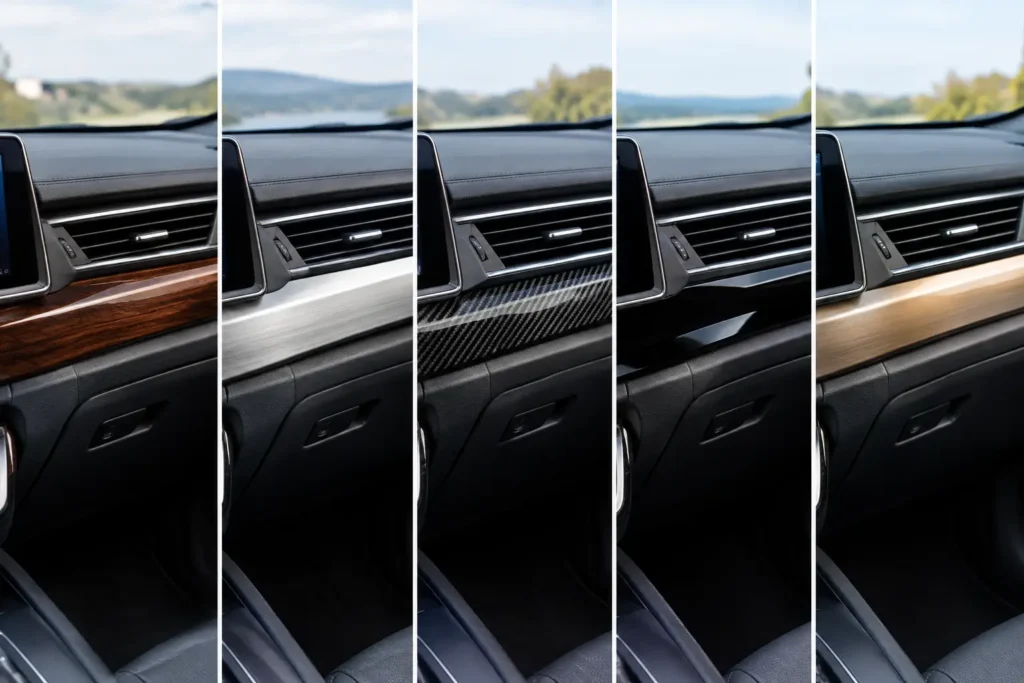
A dash can be mechanically perfect and still make the entire cabin feel tired. Sun-faded woodgrain, peeling soft-touch coatings, scratched metallic panels, and dated plastic finishes sit directly in the driver’s line of sight. Choosing the best finishes for custom dash trim is not just about picking the material that looks good in a photo. It is about matching the vehicle, the way it is driven, and the standard you expect every time you open the door.
The right finish can return a classic interior to factory-correct character, give a luxury sedan a cleaner modern appearance, or make a custom build feel intentional from seat to console. The wrong one can look out of place, show every fingerprint, or fail early under heat and UV exposure. That is why material selection and surface preparation matter as much as color.
Start With the Interior You Want to Keep
Before selecting a dash trim finish, look at the interior as one complete system. The steering wheel, seats, door panels, console, shifter, and factory accents should guide the decision. A high-gloss carbon fiber dash in a vehicle with worn matte black plastics may create more contrast than refinement. Likewise, a satin-painted trim package can look understated and correct in a modern performance car while feeling too contemporary in a vintage luxury coupe.
Originality is the first decision. If you own a collector vehicle, factory-style woodgrain refinishing or a correct satin metallic finish often protects the vehicle’s character and resale appeal. If the goal is a personal upgrade, you have more freedom, but the finish still needs to look like it belongs in the cabin.
Also consider the trim piece itself. A flat dash insert can carry a gloss finish more easily than a frequently handled console surround. Parts near vents, windshield glass, switches, and cupholders face different levels of heat, abrasion, and cleaning chemical exposure. A professional refinishing process accounts for those realities rather than applying the same coating or wrap to every panel.
Best Finishes for Custom Dash Trim
Refinished woodgrain for factory character
Woodgrain remains one of the strongest choices for classic, luxury, and executive interiors. Done properly, it brings warmth and depth that painted plastics cannot duplicate. It is especially effective for vintage American vehicles, European luxury sedans, classic trucks, and factory-equipped wood-trim interiors where the original finish has cracked, yellowed, or worn through.
The key is controlling the sheen and grain pattern. Some interiors call for a deep, polished appearance; others look best with a lower-gloss finish that more closely resembles original trim. A grain that is too bold, a color that is too red, or a finish that is excessively glossy can make an otherwise beautiful restoration look aftermarket.
Woodgrain is best for owners who value period-correct detail or want the cabin to feel richer without changing its fundamental design. It needs careful prep and quality clear coating to stand up to UV exposure, but a professionally refinished woodgrain piece can transform an aging dash back into a centerpiece.
Carbon fiber for performance-focused interiors
Carbon fiber is a natural fit for sports cars, high-performance sedans, track-inspired builds, and modern exotic interiors. It adds visual movement without relying on bright color, and it pairs well with black leather, Alcantara-style suede, contrast stitching, forged-metal accents, and modern gauge clusters.
Not all carbon fiber looks the same. Traditional woven patterns create a clean, recognizable performance look. Forged-style carbon fiber has a more irregular, contemporary appearance. The choice between gloss and satin is just as important. Gloss carbon has strong visual depth but can produce windshield glare in some vehicles. Satin or matte carbon is more restrained, hides minor fingerprints better, and often fits modern OEM performance interiors more naturally.
Carbon fiber conversion works best when used with restraint. A dash trim set, console trim, and steering wheel accent can create a cohesive package. Covering every surface in carbon fiber can make the cabin visually busy, especially in smaller interiors.
Suede for low-glare luxury and grip
Suede-wrapped dash trim gives an interior a tailored, motorsport-influenced feel. It is popular in performance cars because it reduces reflected glare and provides a soft, upscale surface. It can also work beautifully in luxury interiors when coordinated with suede headliners, steering wheel sections, shift boots, or door inserts.
For dash applications, dark neutral tones usually perform best. Black, charcoal, and dark gray are practical choices because they reduce glare and integrate easily with most cabins. Brighter colors can make a strong custom statement, but they require confidence and a larger design plan. A vivid red or tan suede dash panel may look exceptional when matched to seating and stitching, but isolated color can feel unfinished.
The trade-off is maintenance. Suede can attract dust and may show marks if handled often. It is better suited to trim panels than high-contact areas unless the owner is prepared for regular care. The material also needs precise wrapping around vent openings, switch cutouts, curves, and tight edges. Poorly fitted suede is immediately noticeable.
Painted finishes for precise color control
Painted dash trim is one of the most versatile options because it can be matched to factory interior colors, exterior paint, or a custom build theme. It works especially well for modern vehicles with faded or peeling trim coatings, as well as classic interiors where original metallic, black, silver, or body-color accents need to be restored.
The finish level changes the entire result. High-gloss paint has a dramatic, show-car look but reveals fingerprints, fine scratches, and dust. Satin paint gives a refined low-sheen appearance that is easier to live with. Matte paint can look purposeful and contemporary, although it must be applied carefully because repairs and touch-ups may be more visible.
Color-matched paint is often the right answer when you want a custom detail without changing the material language of the interior. A painted accent that matches exterior paint can tie a build together. For a factory-plus result, matching an OEM shade and sheen is usually the better choice.
Soft-touch and factory-style textured finishes
Some interiors do not need a bold visual change. They need the factory feel restored. Soft-touch coatings and textured refinishing are excellent choices for late-model dashboards and trim pieces that have become sticky, scratched, faded, or uneven over time.
A correct factory-style finish should look natural under direct light and feel appropriate next to the surrounding plastics. This is where color matching, texture control, and sheen matching become critical. A dash panel can be the right shade of black and still look wrong if it is glossier than the door panels or smoother than the adjacent trim.
This route is ideal for daily drivers, late-model luxury vehicles, and owners who want the cabin to look factory new rather than customized. It is also a smart choice when preserving resale value matters more than adding a personalized accent.
Gloss, Satin, or Matte: The Finish Level Matters
The material gets attention, but sheen determines how the finish behaves in the real world. Gloss creates depth and visual impact. It is often the strongest choice for woodgrain and certain carbon fiber applications, particularly on show-oriented or weekend-driven vehicles. Its downside is reflection. On a dash, excessive gloss can catch sunlight and become distracting.
Satin is the most flexible middle ground. It has enough light reflection to show contour and material depth without creating the mirror-like effect of gloss. Satin works across painted trim, carbon fiber, metallic finishes, and many factory-inspired restorations.
Matte is best when low glare and a technical appearance are priorities. It suits performance interiors, blacked-out cabins, and certain modern designs. However, matte surfaces require careful cleaning. Aggressive rubbing, harsh products, and oily dressings can create uneven patches that are difficult to correct.
Durability Is Built Before the Finish Goes On
A premium dash trim finish is only as good as the foundation underneath it. Old peeling coatings, contaminated plastics, cracked substrates, and failed adhesives cannot be hidden with a new top layer. They must be corrected first.
Proper preparation may involve stripping unstable material, repairing damage, leveling the surface, cleaning and priming the part, then applying the selected finish under controlled conditions. This work is particularly important for trim that has spent years baking beneath a windshield. Heat and UV exposure reveal shortcuts quickly.
At Craft Customs, dash trim is evaluated as an individual component, not treated as a generic panel. The condition of the original material, the intended look, and the use of the vehicle all affect the recommended process. That attention is what separates a finish that photographs well from one that continues to look right after regular driving and cleaning.
Choose a Finish That Belongs in Your Vehicle
The best result is rarely the loudest option. It is the finish that makes the interior feel complete. Factory-style woodgrain may be the right answer for a classic restoration. Satin carbon fiber may better suit a modern performance build. A carefully matched paint finish may deliver the cleanest improvement of all.
Before sending in your dash trim, decide whether you want it to disappear into a factory-correct interior or become a deliberate focal point. Once that choice is clear, material, color, and sheen become easier to select – and the finished dash will look like it was always meant to be there.