
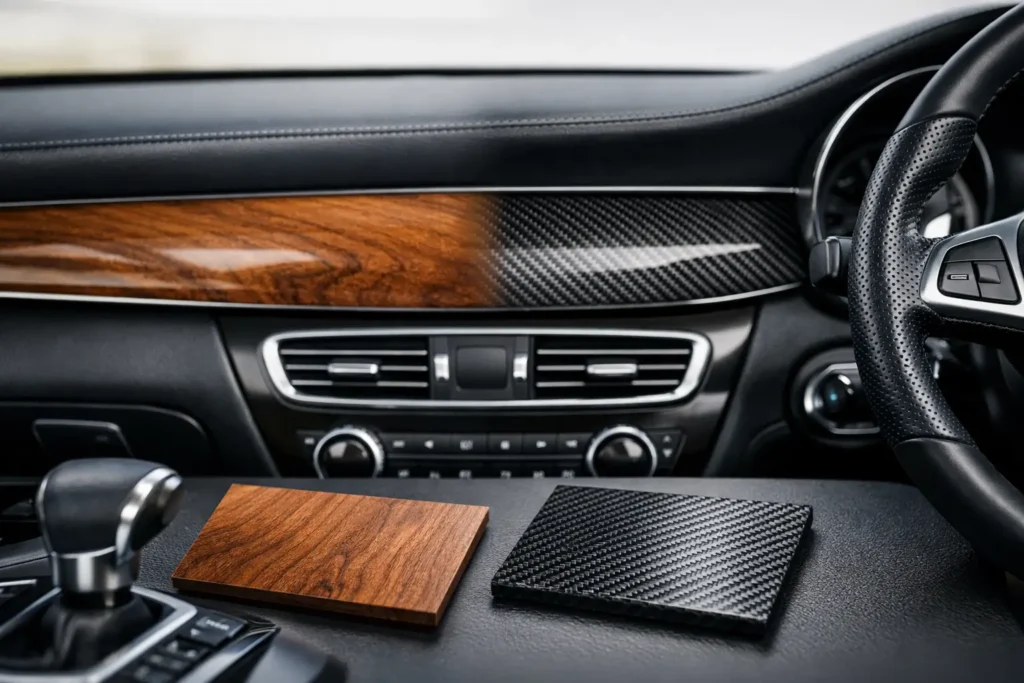
A steering wheel can make the answer obvious before the engine even starts. Run your hand across a glossy, properly refinished wood rim and you get warmth, depth, and a connection to the era of the vehicle. Rest your hand on carbon fiber and the impression changes immediately: technical, focused, and performance-driven. In the real wood vs carbon fiber decision, neither material is automatically better. The right choice is the one that belongs in your vehicle and suits the way you want its interior to feel.
For many owners, this is not simply a cosmetic upgrade. Woodgrain trim that has faded, cracked, or lifted can make a well-kept luxury car feel tired. Carbon fiber that has yellowed, delaminated, or been covered with a low-quality overlay can have the same effect. Proper restoration or conversion should make the part look intentional, durable, and appropriate from every seat in the cabin.
Real Wood vs Carbon Fiber: Start With the Vehicle
The factory design is usually the best starting point. Real wood has a natural home in classic American cars, vintage European luxury models, traditional trucks, executive sedans, and many high-end SUVs. It works especially well when the cabin already includes leather, chrome, polished metal, or original wood accents. A correctly restored wood steering wheel or dash trim piece can preserve the character that made the vehicle desirable in the first place.
Carbon fiber fits naturally in performance cars, track-inspired builds, modern sports sedans, supercars, and interiors with aluminum, piano black, or technical finishes. It can sharpen the look of a newer vehicle without making it feel overdone, particularly when the weave direction, gloss level, and surrounding trim are carefully matched.
There are exceptions. A classic car can wear carbon fiber successfully when the build has modern brakes, suspension, seats, and drivetrain upgrades. A newer performance vehicle can also benefit from real wood, but the finish must be selected with restraint. Deep open-pore wood, dark satin burl, or a modern matte finish may work where a high-gloss traditional veneer would not.
The question is not whether wood is old-fashioned or carbon fiber is automatically sporty. Ask whether the material supports the vehicle’s story. A restoration should look like it belongs there, not like an unrelated part was added to the cabin.
The Visual Difference Is More Than Color
Real wood has variation that manufactured materials cannot fully duplicate. Grain lines, figuring, depth beneath the clear finish, and subtle shifts in tone create a one-of-one appearance. Even when two pieces use the same species and stain, they will not look identical. For collectors and owners restoring an original interior, that individuality is part of the appeal.
Wood can be finished in many directions. A rich, high-gloss walnut look can recreate a factory luxury appearance. A lighter satin finish can feel cleaner and more contemporary. Refinishing also makes it possible to correct sun fading, scratches, cloudy clear coat, and damaged edges while matching the surrounding interior materials.
Carbon fiber has its own visual language. The weave pattern creates movement under changing light, and its clean geometry reads as engineered rather than organic. Gloss carbon fiber delivers a bold, high-contrast look. Satin or matte carbon fiber is more understated and often better suited to interiors where glare is a concern.
Quality matters greatly with carbon fiber. A convincing finish requires consistent weave alignment, clean transitions around switches and spokes, smooth clear coat, and no distorted pattern at corners or tight radiuses. Poorly installed overlays can show seams, lift at edges, or look flat compared with a properly converted or refinished part.
Durability Depends on Finish, Use, and Care
Both materials can hold up extremely well when restored or converted correctly, but neither is maintenance-free. Real wood is protected by its finish, not by the wood alone. A quality clear coat helps shield it from UV exposure, oils, light scratches, and daily handling. Over time, intense sun, heat cycles, moisture, and neglected cleaning can still cause finish failure, cracking, or fading.
This is particularly relevant for steering wheels. Rings, hand lotion, sunscreen, sweat, and temperature extremes all affect the surface. A wood steering wheel should be cleaned with products appropriate for finished interior surfaces, not harsh household cleaners or abrasive compounds. If the finish begins to crack or cloud, addressing it early can prevent more extensive damage.
Carbon fiber is often selected because it feels tougher and more modern, but its surface still relies on a protective clear coat. UV exposure can yellow or dull lower-quality finishes. Sharp impacts can chip the coating, and damage to the composite beneath the surface requires more than a quick polish. Carbon fiber parts also benefit from gentle cleaning and protection from harsh chemicals.
For a daily driver that sees heavy use, either option can be practical when the work is done to a high standard. The bigger factor is whether the finish matches the vehicle’s exposure. A garage-kept collector car allows for more delicate, period-correct choices. A vehicle parked outside every day may benefit from a finish selected specifically for UV resistance and frequent handling.
Feel Behind the Wheel Changes the Decision
Appearance gets attention, but tactile quality is what owners notice every mile. Wood is smooth, firm, and warm in a way that can make a classic or luxury interior feel substantial. On a properly restored steering wheel, the surface should feel even and polished without rough spots, sticky clear coat, or sharp transitions where the finish has failed.
Carbon fiber feels cooler, more technical, and visually lighter. It is commonly used on steering wheel spoke trim, dash panels, center consoles, and other touchpoints where a performance-oriented look matters. On a full steering wheel, carbon fiber is often paired with leather, perforated leather, or suede grips. That combination can provide the visual impact of carbon fiber while retaining a secure, comfortable hand position.
If comfort is the priority, think about where the material will sit. Carbon fiber on spokes and trim is very different from carbon fiber at the nine-and-three grip positions. Likewise, real wood on an upper or lower steering-wheel section can be a beautiful factory-style detail, while a full wood rim may better suit a classic vehicle than a modern canyon carver.
Originality, Customization, and Resale Value
Owners of collector vehicles should be careful about replacing an original material simply because another finish is currently popular. Correct woodgrain restoration can support authenticity and preserve the interior’s value. Keeping original parts in service, rather than replacing them with generic aftermarket pieces, often makes a stronger impression on buyers and judges alike.
Custom builds follow a different rule: consistency creates value. Carbon fiber can elevate an interior when it appears as part of a complete plan across the wheel, dash trim, console, and shift-area accents. One isolated carbon piece surrounded by faded factory wood or worn leather can look unfinished. The same is true of newly refinished wood placed beside scratched black trim and cracked armrests.
There is also a middle ground. Wood can be refreshed in a more contemporary tone, while carbon fiber can be used selectively on performance-oriented components. The goal is not to cover every panel in one material. It is to create a cabin with a clear point of view.
When Each Material Makes Sense
Choose real wood when factory authenticity, classic luxury, natural depth, or traditional craftsmanship are central to the vehicle. It is especially strong for vintage steering wheels, classic dash trim, executive sedans, luxury SUVs, and collector-grade restorations.
Choose carbon fiber when the vehicle has a genuine performance focus, a modern technical design, or a build that already uses motorsport-inspired materials. It is an excellent choice for sport steering wheels, trim conversions, center consoles, and interiors that need a cleaner, more aggressive visual direction.
If you are undecided, do not choose based on a small online sample alone. Look at the entire cabin: seat color, stitching, dash material, exterior paint, metal accents, and the vehicle’s intended use. A material that looks excellent by itself may be wrong once it is installed next to everything else.
At Craft Customs, the best projects begin with the original part and a clear understanding of what the finished interior needs to accomplish. Whether the goal is factory-new woodgrain or a carefully executed carbon fiber conversion, precision preparation and finishing are what separate a lasting upgrade from a temporary cosmetic change.
Your interior should make sense the moment you open the door. Choose the material that respects the vehicle, fits your driving style, and gives every repaired or refinished part a reason to be there.