
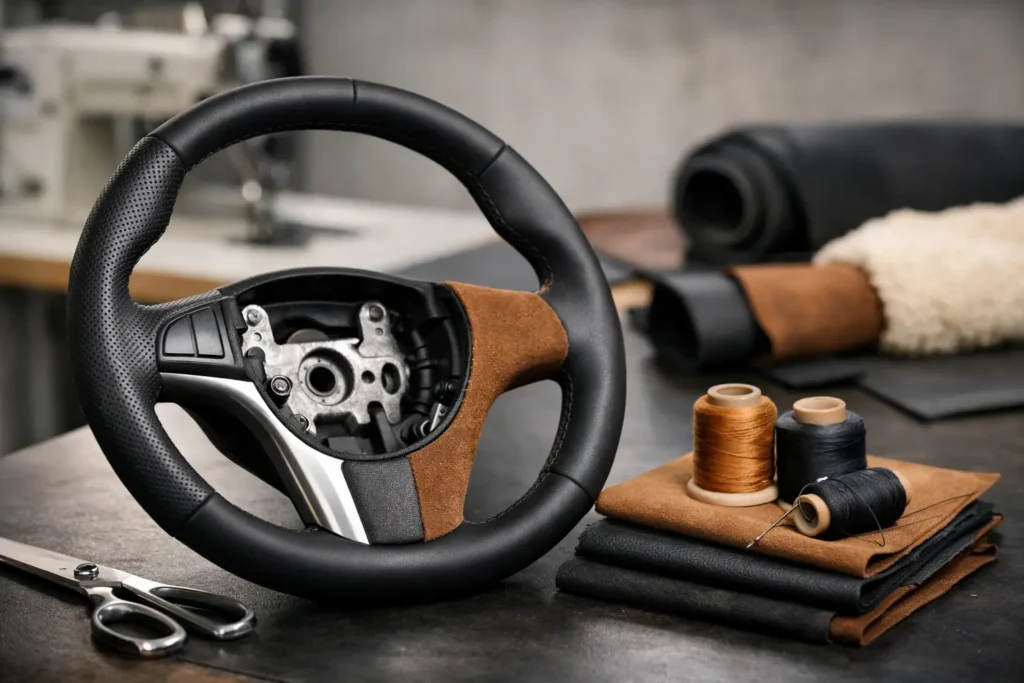
A steering wheel tells the truth about a vehicle’s interior faster than almost any other part. If the leather is slick, the stitching is frayed, or the finish is peeling, the whole cabin feels older than it is. Choosing the best materials for steering wheel reupholstery is not just about appearance – it affects grip, comfort, durability, maintenance, and whether the finished wheel feels factory-correct or fully custom.
The right material depends on how you use the vehicle and what kind of result you want. A classic restoration has different priorities than a track-focused build. A daily driver in a hot climate needs something different from a weekend exotic that spends most of its time in the garage. That is where material choice matters.
Best materials for steering wheel reupholstery by use case
There is no single best option for every wheel. Genuine automotive leather remains the standard for most applications because it balances durability, feel, and resale appeal. But suede-style materials, perforated leather, wood, and carbon fiber all have a place when the vehicle and the owner’s goals line up.
What matters most is matching the material to the wheel’s shape, the vehicle’s character, and the level of wear it will see. A material can look impressive in photos and still be the wrong choice in a real-world interior.
Genuine leather
For most customers, genuine automotive leather is still the strongest all-around answer. It has the right hand feel, wears in a premium way when properly selected, and fits everything from luxury sedans to muscle cars to classic restorations. On a reupholstered steering wheel, leather also gives the most flexibility in color, grain, stitch pattern, and finish.
Not all leather performs the same, though. Automotive-grade leather is designed for repeated hand contact, heat, oils, and friction. That matters. A wheel sees constant use in a very small area, which means inferior leather can get glossy too quickly, stretch, or lose its finish.
Smooth leather is the safest choice if you want a clean factory-style result. It is easy to maintain, comfortable in all seasons, and visually correct for a wide range of vehicles. If your goal is to make a worn wheel look factory new again, this is often the material that gets you there.
Perforated leather
Perforated leather is a smart upgrade when you want a more modern performance look and slightly better grip. It is commonly used on side grips or at the 10 and 2 positions, especially when paired with smooth leather on the top and bottom sections.
It can make the wheel feel less slick in warm weather, but it also introduces more texture and a slightly sportier visual. That works well in newer German, Japanese, and performance-oriented interiors. On a vintage luxury car, it may feel out of place.
Perforated sections also need precise wrapping and stitching. If the pattern is off or the material quality is poor, the wheel can look aftermarket in the wrong way. Done properly, it adds refinement. Done poorly, it stands out immediately.
Alcantara and suede-style materials
Alcantara and other suede-style wraps are popular for sports cars and custom builds because they provide excellent grip and a very distinct feel. They look aggressive, feel soft in hand, and can transform the personality of a wheel.
The trade-off is maintenance. These materials show wear faster than leather, especially on daily drivers. Skin oils, sunscreen, sweat, and general use can flatten the texture and create dark, matted areas. For a weekend car, show car, or performance build where tactile grip matters more than low maintenance, Alcantara can be the right call. For a commuter that sees constant use, leather is usually the better long-term material.
If you like the look of suede-style material but want more durability, limiting it to grip zones or combining it with leather can be a smarter approach than wrapping the entire wheel.
The best materials for steering wheel reupholstery in premium custom builds
Some steering wheels are not trying to look factory at all. They are meant to become focal points. In those cases, hard trim materials and hybrid designs come into play.
Wood
Wood is one of the most striking options for steering wheel restoration and customization, especially on classics, vintage luxury cars, and select high-end modern builds. A properly refinished wood wheel can look elegant, period-correct, and valuable in a way soft trim alone cannot match.
But wood is highly dependent on execution. The color, grain pattern, gloss level, and fit all have to suit the cabin. Too dark, too glossy, or too modern of a finish can make a restored wheel feel disconnected from the dash and trim around it.
Wood also changes the tactile experience. It looks beautiful, but it does not offer the same soft, forgiving hand feel as leather. Some drivers love that solid, traditional feel. Others prefer leather-wrapped grip sections for comfort. A wood-and-leather combination often solves that problem well.
Carbon fiber
Carbon fiber is best suited for modern exotic, performance, and heavily customized interiors. It delivers a technical, high-end appearance and can dramatically update a wheel when the rest of the cabin supports that style. Gloss carbon, forged carbon, and tinted variations can all create different effects.
The key issue is visual integration. Carbon fiber only works when it belongs with the rest of the interior. If the vehicle has no other performance-oriented trim or modernized accents, a carbon wheel can feel out of place. If the dash, console, or trim already features carbon elements, it can tie the cabin together.
Carbon also changes the character of the wheel. It is less about softness and more about appearance, structure, and visual impact. Most successful builds combine carbon with leather or perforated leather in the hand-contact zones so the wheel remains comfortable to use.
How to choose the right steering wheel material
Start with the vehicle’s role. If it is a daily driver, durability and easy cleaning should be near the top of the list. Smooth leather or a smooth-and-perforated leather combination usually makes the most sense. These materials age predictably and keep the wheel comfortable in changing temperatures.
If the vehicle is a collector car or a restoration, authenticity matters more. The best material is usually the one that matches the original look and feel as closely as possible. That might mean a specific leather grain, a certain stitch style, or a wood finish that reflects the factory era rather than current trends.
If it is a custom or performance build, function and personality both matter. This is where Alcantara inserts, race-inspired contours, carbon sections, or bold contrast stitching can make sense. Even then, there is a difference between a custom wheel that feels intentional and one that simply mixes materials for the sake of it.
Climate matters too. Extremely hot environments can make some surfaces uncomfortable, and high humidity or heavy use can accelerate wear on suede-style materials. If you drive with lotions, work-worn hands, or a lot of exposure to dust and sweat, leather generally remains the most forgiving option.
Material quality matters as much as material type
One of the biggest mistakes in steering wheel reupholstery is focusing only on the category of material rather than the grade. Cheap leather and premium automotive leather are not interchangeable. The same goes for synthetic suede, wood refinishing, and carbon applications.
The wheel is one of the highest-contact parts in the cabin. Every inconsistency in wrap tension, seam alignment, padding thickness, or topcoat quality is easy to see and easy to feel. That is why the craftsmanship behind the material matters as much as the material itself.
A properly reupholstered wheel should feel tight, symmetrical, and consistent all the way around. The stitching should be even. The seam placement should make sense in the hand. The finish should match the rest of the interior instead of competing with it.
What usually works best
For most owners, the best materials for steering wheel reupholstery come down to three realistic winners. Smooth automotive leather is the best overall choice for factory-style restoration, long-term comfort, and broad resale appeal. Perforated leather is an excellent second option for drivers who want a sportier look and more texture without sacrificing practicality. Alcantara or suede-style material is best reserved for specific performance or weekend applications where grip and appearance matter more than easy upkeep.
Wood and carbon fiber can be outstanding, but they are specialty choices. They work best when they match the vehicle’s interior design and are executed with the same level of precision as the rest of the cabin. When that happens, they do more than refresh a worn wheel – they elevate the entire interior.
If your steering wheel is worn, cracked, faded, or simply no longer fits the quality of the rest of your vehicle, the right material can change the driving experience every time you get behind it. The best result is not the flashiest option. It is the one that looks right, feels right, and still makes sense after years of use.