
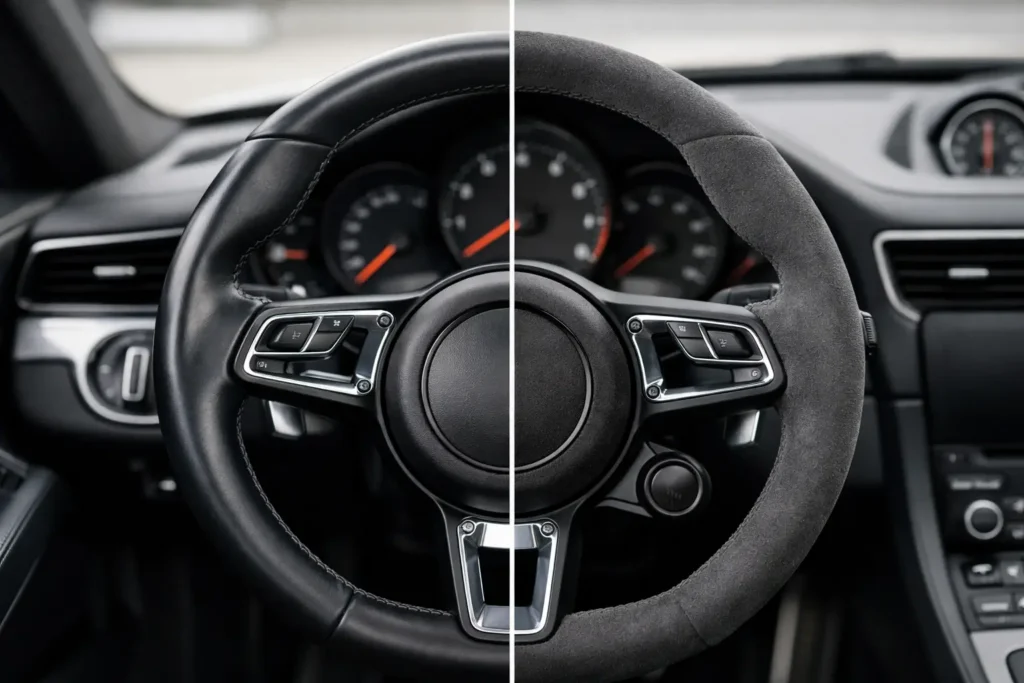
A steering wheel can make a clean interior feel premium or tired in about two seconds. That is why the leather vs alcantara steering wheel question matters more than many owners expect. Your hands are on it every time you drive, and the wrong material choice will show up fast in comfort, wear, maintenance, and the overall look of the cabin.
For some drivers, leather is the clear winner because it wears predictably, cleans up well, and fits almost any interior style. For others, Alcantara delivers the more focused, performance-oriented feel they want. The better option depends on how you drive, how often you drive, and how much upkeep you are realistically willing to do.
Leather vs Alcantara steering wheel: what really changes
On paper, both materials are premium upgrades over a worn factory wheel. In practice, they behave very differently.
Leather has a smoother surface, a more traditional luxury appearance, and a broader range of finishes. It can be soft and supple, or firmer and more structured depending on the hide and wrap style. It also tends to look right in almost everything, from a restored classic to a late-model luxury SUV.
Alcantara has a suede-like texture and a more motorsport-driven visual identity. It offers a softer, more tactile grip, especially when your hands are dry and you want that planted feel through corners. In the right vehicle, it looks aggressive and purpose-built. In the wrong vehicle, it can feel out of place or high-maintenance.
That is the first real dividing line. Leather is usually the safer all-around choice. Alcantara is more specific. When it matches the vehicle and owner, it can feel excellent. When it does not, owners often end up wishing they had gone with leather.
Grip and feel behind the wheel
If your main priority is tactile grip, Alcantara has an edge. The surface creates more friction than smooth leather, which is one reason it shows up so often in performance builds and track-oriented interiors. It can make the wheel feel more connected in spirited driving, especially when paired with contouring, thumb grips, or a thicker rim.
But grip is not a one-variable decision. Alcantara feels best when it is clean and properly maintained. Once body oils, sweat, and dirt build up, that fresh dry texture starts to flatten and slick over. A neglected Alcantara wheel loses much of the quality people choose it for in the first place.
Leather delivers a different kind of confidence. It is not as fuzzy or high-friction, but quality automotive leather still provides reliable control and a substantial, refined feel. Perforated leather can add a bit more grip without crossing into the higher-maintenance territory of Alcantara. For daily use, many drivers find that balance more practical.
If you drive hard on weekends and want the wheel to feel more performance-oriented, Alcantara makes sense. If you want a premium grip that still holds up to commuting, errands, weather changes, and easier cleaning, leather is usually the stronger long-term choice.
Daily durability and wear patterns
This is where the decision gets real.
Leather wears in ways most owners already understand. Over time it can smooth out, wrinkle slightly, or develop shine in high-contact areas. Lower-quality leather can crack or dry out, but properly selected and properly wrapped leather ages in a predictable way. Even when it shows use, it often still looks appropriate.
Alcantara is more sensitive. It does not usually crack like leather, but it can mat down, darken in contact zones, and develop a worn, flattened look if it is handled heavily and cleaned infrequently. If you drive with dirty hands, use hand lotion often, or spend long hours behind the wheel, Alcantara will tell on you faster.
That does not mean Alcantara is a bad material. It means it is less forgiving. Many owners love it when the vehicle is a weekend car, a garage-kept performance build, or a lower-mileage specialty vehicle. In a daily driver that sees constant use, coffee runs, heat, sweat, and quick in-and-out driving, leather generally holds its appearance better with less effort.
This matters for resale too. A clean leather wheel tends to appeal to almost everyone. A worn Alcantara wheel can make a car feel used faster than the odometer suggests.
Maintenance is where many owners choose leather
A lot of steering wheel decisions are made emotionally at first and practically later. Alcantara often wins the first reaction because it looks sporty and feels different. Maintenance is what changes the conversation.
Leather is simpler to live with. Routine cleaning is straightforward, and regular care helps preserve the surface and color. It is a material most owners recognize and know how to handle. If it gets minor shine from use, that is expected. If it gets dirty, it is usually manageable.
Alcantara needs more discipline. It should be cleaned gently and more consistently to prevent oils from building up. If you ignore it for too long, it can lose that crisp texture and start looking tired. Owners who expect zero-maintenance performance often end up disappointed.
For a show-quality or enthusiast vehicle, that extra care may be completely worth it. For a commuter car or family vehicle, leather usually asks less of you while still delivering a premium result.
Cabin style, originality, and material match
The leather vs alcantara steering wheel choice is not just about your hands. It is also about whether the wheel belongs in the interior.
Leather has the widest design range. It works with OEM restorations, luxury interiors, classic cabins, trucks, exotics, and modern customs. You can keep it factory-correct or push it into a more custom direction with contrast stitching, perforated sections, colored markers, or reshaped contours. It rarely looks forced.
Alcantara has a narrower but strong design lane. It pairs best with sport seats, aggressive trim, carbon fiber accents, and interiors that already lean modern or performance-focused. In a track-inspired build, it looks right at home. In a traditional luxury or period-correct restoration, it can feel like the wrong material even if the workmanship is excellent.
This is one place where an experienced interior specialist matters. The best result is not just choosing a premium material. It is choosing the material that fits the vehicle, the use case, and the rest of the interior. Craft Customs sees this decision every day on wheels from daily drivers to collector cars, and the right answer is almost never one-size-fits-all.
Who should choose leather
Leather is usually the right choice if you want a wheel that looks premium, wears more predictably, and does not ask for constant attention. It is especially strong for daily drivers, luxury vehicles, restored classics, trucks, and any owner who values longevity and resale appeal.
It is also the safer option if you are repairing a wheel that already made the interior feel old. Fresh leather has an immediate factory-new effect. It cleans up the cabin visually, improves hand feel, and tends to stay looking right for the broadest range of drivers.
If you want added texture without the full maintenance commitment of Alcantara, perforated leather or a mixed-material layout can be a smart middle ground.
Who should choose Alcantara
Alcantara makes sense when driving feel and visual character matter more than low maintenance. If you own a performance car, drive spirited roads, track the car occasionally, or want the cabin to lean more motorsport than luxury, Alcantara can be the right call.
It also works well for second vehicles, weekend builds, and enthusiast-owned cars that are cleaned regularly and not subjected to heavy daily abuse. In that setting, the material can stay looking sharp and deliver the tactile payoff owners are after.
The key is honesty. If you know you are not going to maintain it, leather will likely serve you better.
The best answer for most owners
If you are choosing purely on broad practicality, leather wins. It is more versatile, easier to maintain, and better suited to the way most people actually use their vehicles. It also has fewer ways to disappoint over time.
If you are choosing for a purpose-built driving experience and you understand the upkeep, Alcantara can absolutely be the better material. It just needs the right car and the right owner.
A steering wheel is one of the few interior parts you never stop noticing. Choose the finish that will still feel right after the novelty wears off, not just the one that looks best on day one.