
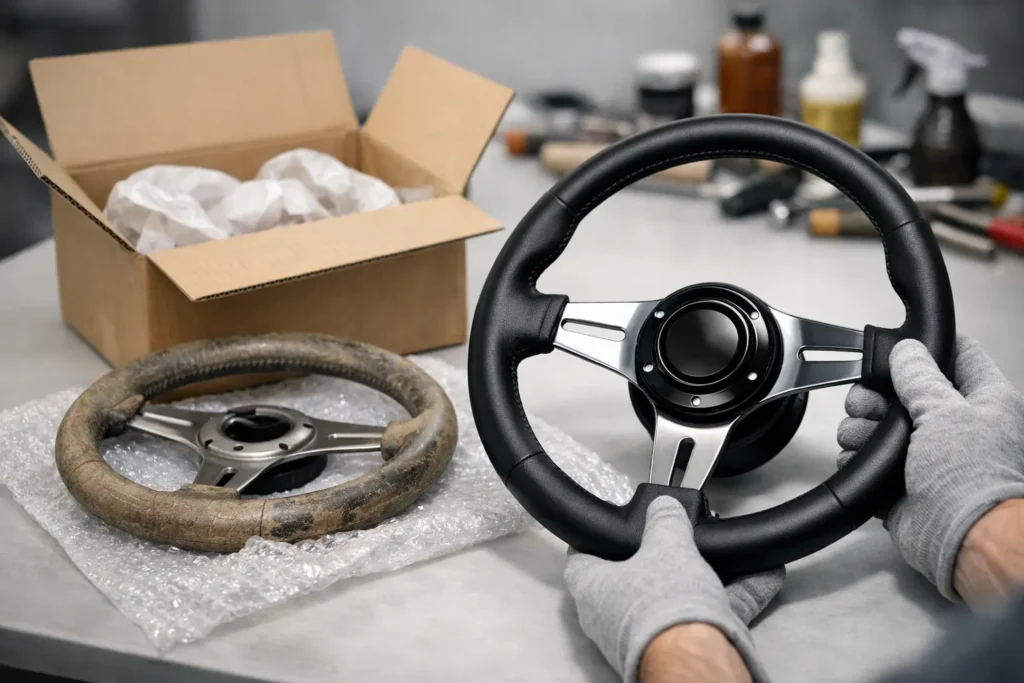
A worn steering wheel changes the feel of the entire cabin. You can have clean seats, polished paint, and a strong-running vehicle, but if your hands land on cracked leather, peeling finish, or faded wood every time you drive, the interior still feels tired. That is exactly why mail in steering wheel restoration has become the smart option for owners who want expert results without hunting down a local specialist who may not work on their specific wheel.
What mail in steering wheel restoration actually solves
Steering wheels wear differently than almost any other interior part. They absorb skin oils, heat, sunlight, friction, and constant pressure in the same areas day after day. Over time, leather gets slick, hard, torn, or discolored. Wood trim can crack or lose its gloss. Painted sections fade. Factory coatings peel. On some newer wheels, the original surface starts to feel gummy or uneven. On older classics, the structure may still be solid while the finish has clearly aged out.
Replacing the wheel is not always the best answer. For many vehicles, a new OEM wheel is expensive, unavailable, or no longer produced. Used replacements often come with the same wear you are trying to get rid of. If the wheel belongs to a rare trim package, performance model, or collector vehicle, keeping the original part usually matters. Restoration preserves fit, originality, and factory function while bringing the surface and appearance back to a much higher standard.
That matters for more than looks. The steering wheel is a constant touchpoint. If it feels dry, rough, sticky, loose, or worn through, the car feels older than it is. A properly restored wheel improves comfort, visual quality, and perceived value every time you get behind it.
Why a mail in steering wheel restoration service makes sense
Most upholstery shops and body shops are not true steering wheel specialists. Some can do basic wrapping work, but fewer handle structural prep, leather pattern matching, woodgrain refinishing, paint-matching, carbon fiber conversion, or restoration across modern, luxury, vintage, and exotic applications. That gap is why send-in service works so well.
With a mail-in process, the work is done by a shop that handles these parts every day instead of treating your wheel like a side project. The wheel is removed from the vehicle, shipped in, restored in-house, and sent back ready for reinstallation. For owners outside major metro areas, it opens access to a level of craftsmanship that may not exist locally.
It also gives you more options. Instead of settling for a basic recover, you can restore the wheel to factory-style condition or take the opportunity to upgrade it. Many owners start with worn leather repair and then choose changes such as thicker grips, perforated leather sections, suede, custom stitching, paint-matched trim, refinished wood, or carbon fiber accents. The result can stay original in appearance or move toward a more tailored custom interior.
What can be restored or customized
The answer depends on the wheel, but most projects fall into a few clear categories. Leather wheels can often be reupholstered with new material in the closest factory color or in a custom finish. Cracked, hardened, or torn outer wraps are typically removed and rebuilt with fresh leather. Grip shape can sometimes be maintained exactly as stock or slightly modified if the owner wants a fuller hand feel.
Wood and woodgrain sections are another common need. These can suffer from UV fading, clear coat failure, and cracking. A specialist can refinish those sections to restore depth and gloss or match a specific interior tone. Painted trim and molded sections may also be refinished when factory coatings have worn through.
Then there are custom builds. Some owners want the wheel to look better than stock, not simply newer. Carbon fiber conversion, suede wrapping, contrast stitching, and color changes can modernize the cockpit without changing the core fitment of the original wheel. That is especially useful when you like the wheel’s shape and controls but want the finish to match a larger interior build.
How the process usually works
A professional mail in steering wheel restoration process should feel straightforward. First, the owner confirms that the shop can work on the specific make, model, and wheel style. Photos are usually enough to identify condition, trim type, and material needs before the wheel is shipped.
Next comes removal and packing. The wheel is taken off the vehicle and shipped to the restoration shop. Proper packing matters because bent trim, damaged control areas, or impact marks during transit can create avoidable issues. Once received, the wheel is inspected, the restoration plan is confirmed, and the work begins.
From there, quality is all about prep and execution. Old material has to come off cleanly. Surface damage has to be corrected, not hidden. Leather needs proper wrapping and stitching. Hard trim sections need the right refinishing process for both appearance and durability. If a wheel includes multiple materials, transitions between those materials need to look factory-clean.
When the work is complete, the wheel is shipped back for reinstallation. A good send-in experience is not complicated, but it does depend on a shop that communicates clearly and has real process control in-house.
What separates expert restoration from a cosmetic quick fix
Not every restored wheel is restored well. Some low-end repairs look acceptable in photos but fail where it matters – in the hand, at the seams, or after a short period of use. That usually comes down to shortcuts.
The first shortcut is surface-only repair. If worn leather is simply coated or patched without properly rebuilding the wheel, the result may crack again, feel unnatural, or show uneven texture. The second is poor material matching. Wrong grain, incorrect sheen, and off-color leather can make the wheel stand out for the wrong reasons. The third is weak finishing work on wood, painted trim, or composite sections, where gloss level and color accuracy matter just as much as durability.
A proper restoration should look intentional from every angle. Stitch lines should be straight. Edges should be clean. Grip contours should feel even. Refinished sections should match the surrounding interior rather than drawing attention as a close-but-not-quite attempt. That level of finish takes specialization.
Is restoration better than replacement?
Sometimes yes, sometimes no. If a direct OEM replacement is available at a reasonable price and matches your interior exactly, replacement can be a valid option. But that is not the usual situation for older vehicles, specialty trims, or higher-end interiors.
Restoration is often the better move when originality matters, when factory parts are discontinued, or when the used market is full of wheels with the same damage. It is also better when you want to improve the wheel instead of merely swapping in another stock part. A send-in service gives you control over final materials, color, finish, and feel.
The trade-off is downtime. Your wheel has to be removed, shipped, restored, and returned, so the vehicle may be out of service unless you have a spare wheel or another transportation option. For many owners, that is an easy compromise for better craftsmanship and wider customization.
Who gets the most value from this service
Classic car owners benefit because original wheels are often difficult to replace correctly. Luxury and exotic owners benefit because factory parts can be costly and interior finish quality matters more. Daily drivers benefit because steering wheel wear is one of the fastest ways for a well-maintained vehicle to feel neglected.
There is also strong value for enthusiasts doing a broader interior refresh. If you are already updating trim, consoles, shift knobs, armrests, or dash pieces, the steering wheel should not be the one part left behind. It sits in the center of the driving experience. When it is restored correctly, the entire cabin feels more cohesive.
For customers shipping parts to a specialist such as Craft Customs, the main advantage is access to focused craftsmanship without being limited by geography. That matters when the part in your hands is rare, expensive, sentimental, or central to the way the vehicle presents.
Before you send your wheel out
Take a close look at what bothers you most. Is it cracking at the top of the rim, worn-through leather on the sides, faded wood, peeling finish, or a color that no longer works with the rest of the cabin? Knowing whether your goal is factory-correct restoration or a custom upgrade will shape the right path.
It also helps to think beyond the wheel itself. If the rest of the interior has black trim but your wheel finish is faded gray, matching matters. If you want a thicker grip or a sportier material, comfort matters. If the vehicle is collectible, authenticity matters. The best restoration is not just technically clean. It fits the purpose of the vehicle and the expectations of the owner.
A steering wheel is one of the few parts you see and touch every single drive. When it looks worn, the whole cabin pays for it. When it is restored with the right materials and the right process, the difference is immediate, and you feel it long before anyone else notices it.