
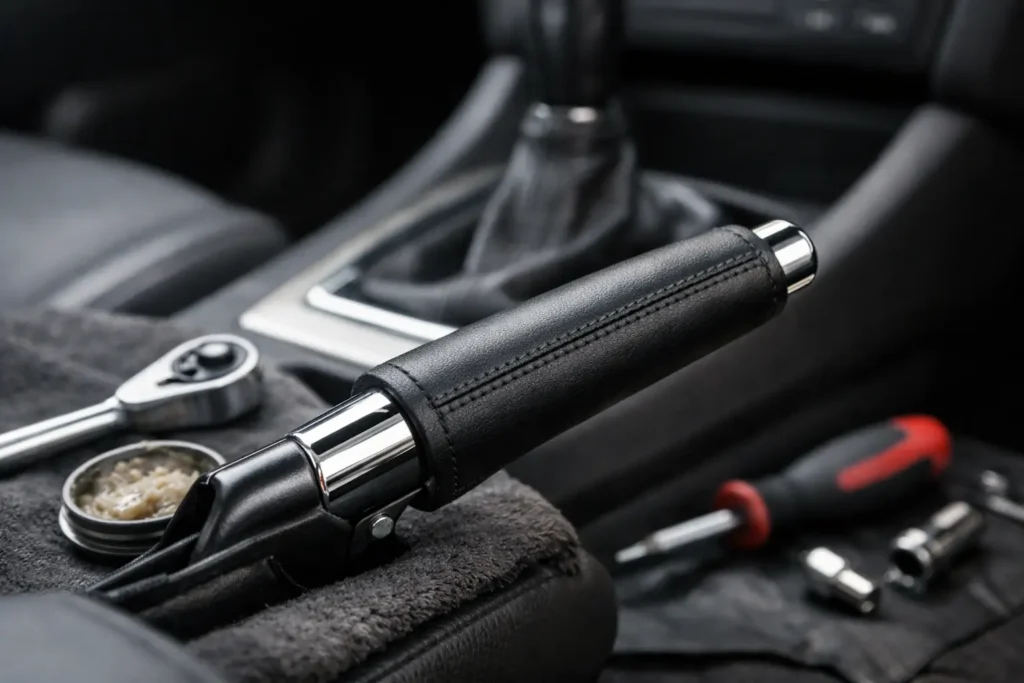
A worn e-brake handle is one of those interior flaws you notice every time you drive. Your hand goes straight to it, so faded leather, peeling trim, loose fitment, or a cracked plastic body can make the whole cabin feel older than it is. That is why emergency brake handle restoration matters – not as a cosmetic extra, but as a high-contact repair that changes how the interior looks, feels, and holds value.
Why emergency brake handle restoration matters
The emergency brake handle sits in a small area, but it carries a lot of visual weight. In a clean interior, damaged trim on the handle stands out fast. On a classic car, it can look obviously out of place next to a restored console or freshly refinished steering wheel. On a modern luxury or performance vehicle, worn material on the handle breaks the factory feel that owners expect from the rest of the cabin.
This part also ages differently than larger interior pieces. Hands, oils, friction, sunlight, rings, keys, and constant use wear down the finish in a concentrated way. Leather gets smooth and shiny in the wrong way, stitching frays, soft-touch coatings become sticky, painted surfaces chip, and plastic starts to crack around stress points. If the handle has a button or release cap, those details can become loose or heavily scratched as well.
The result is simple. Even if the seats, dash, and door panels still look decent, one tired e-brake handle can make the interior feel neglected.
What goes wrong with an e-brake handle over time
Most emergency brake handle restoration work starts with surface wear, but the real condition can vary a lot depending on the vehicle and material. Some handles are wrapped in leather over a rigid core. Others use molded plastic with paint or soft-touch coating. Higher-end vehicles may combine leather, contrast stitching, brushed trim, woodgrain, or specialty finishes.
That matters because the repair approach should match the construction. A cracked molded handle is a different job than replacing worn leather. A faded wood or carbon-style insert needs different prep and refinishing than a black plastic grip with chipped coating. There is no one-size-fits-all process if the goal is a factory-correct result.
In practical terms, the most common issues include worn leather, split seams, flattened padding, peeling paint, discoloration, gouges, broken trim tabs, scratches around the button area, and damage caused by past DIY repairs. Glue residue and over-applied dye are especially common on handles that someone tried to freshen up at home.
Restore or replace? It depends on the part
Some owners assume replacement is the easier move. Sometimes it is. If a brand-new OEM handle is still available, affordable, and correct for the vehicle, replacement can make sense. The problem is that many interior parts are discontinued, expensive, or only available in the wrong color or trim level. On older vehicles, finding an undamaged original can be harder than restoring the one you already have.
Restoration becomes the better option when originality matters, when matching adjacent interior pieces matters, or when the available replacements are lower quality than the factory part. That is especially true on collector vehicles, rare trim packages, luxury models, and custom builds where consistency across the cabin is more important than simply installing something functional.
There is also the fit issue. Original handles usually fit better than aftermarket replacements. When the goal is to keep the interior looking correct, restoring the factory piece often delivers the cleaner result.
What a proper emergency brake handle restoration includes
The best restoration work starts with a close inspection, not a quick refinish. The part has to be checked for structural damage, worn mounting points, damaged release components, and underlying material failure. Surface work alone will not hold up if the foundation is compromised.
For leather-wrapped handles, restoration usually involves removing damaged material if necessary, repairing the substrate, cutting and fitting new leather, and stitching or wrapping it to match the original style. Grain, thickness, sheen, and color all matter. A handle trimmed in leather that is too glossy, too thick, or the wrong texture can look custom in the wrong way.
For painted or coated handles, prep is where quality shows. Old coatings need to be removed correctly, cracks and gouges repaired, surfaces leveled, and new finish materials applied with the right texture and color. If the handle includes metallic, woodgrain, carbon fiber, or satin trim details, those have to be matched to the rest of the interior rather than guessed.
Fit and feel matter just as much as appearance. A restored handle should not just photograph well. It should feel solid in the hand, sit correctly with the surrounding console parts, and operate as it should.
Matching the rest of the interior
This is where many repairs fall short. An e-brake handle rarely lives on its own. It sits next to the shifter, console lid, trim panels, and seats. If those pieces are black but vary in sheen, or if the grain on the new leather does not match the shift knob or steering wheel, the repair can still look off.
A quality restoration accounts for surrounding materials. That may mean matching OEM black instead of generic black, using the same stitch color found on the wheel or shifter, or replicating a factory texture that most shops would overlook. In a custom interior, it can mean intentionally coordinating the e-brake handle with a suede wheel, color-matched trim, or upgraded console finish.
That is why this part is often worth restoring alongside other touchpoints. When the wheel, shifter, armrest, and handle all look and feel consistent, the interior feels complete.
Customization options beyond factory specs
Not every customer wants stock. Emergency brake handle restoration can also be the right time to upgrade the part instead of simply returning it to original condition.
Leather color changes, contrast stitching, perforated leather, suede, smooth leather, carbon fiber styling, and custom paint-matched trim can all work well if they are done with restraint and with the rest of the cabin in mind. On a performance build, a more aggressive material choice may make sense. On a luxury vehicle, subtle changes usually age better.
The trade-off is authenticity. A custom finish can make the interior look more personal and more premium, but it may not be the right choice for a numbers-matching classic or a collector-grade restoration. If resale value depends on originality, factory-correct restoration is usually the safer path.
Why DIY results usually disappoint
Small parts make people think the job is easy. In reality, e-brake handles are often harder to restore well than larger panels because flaws are easier to see at close range. Loose leather wrapping, uneven seams, wrong adhesive, poor disassembly, and mismatched color show up immediately on a part that is inches from your hand.
The other issue is durability. Aerosol paint, off-the-shelf dye, or universal wrap material may look acceptable for a few weeks, then wear through quickly with regular use. High-contact interior parts need proper prep, correct material selection, and finishing methods built for friction and handling.
If the goal is a temporary improvement, DIY may be enough. If the goal is a factory-new or premium custom result that lasts, specialist restoration is a different level of work.
Choosing the right shop for emergency brake handle restoration
This kind of repair is best handled by a shop that already works deep in automotive interiors, not one that treats the handle like a generic trim piece. You want a team that understands leather wrapping, color matching, hard-part refinishing, OEM texture replication, and the fitment standards expected across different makes and models.
Ask the practical questions. Do they restore the original part in-house? Can they match surrounding interior components? Do they handle both restoration and custom work? Have they worked on your vehicle type before? Can they repair cracked substrates, not just recolor them?
Craft Customs is built around that kind of detail-driven interior work, including high-contact parts that most general upholstery shops treat as secondary items. When the handle has to match the rest of the interior, experience matters.
A restored emergency brake handle should disappear into the cabin in the best possible way. It should look right, feel right, and stop pulling your eye away from everything else you have already invested in.