
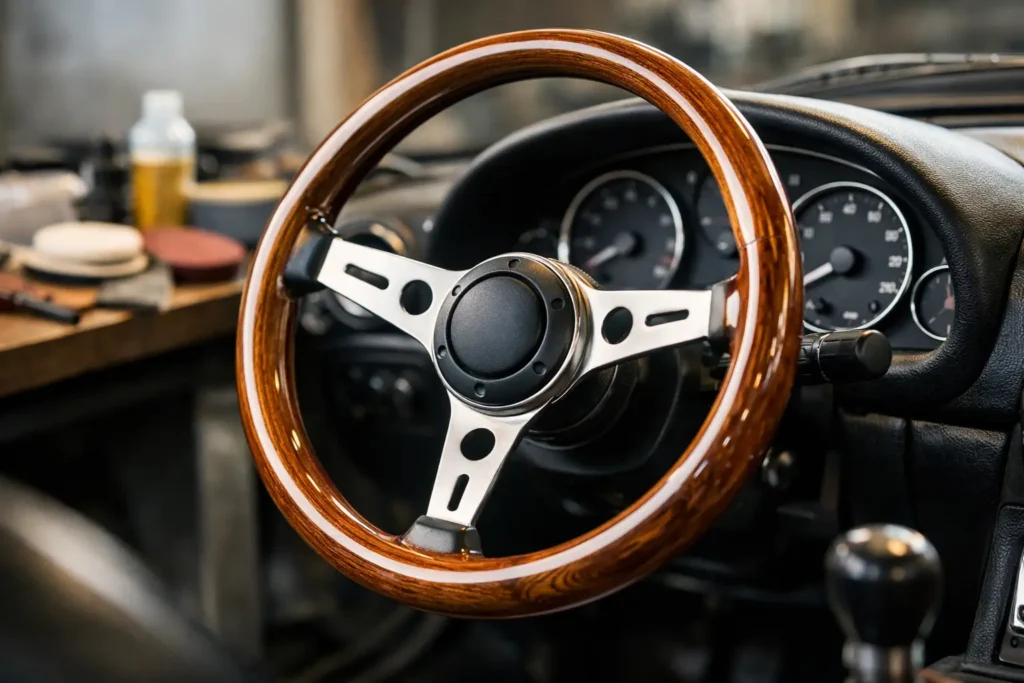
A faded or cracked wood-trim wheel changes the whole feel of a vehicle the second you sit down. Even when the seats, dash, and paint still look strong, damaged wood can make the interior feel tired, neglected, or cheap. That is why wood grain steering wheel restoration matters more than many owners expect. The steering wheel is the one interior part you see and touch every time you drive, so when the finish fails, the problem is impossible to ignore.
For classic cars, luxury vehicles, and modern models with wood accents, restoring the wheel is rarely just about cosmetics. It is about preserving originality when that matters, improving fit and feel in your hands, and correcting wear before it spreads into deeper cracking, lifting, or structural damage. A proper restoration can return the wheel to a factory-correct look or take it in a more refined custom direction, depending on the vehicle and the owner’s goals.
What goes wrong with wood-trim steering wheels
Wood grain steering wheels fail in a few predictable ways. UV exposure dries out clear coats and fades color. Heat cycling causes expansion and contraction that can lead to hairline cracks or larger splits. Oils from hands, cleaners, and years of use wear down the finish and leave dull spots, rough texture, or discoloration. On some wheels, the issue is not solid wood at all but simulated woodgrain trim, veneer, or molded components with a faux wood finish. Those require a different repair strategy than many owners realize.
That distinction matters. A true wood rim or veneer insert may need crack repair, refinishing, stain correction, and clear coat rebuilding. A simulated woodgrain section may need surface preparation, color recreation, grain pattern matching, and refinishing techniques designed to replicate the original appearance. Treating both types the same usually leads to poor color match, uneven gloss, or a repair that looks obvious once installed.
Wood grain steering wheel restoration is not one-size-fits-all
The right approach depends on the construction of the wheel, the age of the part, and what kind of result you want. Some owners want factory-authentic restoration because the vehicle is collectible and originality affects value. Others want the same wood look but cleaner, deeper, and more durable than what left the factory. There are also cases where the best result comes from restoring the wood sections while rewrapping the grip area in new leather, which gives the wheel a more complete transformation.
This is where experience makes the difference. Matching a gloss level is not the same as matching a factory wood tone. Recreating a grain effect is not the same as spraying on a tinted clear coat. And if the wheel has mixed materials such as leather, plastic, painted trim, or metal accents, every section has to work visually with the others. A steering wheel can be technically repaired and still look wrong if the finish is too orange, too red, too glossy, or too flat.
What a professional restoration process usually includes
A quality restoration starts with inspection, not sanding. The wheel needs to be evaluated for structural cracks, loose sections, failed coatings, sun damage, and previous repair work. If there is old filler, low-quality repainting, or clear coat contamination, those problems have to be corrected before any finish work begins.
Once the wheel is stripped and prepped, damaged areas are repaired and leveled. If the wheel has a genuine wood section, crack stabilization and surface correction need to happen without distorting the original shape. If it has a simulated woodgrain finish, the surface has to be rebuilt cleanly so the new grain pattern does not telegraph old damage underneath.
Color matching is the stage most people underestimate. A proper wood appearance is built in layers. Tone, depth, grain movement, and final clear all affect how the wheel reads in daylight. The goal is not simply to make it shiny again. The goal is to make it look intentional, consistent, and correct for the rest of the interior.
Then comes the protective finish. Clear coat has to do more than add gloss. It needs to protect against UV exposure, hand contact, and regular use while keeping the wheel comfortable to hold. Too thick, and it can look artificial. Too thin, and durability suffers. The best results balance appearance with long-term wear.
Why DIY wood grain steering wheel restoration often disappoints
There is a reason so many do-it-yourself wheel repairs look good from ten feet away and rough from the driver’s seat. Steering wheels are high-visibility parts with complex curves, constant hand contact, and little room for mistakes. A small mismatch in color, texture, or gloss is obvious every time you get behind the wheel.
Most DIY attempts fail in one of three areas. The first is prep. If the damaged coating is not fully stabilized, the new finish will not last. The second is grain replication. Faux woodgrain is harder to recreate than it looks, especially when trying to blend repaired spots into surrounding material. The third is durability. Consumer products can improve appearance temporarily, but they often do not hold up to heat, oils, and daily handling the way a professionally refinished wheel should.
That does not mean every wheel needs a full concours-level restoration. If the vehicle is a driver and the damage is minor, a simpler refinishing plan may make sense. But if the wheel is rare, valuable, or central to the interior’s look, cutting corners usually costs more later.
When restoration is better than replacement
Replacement sounds easier until you try to find the correct wheel. Many factory wood-trim wheels are discontinued, expensive, or only available used in the same worn condition. Even when a replacement exists, it may not match the original color, trim configuration, airbag setup, or production-year details exactly.
Restoration keeps the original part with the original fit. That matters on collector vehicles, but it also matters on newer cars where trim variations can be surprisingly specific. Keeping the factory wheel also avoids the gamble of buying a used piece with hidden cracks, peeling clear, or prior repairs.
For owners who care about resale, restoration can also protect value better than an incorrect replacement. Buyers notice interior details. A properly refinished wheel makes the cabin feel maintained. A wrong or poorly matched wheel raises questions about the rest of the vehicle.
Customizing while restoring
Not every project needs to stay stock. Some owners want wood grain steering wheel restoration that preserves the original design but improves the finish. Others want a more tailored result, such as darker wood tone, a richer gloss level, or a leather rewrap that better suits the rest of the cabin.
That is where specialist interior work becomes especially valuable. A wheel can be restored to look factory-new, or it can be refined to better match upgraded trim, custom seating, or a revised color scheme. The key is restraint and accuracy. Good customization looks like it belongs in the vehicle. It should feel deliberate, not forced.
At Craft Customs, this kind of work is handled in-house because matching materials and finishes across interior components requires consistency. A wheel should not look isolated from the dash, console, or shifter. The strongest results come when every visible surface speaks the same visual language.
Choosing the right service for your wheel
If you are evaluating a restoration provider, look past generic promises. Ask whether they work specifically with steering wheels, whether they restore both genuine and simulated wood finishes, and whether they can match factory appearance as well as custom requests. Ask how they handle cracks, coating failure, and mixed-material wheels. Most of all, look for evidence in finished work, not just claims.
A steering wheel restoration should improve more than appearance. It should restore confidence in the part every time you grip it. The finish should feel smooth, the color should suit the interior, and the final result should make the entire cabin feel newer and more valuable.
If your wheel has fading, peeling, cracks, or worn-out woodgrain, waiting rarely helps. Damage spreads, coatings continue to break down, and the wheel becomes harder to restore cleanly. Fix it while the original part can still be brought back the right way, and the whole interior will feel better every time you drive.