
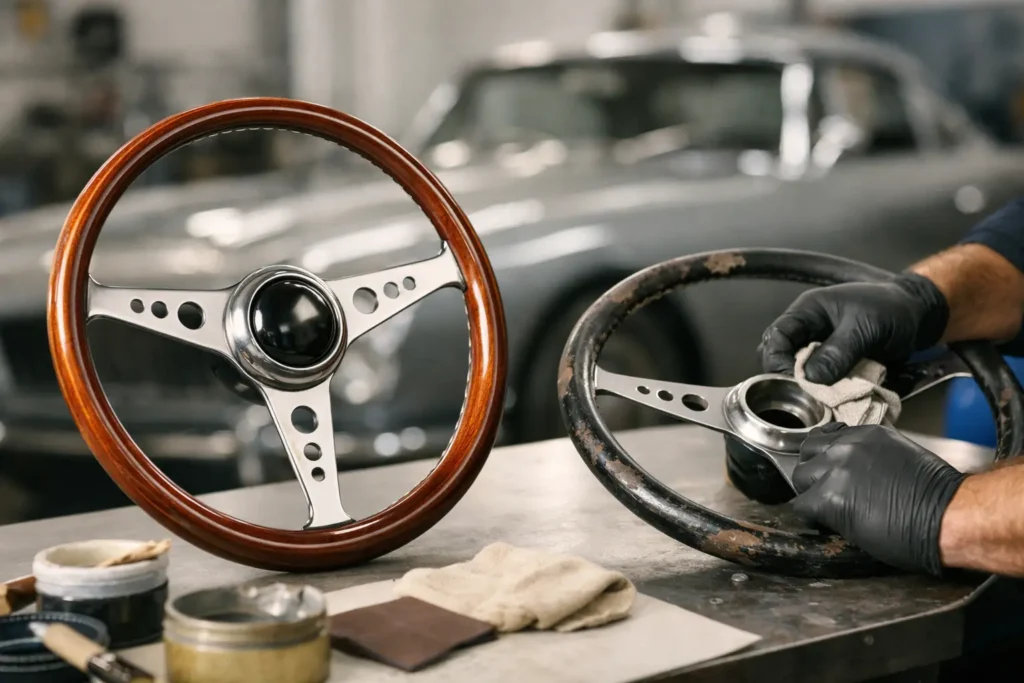
A worn steering wheel gives away a vehicle’s age faster than almost anything else in the cabin. Cracks at the rim, faded color, loose wraps, chipped paint, and dried-out material all show up the moment you sit down. A proper classic steering wheel restoration service fixes more than appearance – it restores the part you see and touch every time you drive.
For classic car owners, collectors, and serious enthusiasts, that matters. The steering wheel is not just another trim piece. It sets the tone for the entire interior. You can have fresh carpet, clean gauges, and polished exterior paint, but if the wheel looks neglected, the car still feels unfinished.
What a classic steering wheel restoration service actually solves
Classic steering wheels age in different ways depending on the original construction. Some have hard plastic or bakelite-style materials that crack and separate. Others have wood rims with faded finish, damaged grain, or missing sections. Leather-wrapped wheels can dry out, split at the seams, flatten from years of use, or simply lose the rich texture they once had.
The right restoration service addresses the specific failure, not just the symptom. That means stabilizing cracks instead of filling them loosely, refinishing surfaces for the correct sheen instead of over-glossing them, and rebuilding damaged areas so the wheel feels solid in the hand again. The goal is not to make it look freshly painted from ten feet away. The goal is to make it look right up close.
That difference matters most on vintage and specialty vehicles, where replacement parts are limited, expensive, or simply wrong for the car. Preserving the original wheel often protects authenticity, fit, and value better than installing an aftermarket substitute.
Why original steering wheels are worth restoring
Many owners start by asking the practical question: should you restore the original wheel or replace it? In classic vehicles, restoration is often the better move.
Original parts carry design details that reproductions tend to miss. Rim thickness, spoke finish, horn button fitment, grain pattern, stitching style, and color tone all affect how correct the interior feels. Even when a reproduction is available, it may not match the original interior materials or may look too new compared to the rest of the cabin.
There is also the matter of fit. Factory wheels were built for the column, horn components, trim pieces, and interior proportions of that vehicle. Restoring the original part avoids the compromises that come with adapting a replacement.
For high-value classics, restoration also supports resale appeal. Buyers notice whether a car has been handled with care. An original wheel that has been professionally restored tells a very different story than a generic replacement or a quick cosmetic repair.
What separates a professional restoration from a quick cosmetic fix
Not every repair that looks good on day one will hold up over time. This is where specialist work matters.
A true restoration starts with inspection. The wheel has to be evaluated for structural cracks, material loss, previous repairs, finish failure, and wear patterns. If the rim is separating or the substrate is unstable, cosmetic refinishing alone will not solve the problem.
From there, the process depends on the wheel type. Hard wheels may need crack repair, rebuilding, shaping, and refinishing. Wood wheels may require stripping, surface correction, stain matching, and clear coating. Leather wheels often need full rewrapping with the right hide, correct seam placement, and a color match that suits the interior.
The final result should feel intentional in every way: smooth where it should be smooth, textured where it should be textured, and finished to a level that matches the vehicle rather than overpowering it.
That is the real difference between a specialist and a general repair shop. A specialist understands both restoration accuracy and tactile quality. The wheel has to look right, but it also has to feel right in your hands at 60 mph.
Classic steering wheel restoration service options by material
Different wheels call for different methods, and the best outcome usually comes from choosing the process that matches the original material and your goals.
Hard plastic and vintage molded wheels
These are common on many American classics and older imports. Over time, they develop hairline cracks, deeper splits, discoloration, and surface dullness. A quality restoration involves repairing the damaged areas, reshaping the rim profile where needed, and refinishing the wheel evenly so the repaired sections disappear into the whole piece.
The challenge here is balance. Some owners want factory-correct appearance, while others want a cleaner upgraded finish. Both are valid, but the wheel should still suit the vehicle.
Woodgrain and real wood steering wheels
Wood wheels can be some of the most visually striking parts of a classic interior, but they are vulnerable to finish failure, UV fading, scratches, and drying. In severe cases, the clear coat can peel or the wood itself can crack.
Restoration may involve careful refinishing, color correction, and protective topcoats that bring back depth without making the wheel look artificial. On rare wheels, preserving the original grain character is often more important than chasing a perfectly uniform appearance.
Leather-wrapped classic and vintage-style wheels
Leather introduces a different set of considerations. The type of leather, stitch pattern, padding, and color all affect the final result. A proper rewrap should restore contour, grip, and clean seam alignment. If the original look matters, details like perforation pattern, thumb grips, and thread color need to be handled correctly.
This is also where customization can make sense. Some owners want the original wheel restored exactly as built. Others want the same wheel upgraded with smoother leather, suede sections, contrast stitching, or a revised thickness for a better driving feel.
When restoration should stay factory-correct – and when customization makes sense
Not every wheel should be customized, and not every wheel should be restored exactly as original. It depends on the vehicle and the owner.
If you have a rare collector car, period-correct restoration is usually the smart choice. The closer the wheel stays to factory appearance, the more naturally it fits the vehicle and the more it supports long-term value.
If you have a restomod, performance build, or a driver that you want to enjoy more often, tasteful customization can improve both comfort and appearance. A thicker grip, upgraded leather, revised color, or restored woodgrain with a richer finish can elevate the interior without taking away from the car.
The key is restraint and material knowledge. Custom work should look intentional, not trendy. The best upgraded wheels still feel like they belong in the vehicle.
Why in-house craftsmanship matters
A steering wheel is not a part you want passed through multiple vendors. The more hands involved, the harder it is to control consistency, turnaround, and quality.
In-house restoration gives better control over each step, from prep and repair to wrapping, refinishing, and final inspection. It also makes communication clearer when a customer wants a specific color match, finish level, or restoration direction.
That is especially important for send-in work. When you are shipping an original classic part across the country, you want confidence that it is being handled by a team that works with these materials every day. Craft Customs built its reputation around that kind of specialized, hands-on interior restoration, with work performed in-house and focused on results you can actually see.
What to expect from the process
Most classic steering wheel restoration projects begin with photos and a review of the wheel’s condition. That helps determine whether the part needs cosmetic refinishing, structural repair, a full rewrap, or a more involved rebuild. Once the wheel arrives, the actual condition can be confirmed and the restoration plan finalized.
Turnaround depends on complexity. Minor wear is one thing. Rare wheels with multiple cracks, missing material, or detailed wood and leather work take more time. That is normal. Precision restoration is not a rush job, especially when the goal is durability and correct finish quality.
It also helps to be realistic about the part itself. Some wheels can be restored to near factory-new condition. Others, especially heavily damaged originals, may retain small signs of age or require thoughtful compromise to preserve the part. A good shop will be clear about that before work begins.
Choosing the right service for your wheel
If you are comparing providers, look past generic promises. Ask whether they work on your wheel’s specific material and era. Ask whether repairs are done in-house. Ask how they handle color matching, finish matching, and structural damage. Most of all, ask to see actual before-and-after work.
A quality classic steering wheel restoration service should give you confidence in the finished part before you ever ship it out. The signs are usually obvious: specialist experience, consistent workmanship, a clear process, and results that hold up under close inspection, not just in polished marketing photos.
When the right wheel is restored correctly, the whole interior comes back to life. The gauges feel sharper, the dash looks cleaner, and the car immediately feels more cared for. If your steering wheel is the one part of the cabin you keep apologizing for, it is probably the first part worth fixing.