
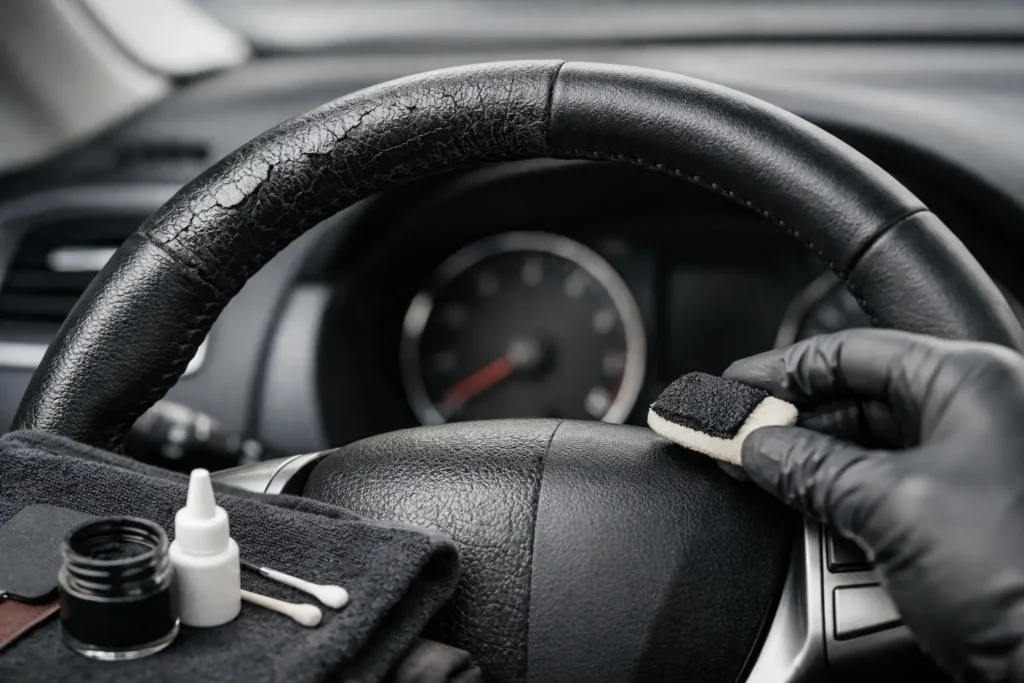
A cracked steering wheel changes the whole feel of a car. You notice it every time you drive – the dry texture, the split seams, the rough edges on your hands. Cracked leather steering wheel repair is not just about cosmetics. It is about restoring the part of the interior you touch more than anything else, and doing it in a way that actually lasts.
For some wheels, a minor repair can improve the look and buy time. For others, patching the surface only hides a deeper problem. The right approach depends on how the leather failed, how far the damage has spread, and what standard you expect when the job is done.
What causes steering wheel leather to crack?
Leather on a steering wheel lives a hard life. It is exposed to body oils, sweat, heat, sun, friction, hand sanitizer, cleaners, and constant pressure from the same grip points. Over time, the finish wears away, the leather dries out, and the surface starts to harden. Once that happens, flexing leads to visible cracks.
Some wheels crack because of age alone. Others fail early because they were cleaned with harsh products or left in extreme heat for years. On higher-mileage vehicles, the damage usually starts at the top of the wheel, around 10 and 2, or near the lower side grips where hands rest most often. If the wheel has perforated leather, thumb bolsters, heating elements, or special stitching, the wear pattern can be even more pronounced.
The key point is that cracking is usually a symptom of material breakdown, not a simple surface blemish. That is why the repair method matters.
Cracked leather steering wheel repair – what actually works?
There are two very different categories of repair. The first is cosmetic spot repair. The second is full restoration or reupholstery.
A cosmetic repair typically involves cleaning the wheel, filling damaged areas, sanding, recoloring, and sealing the surface. This can help when the cracks are shallow, the leather is still structurally sound, and the owner understands the goal is improvement rather than a factory-new result. On the right wheel, this can make damage less noticeable and improve the feel in hand.
But fillers and surface coatings have limits. If the leather is brittle, split through, loose over the foam, or worn through along the seam, a quick repair will not hold up like fresh material. It may look acceptable at first and then break down again as the wheel flexes during normal driving.
A true restoration usually means removing the failing leather and rewrapping the wheel with new material. That allows the damaged outer layer to be replaced rather than disguised. It also gives you the chance to correct shape loss, restore padding where needed, match original stitching, and return the wheel to a much cleaner, more consistent finish.
When a simple repair is enough
If the wheel has light cracking but no major splits, no missing leather, and no severe seam damage, a surface-level repair may be reasonable. This is most common on newer vehicles where the leather has started to dry and craze but has not yet broken apart.
In that situation, the goal is to stabilize the appearance and improve the touch points. You are not rebuilding the wheel from scratch. You are extending the life of the original wrap while keeping the original material in place.
That said, expectations matter. A repaired crack is still a repaired crack. It may blend well from a normal viewing distance, but under close inspection, especially on darker wheels with heavy wear, the previous damage can still be detectable. If you own a collector vehicle, luxury model, or custom build where finish quality matters, this level of repair may feel like a compromise.
When full reupholstery is the better choice
Once the leather has split open, started peeling, shrunk around the edges, or worn thin enough to expose underlying structure, reupholstery is usually the correct path. The same goes for wheels with multiple damaged sections, flattened grip areas, damaged stitching, or previous DIY repairs that left the surface uneven.
A full rewrap addresses the root issue. Instead of trying to make degraded leather behave like new, you replace it with properly fitted material. That is the difference between a temporary visual improvement and a finished result that feels right every time you drive.
This matters even more on vehicles where the steering wheel is central to the interior experience. In a classic car, a cracked wheel can make an otherwise careful restoration feel unfinished. In a luxury SUV or sports car, it takes away from the premium feel immediately. In a daily driver, it is often the one worn part that makes the entire cabin seem older than it is.
Why DIY kits often fall short
There is no shortage of DIY leather repair kits. Some can help with minor cosmetic issues, but many promise more than they can deliver. Steering wheels are especially difficult because they are high-contact, high-flex components. Unlike a seat side bolster or door panel insert, the wheel is constantly twisted, gripped, heated, and exposed to oils from your hands.
That movement is what causes many home repairs to fail early. Fillers can crack again. Color coats can wear off unevenly. Texture rarely matches well. On heavily worn wheels, the finished surface can end up looking thick, artificial, or blotchy.
Another common issue is prep work. If the wheel is not stripped, cleaned, and stabilized correctly, any product layered on top is only as good as the failing surface underneath. For owners who care about lasting results, especially on valuable vehicles, patching over deteriorated leather is usually not the finish line.
What professional restoration should include
A proper steering wheel restoration starts with evaluation, not assumptions. The condition of the leather, padding, seams, core structure, and any integrated features all affect the repair plan.
On a wheel that needs reupholstery, the original wrap is removed and the substrate is checked for shape loss or damage. New leather is then cut, fitted, stitched, and finished to suit the application. If the goal is an OEM-style restoration, the grain, color, stitch pattern, and contour need to stay true to the original. If the goal is customization, this is also the stage where upgraded materials, contrast stitching, thicker grips, suede sections, perforated leather, or color changes can be built in cleanly.
This is where experience shows. A steering wheel is a small part, but it is full of details. Spoke transitions, thumb grips, seam placement, finger contours, switch cutouts, and airbag alignment all need to be handled correctly. A wheel can look decent in photos and still feel wrong in hand if those details are off.
OEM look or custom upgrade?
Many customers start with cracked leather steering wheel repair because they want to fix damage. Once the wheel is being redone, though, it is worth deciding whether you want to stay factory-correct or improve the design.
An OEM-style restoration is the right move when originality matters, especially for classic vehicles, collector cars, lease returns, or high-end interiors where the factory look is part of the value. The focus there is accuracy – matching leather type, stitching style, color tone, and overall profile.
A custom rebuild makes sense when you want the wheel to feel more premium or more performance-oriented than stock. That can mean smoother leather, perforated side grips, bolder stitching, reshaped thumb bolsters, or a different visual layout. The advantage is that you are not just repairing wear. You are upgrading one of the most used parts of the cabin.
The send-in option makes more sense than many owners realize
A lot of vehicle owners assume steering wheel restoration only works locally. In reality, a send-in service is often the best route because it allows the wheel to be worked on by a specialist who does this type of restoration every day.
That matters when the vehicle is uncommon, the wheel has a complex shape, or the owner wants a finish that looks intentional rather than improvised. Craft Customs handles steering wheels in-house for a wide range of makes and models, which is exactly the kind of specialized work this part requires.
Removing and shipping the wheel also allows for a more controlled process than trying to repair it inside the vehicle. There is better access, better prep, and a better chance of getting the stitching, fitment, and finish right the first time.
Is repair worth it?
In most cases, yes. A worn steering wheel has an outsized effect on how a car feels. Even if the seats, dash, and trim still look good, a cracked wheel tells your hands the car is older, rougher, and less cared for than it really is.
Repair or reupholstery restores comfort, improves appearance, and protects value. It is one of the few interior improvements you notice every single drive. The real question is not whether to address it. It is whether a short-term patch will satisfy you, or whether the wheel deserves a proper rebuild.
If the leather is only lightly damaged, a careful cosmetic repair may be enough for now. If the cracks are deep, the finish is failing, or you want the wheel to feel factory-new again, replacing the worn leather is usually the smarter investment. A steering wheel should feel solid, clean, and right in your hands – because every mile starts there.