
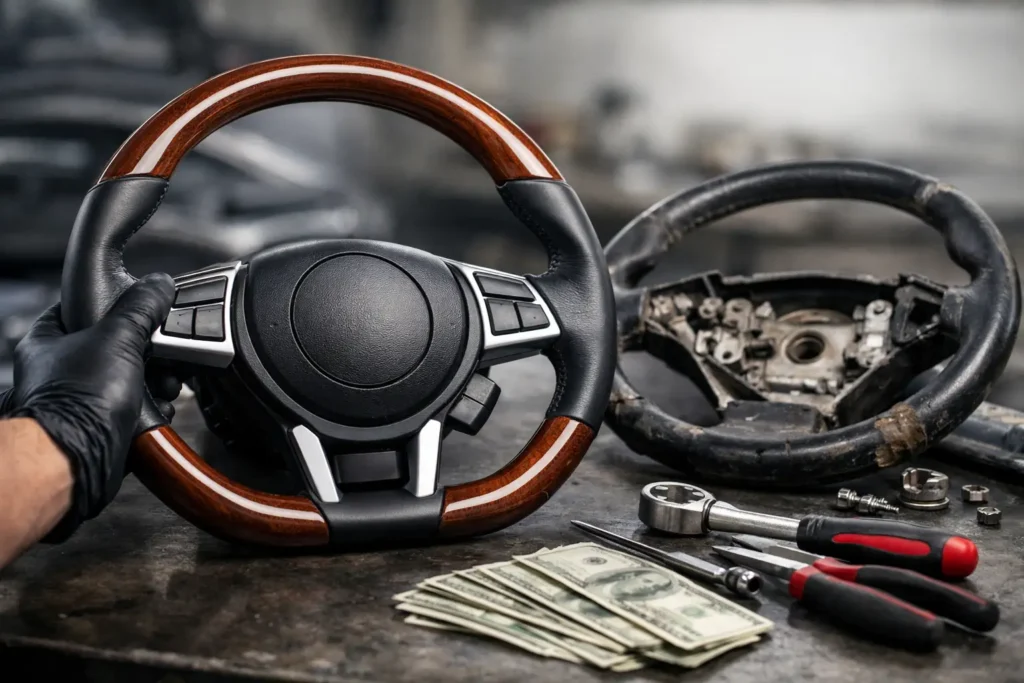
A worn steering wheel gives a vehicle away fast. You can have clean paint, polished trim, and a detailed cabin, but if the wheel is slick, cracked, faded, or peeling, the interior still feels tired. That is usually why people start asking how much does steering wheel restoration cost – because the part you touch every time you drive no longer matches the rest of the car.
The short answer is that steering wheel restoration can range from roughly $200 to over $1,500, depending on the wheel, the materials, the damage, and the finish you want. A simple leather rewrap on a common daily driver sits at a very different price point than restoring a cracked classic wheel, refinishing real wood, or converting sections to carbon fiber. The real cost comes from labor, material quality, and how much disassembly and surface correction the wheel needs before it can look right again.
How much does steering wheel restoration cost in real terms?
For most customers, the best way to think about price is by service type rather than by vehicle alone. A basic cosmetic refresh is one category. A full restoration or a custom build is another.
A straightforward leather restoration or reupholstery for a modern steering wheel often starts in the low hundreds and can move into the mid hundreds depending on leather type, stitch pattern, thumb grips, heated-wheel considerations, and whether the wheel has complex contours. If the original leather is heavily worn, the old cover may need to be removed, the foam reshaped, and the wheel rebuilt before new material is installed. That adds time, and time is what drives price.
Classic steering wheels are often less predictable. A vintage wheel with cracks in the rim, missing material, aged paint, or separated sections usually requires repair work before refinishing even begins. That is more restoration than re-covering. In many cases, the cost lands higher because the goal is not just to make it presentable. It is to bring back the right profile, texture, color, and finish so it looks appropriate for the vehicle.
Wood and woodgrain wheels can also vary widely. If the wood veneer is peeling or the clear coat is failing, the job may involve stripping, repairing, rebuilding damaged areas, color matching, and refinishing. A clean refinish costs less than a full wood reconstruction. The same goes for carbon fiber-style upgrades, suede wraps, or paint-matched custom sections. Those are premium services because they require material expertise and exact finishing standards.
What affects steering wheel restoration cost the most?
The biggest factor is the condition of the wheel you are starting with. Light wear is one thing. Deep cracks, missing chunks, sun damage, warped sections, failing adhesive, or previous poor repairs create a very different labor requirement.
Material type matters just as much. Leather restoration has a different workflow than restoring molded plastic, refinishing woodgrain, or repairing an older resin wheel. Some wheels combine several finishes in one piece, such as perforated leather on the sides, smooth leather on the top and bottom, painted trim, and wood sections. Every transition point has to be finished cleanly or the wheel will look off.
Design complexity also changes price. A simple round wheel is easier to strip and recover than a modern flat-bottom wheel with integrated contours, thicker hand grips, special thumb bolsters, or intricate seams. Heated wheels, paddle cutouts, and multi-piece trim sections can all increase labor because the wheel has to be worked around carefully without compromising function.
Then there is the finish level. If you want something close to stock, the process usually focuses on restoring factory appearance and feel. If you want custom leather colors, contrast stitching, suede, color-matched trim, carbon fiber conversion, or reshaped grips, cost rises because the work becomes part restoration and part fabrication.
Repair versus full restoration
This is where many estimates separate quickly.
A repair addresses a specific issue, such as a worn leather section, light surface cracking, minor fading, or damaged finish on one area. If the underlying structure is sound, the work can stay relatively contained.
A full restoration means the wheel is being brought back comprehensively. That may include stripping old material, correcting the base, rebuilding damaged sections, recovering the rim, refinishing hard surfaces, and matching the original appearance as closely as possible. On classic and collector vehicles, that level of work usually makes more sense than a patch because partial repairs often stand out once the wheel is back in the cabin.
If the wheel is rare, valuable, or difficult to replace, restoration often has better long-term value than buying a questionable used part. Used wheels frequently come with the same wear you are trying to get rid of, and reproduction parts can miss the correct feel, grain, color, or shape.
Why cheap steering wheel restoration can cost more later
Steering wheels are high-contact parts. You see them constantly, and you feel every flaw. That makes poor workmanship obvious.
Low-cost work often skips prep. Instead of removing failing material and correcting the surface underneath, the shop may cover damage too quickly or apply coatings over unstable areas. The wheel might look acceptable at first, then start peeling, separating, or wearing unevenly. Stitching can wander, leather can bunch near spoke transitions, and painted surfaces can chip where the driver’s hands make contact most often.
A properly restored wheel should feel as good as it looks. The grip should be even. The seams should be straight. The material should be tight. The finish should hold up under normal use. That level of result comes from skilled in-house work, not a rushed cosmetic fix.
Is restoring a steering wheel worth the cost?
In many cases, yes, especially when the rest of the vehicle is in good condition. A fresh steering wheel changes how the entire interior feels because it is the main touchpoint. Owners notice it every time they get in the car. Buyers notice it too.
For daily drivers, restoration can make an older interior feel newer without replacing major components. For luxury, exotic, and performance vehicles, it protects the premium feel the cabin is supposed to have. For classics and collector cars, it can help preserve originality and visual accuracy in a way aftermarket replacements cannot.
The trade-off is simple. If the vehicle is extremely low value and the wheel is common and easy to replace with a clean OEM part, replacement may make sense. But if the wheel is rare, customized, heated, structurally unique, or central to the car’s character, restoration is usually the better move.
What should be included in the price?
When comparing quotes, look beyond the number itself. Ask what the service actually includes.
A real steering wheel restoration estimate should account for the restoration method, the material being used, the level of surface repair, color matching if needed, and the final finish quality. If the wheel is being shipped to a specialist, shipping and turnaround time matter too. Some customers also need matching work on the airbag cover, shifter, armrest, or surrounding trim so the restored wheel does not make the rest of the interior look neglected.
This is where a specialist has an advantage. A shop focused on interior components can usually restore the wheel as part of a coordinated interior refresh, which produces a more consistent result.
How to get an accurate quote
The fastest way to get a realistic price is to provide clear photos of the wheel from multiple angles and describe the vehicle, the damage, and the finish you want. Mention whether you want factory-style restoration or a custom upgrade. If the wheel has wood, carbon fiber, heat, perforated sections, or unusual contours, include that up front.
Photos of the worst wear matter most. Cracks at the top of the rim, peeling side grips, faded wood, and damaged spoke areas all affect labor differently. A good quote depends on knowing what is under the visible wear, so accuracy at this stage helps avoid surprises later.
For send-in work, customers should also factor in shipping both ways and the downtime while the original wheel is out of the vehicle. For many owners, that trade-off is still worth it because the result is tailored to their exact part rather than a generic replacement.
At Craft Customs, this is why steering wheel work is handled as a craftsmanship job, not a generic upholstery task. The goal is not to get something merely usable back in your hands. It is to return a wheel that looks right, feels right, and fits the value of the vehicle it came from.
If your steering wheel is the one part making the whole interior feel old, the right restoration usually pays for itself every time you open the door and every time your hands hit the rim.