
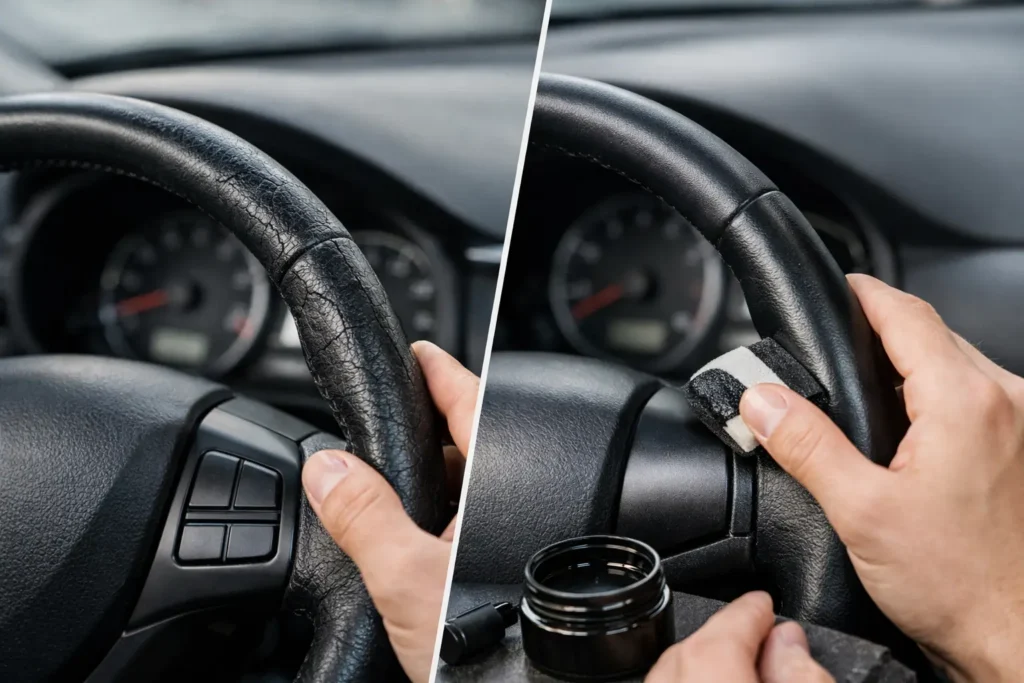
A cracked steering wheel changes the whole feel of a vehicle. You see it every time you get in, and you feel it every time your hands wrap around it. If you are researching how to restore cracked steering wheel leather, the first thing to know is this: not every cracked wheel should be treated the same way, and the right fix depends on how deep the damage goes.
Some leather wheels can be cleaned, filled, recolored, and sealed with good results. Others are past the point of a cosmetic repair and need to be rewrapped or fully reupholstered. The difference matters, because a quick surface fix on badly damaged leather often looks decent for a short time, then fails where it sees the most friction.
How to restore cracked steering wheel leather the right way
The best restoration starts with an honest inspection. Light cracking usually shows as dry surface lines, faded color, and minor roughness across the grip areas. Moderate damage often includes visible splits in the top finish, harder texture, and areas where the leather feels worn thin. Severe damage can mean deep cracks, missing material, torn seams, loose leather, or foam deterioration under the wrap.
If the leather is still structurally sound, a repair process can improve both appearance and feel. If the leather is brittle, shrunken, or broken through, restoration shifts from repair to replacement. That is where many DIY attempts go wrong. People treat actual leather failure as if it were just faded finish.
Before you do anything, clean the wheel thoroughly. Body oils, hand lotion, sunscreen, dirt, and old protectants build up fast on steering wheels. Any filler or colorant applied over contamination will have trouble bonding. Use a proper leather-safe cleaner and work gently, especially around stitching and thumb grips. Avoid soaking the wheel. You want the surface clean, not waterlogged.
Once clean, inspect again. You will usually get a much clearer read on the damage after the residue is gone. What looked like heavy cracking is sometimes just dried finish. What looked minor can reveal deeper splits once the surface grime is removed.
The basic repair process for cracked leather
If the damage is light to moderate, the usual process involves surface prep, crack filling, sanding, recoloring, and sealing. Each step affects the final result.
Surface prep matters more than most people think. The old finish has to be stable enough to accept new material. Loose coating, peeling areas, and rough edges around cracks need to be leveled carefully. Fine sanding helps smooth the damaged spots, but aggressive sanding can thin the leather further. That is one reason steering wheels are trickier than flat seat panels. The leather is wrapped tightly over a small diameter, and the high-contact areas wear unevenly.
After prep, a flexible leather filler can be worked into shallow cracks. This is not meant to rebuild major missing sections. It is for minimizing minor surface damage so the repaired wheel looks smoother and feels more consistent in the hand. The filler needs to cure fully and usually requires additional sanding between coats. Rushing this step leaves ridges, soft spots, or visible patching once color is applied.
Then comes color restoration. A proper leather colorant should match the original tone and sheen as closely as possible. Black is not always just black. Factory interiors vary in gloss level, undertone, and finish texture. That is even more noticeable on luxury, performance, and classic vehicles where the wheel sits directly in your line of sight.
The final step is a protective topcoat or sealer. This helps the new finish resist wear from constant hand contact. Even then, a repaired steering wheel will only last as well as the prep work, materials, and condition of the underlying leather allow.
When DIY works and when it does not
DIY repair can work if the leather has light cracking, the wheel shape is still solid, and you are realistic about the result. On a daily driver with cosmetic wear, a careful repair may be enough to clean up the look and make the wheel feel better.
It is a weaker option when the vehicle is high-value, highly visible, or already has severe wear. If the leather is split through, if the stitching is compromised, or if the padding underneath has started to break down, no filler-and-dye kit is going to produce a factory-new result. It may disguise the damage for a while, but it will not correct the structure of the wheel.
This is especially true on wheels that have polished smooth from years of use, wheels with perforated leather sections, wheels with molded thumb grips, or wheels that combine leather with wood, suede, carbon fiber, or painted trim. Those details change how the part must be handled and refinished.
A lot of owners also underestimate color matching. Even a technically decent repair stands out if the finish is too glossy, too flat, too blue, or too gray compared to the rest of the interior. On a steering wheel, that mismatch is impossible to ignore.
Signs your wheel needs reupholstery, not surface repair
If you are deciding how to restore cracked steering wheel leather, the biggest question is whether the original wrap can still be saved. In many cases, a full reupholstery is the better long-term fix.
That is usually the case when cracks are deep enough to catch a fingernail, when sections feel hard or brittle, when leather has shrunk around seams, or when chunks of finish and material are already missing. The same goes for wheels with failed stitching, flattened grip contours, or damage from heat and sun exposure that has dried the leather beyond recovery.
A proper rewrap replaces the worn outer leather rather than trying to hide damage in place. That gives you a cleaner surface, renewed grip feel, fresh stitching, and a finish that is built to last. It also opens the door to upgrades, whether that means changing leather color, adding perforated sections, switching stitch color, reshaping grips, or pairing the wheel with refinished trim so the whole interior feels newer and more intentional.
For owners who care about preserving vehicle value, this is often the smarter route. A cracked wheel repaired cosmetically can still read as repaired. A professionally reupholstered wheel reads as restored.
Common mistakes that make a steering wheel look worse
The fastest way to ruin a wheel is to use the wrong products. Household cleaners, heavy degreasers, silicone dressings, and thick vinyl coatings create more problems than they solve. They can dry the leather, leave a slick feel, or cause new finish layers to fail early.
Another mistake is overfilling cracks. Steering wheels are handled constantly, so any repair that leaves raised areas, hard patches, or texture differences will be obvious right away. The same goes for over-sanding. If you flatten the grain too much, the repair loses the natural leather look and starts to look coated.
Poor masking is another issue on multi-material wheels. Woodgrain sections, painted spokes, trim inserts, heating elements, and control switches all need to be protected correctly during repair. That is not just about appearance. It is about preserving function and avoiding overspray or material buildup where it does not belong.
Then there is the durability problem. Many off-the-shelf kits are built around convenience, not long-term wear resistance. A wheel sees far more friction than most other interior leather surfaces. What holds up on a seat bolster may not hold up on a steering wheel.
Why professional restoration often delivers the better result
Steering wheels are one of the most tactile parts of a vehicle. You notice every flaw in texture, seam alignment, thickness, and finish. That is why this component benefits from specialist work more than most interior parts.
Professional restoration is not just about making cracks disappear. It is about restoring shape, consistency, grip feel, stitching quality, and factory-correct appearance. When done properly, the wheel should look right from every angle and feel right the moment you grab it.
For heavily worn wheels, an in-house restoration service can also handle issues beyond the leather itself, including foam rebuilding, seam correction, trim refinishing, and custom material options. That level of control is what separates a temporary cosmetic improvement from a real transformation.
At Craft Customs, that kind of work is approached as craftsmanship, not a shortcut. For owners sending in an original wheel from a daily driver, a collector car, or a high-end build, the goal is the same: return a part that looks sharper, feels better, and fits the interior the way it should.
Keeping restored leather from cracking again
Once the wheel is repaired or reupholstered, maintenance matters. Clean it regularly with a leather-safe cleaner to remove oil and residue before buildup hardens the surface. Keep harsh chemicals off it, and do not use greasy protectants that leave the rim slick.
Heat and UV exposure are major causes of drying and finish breakdown, so parked cars benefit from shade, a sunshade, or garage storage whenever possible. If your hands are often covered in sunscreen, hand sanitizer, or work grime, clean the wheel more often. That simple habit goes a long way.
A steering wheel does not need miracle products. It needs the right materials, proper prep, and a realistic decision about whether you are repairing leather or replacing it. Make that call correctly, and the wheel can stop looking worn out long before the rest of the vehicle does.