
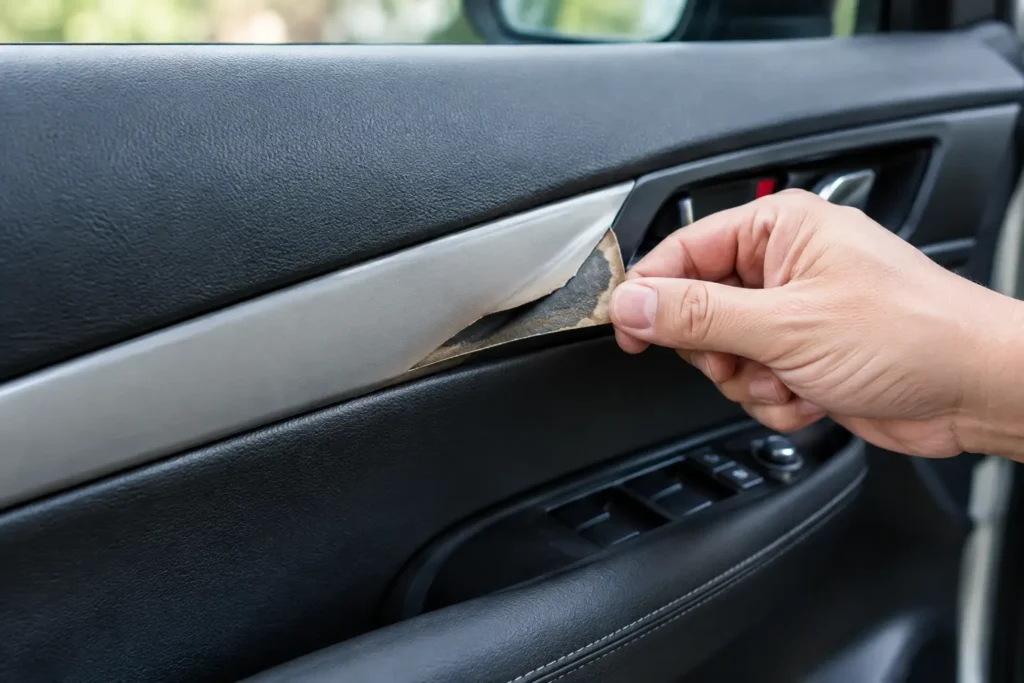
A peeling door pull, dash bezel, console lid, or steering wheel spoke can make an otherwise clean vehicle feel neglected the moment you get behind the wheel. So, why does interior trim peel? In most cases, the visible damage is the final stage of a failed finish system: heat, UV exposure, body oils, cleaning chemicals, moisture, and age have slowly broken the bond between the surface coating and the part beneath it.
The right repair depends on what is actually peeling. A soft-touch coating requires a different approach than a painted plastic panel, woodgrain finish, carbon fiber overlay, or vinyl-wrapped component. Covering the damage without correcting the failed layer may look better briefly, but it rarely delivers a durable, factory-quality result.
Why Does Interior Trim Peel in the First Place?
Interior trim is exposed to more abuse than most owners realize. Even garage-kept vehicles deal with temperature swings, constant hand contact, abrasion from rings and keys, and the chemistry of cleaners, lotions, sunscreen, and interior protectants. Materials that looked excellent when the vehicle was new can lose flexibility and adhesion over time.
Heat and UV exposure weaken coatings
Heat is one of the biggest reasons trim finishes fail. A parked vehicle can reach extreme interior temperatures, especially around the dashboard, center console, door tops, and steering wheel. Those repeated heat cycles cause plastic substrates and coatings to expand and contract at different rates.
Over years, that movement stresses the bond between layers. UV light also breaks down binders, dyes, clear coats, and synthetic surfaces. The finish may first become dull, sticky, brittle, or faded. Eventually, it cracks, lifts, or flakes away.
This is particularly common with soft-touch coatings used on many luxury and late-model interiors. That smooth, rubberized feel can be attractive when new, but once the coating begins to degrade, it may turn tacky and peel in high-contact areas.
Skin oils, lotions, and harsh cleaners attack the surface
Steering wheel trim, shifter surrounds, door handles, and console panels are touched constantly. Natural oils from hands are enough to wear a finish over time. Add hand sanitizer, sunscreen, lotion, makeup, food residue, and cleaning sprays, and the surface can deteriorate much faster.
Strong degreasers, alcohol-heavy products, household cleaners, and abrasive pads are frequent culprits. They can strip protective layers or soften a coating that was never designed to withstand aggressive chemicals. Once a cleaner gets under an already-weakened edge, peeling often spreads quickly.
A product marketed for automotive interiors is not automatically safe for every finish. Woodgrain, satin paint, piano black trim, suede, leather, and soft-touch plastics each need different care.
Moisture and humidity create hidden adhesion problems
Water damage is not always obvious. Moisture can enter through a leaking sunroof, windshield, door seal, or HVAC issue, then collect behind panels or inside a console. In older vehicles, humidity alone can contribute to lifting finishes, especially where an adhesive film or veneer meets plastic or metal.
If trim is peeling after a water event, refinishing the visible face may not be enough. The underlying cause needs to be addressed first. Otherwise, moisture can continue working behind the repaired surface and compromise the new finish.
Manufacturing materials and age matter
Some interior coatings simply age poorly. Vehicle manufacturers must balance appearance, production cost, weight, environmental regulations, and the expected service life of the component. A finish that performed well for eight or ten years may not hold up indefinitely in a hot climate or on a frequently driven vehicle.
Certain makes and model years are known for peeling center consoles, door trims, dash bezels, painted buttons, and steering wheel accents. That does not necessarily mean the vehicle was neglected. Material breakdown is often a predictable age-related issue.
Previous repairs can fail from poor preparation
Not every peeling panel has its original finish. A prior owner, body shop, or DIY attempt may have used a touch-up paint, vinyl wrap, adhesive, or coating that was applied over contamination or unstable material.
Paint will not bond reliably to loose soft-touch residue. Wrap adhesive will not compensate for a greasy, chalky, cracked, or flexing substrate. A repair can look acceptable at first, then lift at the edges once the cabin heats up. Proper surface preparation is what separates a lasting restoration from a temporary cover-up.
Identifying What Type of Interior Trim Is Peeling
Before choosing a fix, look closely at the failed area. Is the surface rubbery or sticky? Is it flaking in thin colored chips? Does it look like a clear layer is separating from woodgrain? Is a film lifting at corners or around switches?
Soft-touch coating failure usually feels tacky, worn smooth, or rubber-like before it begins to peel. Painted plastic typically flakes in sharper chips and reveals a different-colored plastic below. Woodgrain trim may show clear-coat delamination, faded printing, or a lifting decorative layer. Carbon fiber parts can develop clear-coat haze, cracking, or edge separation rather than traditional peeling.
The material beneath the finish matters just as much. Flexible plastics, rigid ABS panels, metal pieces, leather-wrapped components, and genuine wood parts all require their own preparation and coating process. That is why a one-size-fits-all aerosol repair is rarely the best answer for high-visibility trim.
Can You Repair Peeling Interior Trim Yourself?
A small, isolated defect can sometimes be stabilized at home, but DIY repair has clear limits. If the finish is lifting only at one corner of a non-contact panel, careful cleaning and a material-compatible adhesive may slow the problem. For a minor scuff on a painted piece, a color-matched touch-up can reduce its appearance.
Once peeling is widespread, sticky, or located on a steering wheel, center console, door pull, or dash trim, spot repair usually creates visible edges, uneven texture, and color mismatch. The original failed coating may continue to release under the repair. This is especially true on dark satin finishes, high-gloss piano black, metallic accents, and woodgrain pieces, where even slight texture differences stand out.
Avoid picking at loose material or sanding only the damaged spot. Peeling often extends farther than the visible edge. Pulling at it can remove more finish, while uneven sanding can leave low areas that remain visible after repainting.
What a Proper Interior Trim Restoration Involves
A lasting repair begins by removing the component when possible. Working with the trim off the vehicle allows the entire face, edges, mounting points, and surrounding transitions to be evaluated. It also prevents overspray and eliminates the shortcuts that lead to rough masking lines.
The failed coating is then removed completely and the substrate is cleaned of oils, silicone, adhesive residue, and contaminants. This step is critical. If any unstable material remains, the new finish only has something weak to bond to.
From there, the repair process may include leveling scratches, rebuilding damaged edges, applying adhesion-promoting products, priming, color matching, refinishing, and applying the correct protective topcoat. The exact sequence changes based on the material and desired appearance. A factory-style satin black finish, for example, needs a different coating system than gloss woodgrain or a custom color-matched console.
For trim that cannot be restored convincingly with paint alone, a specialist may recommend a different finish altogether. Carbon fiber conversion, custom paint, suede wrapping, leather wrapping, or refinished woodgrain can turn a recurring failure point into a more durable and more personal interior upgrade.
When Replacement Makes More Sense Than Refinishing
Replacement is sometimes the right call, particularly when a component is warped, broken, severely water-damaged, or missing structural mounting tabs. However, replacement is not always simple or superior. New OEM trim may be discontinued, expensive, unavailable in the correct color, or made with the same failure-prone coating as the original.
Used parts can also be a gamble. A clean-looking panel from a salvage vehicle may be only months away from developing the same peeling issue. Refinishing an original component often makes more sense when fitment, grain pattern, hardware, and vehicle authenticity matter.
For classic, luxury, exotic, and limited-production vehicles, preserving the original part can be especially valuable. A properly restored original bezel or wood trim piece retains the correct shape and factory integration while bringing the cabin back to a far higher standard.
How to Keep Restored Trim Looking New
After restoration, use a soft microfiber towel and a mild interior cleaner designed for the specific material. Do not soak seams, switch openings, or trim edges. Keep harsh solvents, all-purpose degreasers, and abrasive brushes away from coated surfaces.
A windshield sunshade is one of the simplest ways to reduce heat and UV load on a dashboard and console. Regular cleaning also helps because body oils and residue become more damaging when they are left on high-contact surfaces for long periods.
If a finish starts feeling sticky, fading unevenly, or lifting at an edge, address it early. Waiting until the coating has peeled across an entire panel can increase the amount of substrate repair required.
Peeling trim does not have to be accepted as part of owning an older or high-mileage vehicle. When the failed material is properly removed and the part is rebuilt with the right finish system, the difference is immediate every time you open the door. Craft Customs restores original interior components in-house for owners who want factory-new refinement or a custom finish that better suits the vehicle they plan to keep.