
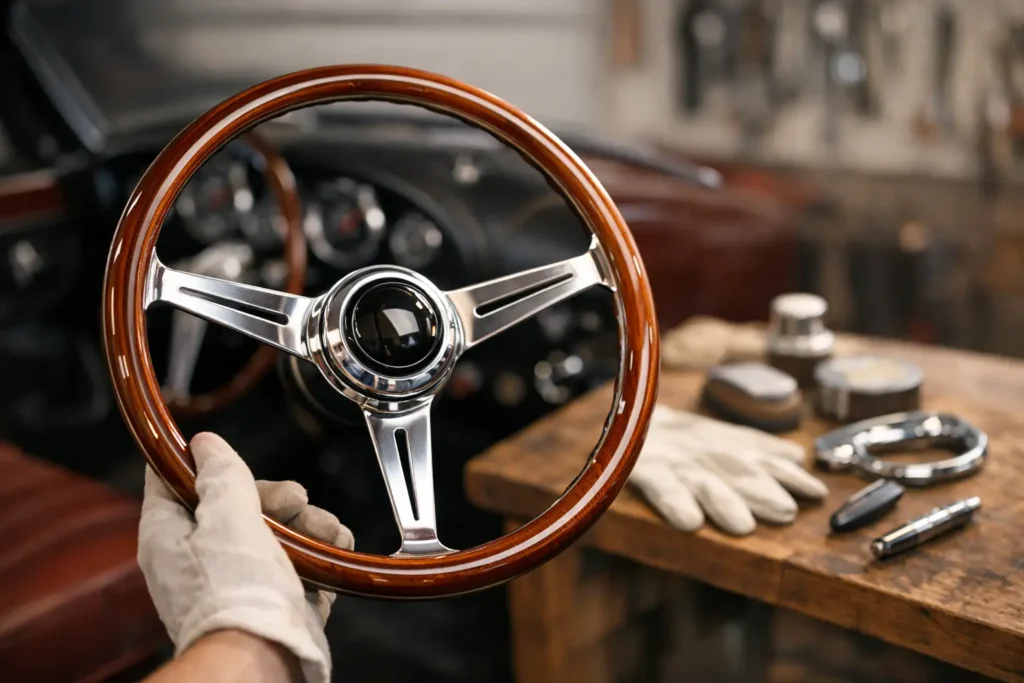
A classic car can have fresh paint, a strong drivetrain, and spotless chrome, yet still feel unfinished the moment you sit behind a split, faded, or sticky steering wheel. The best classic steering wheel restoration examples show why this one component carries so much weight: it is the interior part you see, hold, and judge every time you drive.
Restoring a wheel is not simply about making damage disappear. The right approach preserves the wheel’s original character, corrects the failures that caused the damage, and produces a finish that feels right in the hands. Whether the goal is concours-level authenticity or a carefully chosen custom upgrade, the material, color, grain, sheen, and stitching all matter.
What Classic Steering Wheel Restoration Really Involves
Classic steering wheels were built from a wide range of materials. A 1950s American wheel may have a thick molded plastic rim with fine cracks near the spokes. A vintage European sports car may use a thin wood rim secured with polished hardware. Later luxury vehicles often combine leather, woodgrain, and painted trim. Each requires a different repair strategy.
A proper restoration begins with the wheel’s structure. Before refinishing begins, the restorer checks for loose spokes, broken mounting points, damaged cores, and deep cracks that may continue to move. A beautiful surface coating cannot compensate for an unstable rim or failing substrate.
From there, damaged material is cleaned, stabilized, repaired, shaped, and refinished. On leather wheels, that can mean removing deteriorated leather, rebuilding the underlying foam where needed, and wrapping the rim with new automotive-grade leather. On wood wheels, the work may involve stripping failed clear coat, repairing chips or separation, restoring the wood tone, and applying a durable finish with the correct depth and gloss.
The goal is not a generic “new” appearance. It is a wheel that belongs in the vehicle.
Classic Steering Wheel Restoration Examples by Material
Cracked Plastic and Bakelite-Style Wheels
One of the most familiar restoration examples is a classic wheel with hairline cracks spreading across the rim. These cracks are common on older molded plastic, hard rubber, and Bakelite-style wheels after decades of heat, UV exposure, and temperature changes. They often start small, but they catch dirt, expand over time, and make an otherwise well-kept interior look neglected.
The quality difference is in the preparation. Cracks must be opened and stabilized rather than merely covered. The repaired area then needs careful shaping so the rim remains round and consistent from section to section. After refinishing, the color and gloss must match the original design. Some vintage wheels need a soft satin appearance, while others were produced with a deeper gloss. Applying the wrong sheen can make an accurate color look obviously out of place.
This type of restoration is a strong choice when the original wheel is correct for the car and replacement parts are scarce, expensive, or impossible to find. It also retains the authentic spoke design and horn-button fitment that reproduction wheels may not duplicate.
Faded or Damaged Wood-Rim Wheels
Wood-rim steering wheels often show their age through faded stain, cloudy clear coat, worn finger grooves, or cracks around the rivets and spoke junctions. Moisture, sunlight, hand oils, and years of cleaning products can turn a warm wood rim dull and uneven.
A successful wood restoration respects the grain instead of burying it under an overly thick finish. The wood must be cleaned and repaired before color is adjusted. If stain is needed, it should restore the original depth without making the rim look artificially dark. The clear finish should protect the wheel while still allowing the grain to read clearly under natural light.
There is a trade-off here. A high-gloss show-car finish can look dramatic, especially on a custom build, but it may not be correct for every factory restoration. Owners pursuing originality often prefer a more restrained finish that resembles the wheel’s original presentation. The right answer depends on whether the vehicle is being judged, driven regularly, or built to a personal vision.
Worn Leather Wheels From Later Classics
Many 1970s through 1990s classics used leather-wrapped steering wheels, particularly in luxury, performance, and European applications. Common issues include slick leather, torn seams, faded dye, flattened padding, and sections that have become hard from sun exposure.
The strongest restoration example is not simply a recolored wheel. When leather is deeply worn or split, replacement leather is usually the more durable option. A new wrap can be cut and hand-fitted to the wheel’s shape, with stitch spacing, thread color, and leather grain selected to match the original look or improve it intentionally.
For factory-style work, smooth black leather with matching thread may be the correct choice. For a tasteful upgrade, owners may choose perforated side grips, contrast stitching, Alcantara or suede inserts, or a two-tone combination that ties into the seats and dash. These options can improve tactile feel, but they should suit the vehicle. A highly modern carbon fiber and bright thread treatment may be perfect for a restomod, yet feel wrong in an untouched collector car.
Wood and Leather Combination Wheels
Combination wheels are among the most detail-sensitive projects because two materials must look correct together. The wood sections may be faded while the leather sections are worn, and the transition points must remain clean and balanced. Color mismatch is especially noticeable where the materials meet.
A good restoration brings both surfaces back into harmony. The wood tone should complement the leather color, while the grain direction, edge profile, and finish level should remain consistent around the rim. Hardware and trim pieces also deserve attention. A worn chrome spoke or faded painted insert can undermine otherwise excellent leather and wood work.
These wheels are often worth restoring because they define the personality of a classic luxury interior. Replacing one with a generic aftermarket wheel may save time, but it can reduce originality, affect fitment, and remove a feature buyers expect to see.
Why Before-and-After Results Can Vary
Not every steering wheel begins in the same condition, and honest restoration planning accounts for that. A wheel with surface fading and minor wear can often be renewed while retaining most of its original material. A wheel with missing chunks, corroded spokes, damaged mounting points, or severely warped wood may require more extensive reconstruction.
Originality also changes the recommendation. If a rare wheel is still structurally sound, restoration usually offers more value than replacement. If a driver-quality vehicle needs improved comfort and appearance, a custom rewrap may provide the better outcome. For a museum-level car, exact grain, color, stitch pattern, and gloss level can be more important than adding modern features.
This is why photos are helpful before any work begins. Clear images of the front, back, spoke areas, horn pad, mounting hub, and damaged sections allow a specialist to identify the likely materials and discuss realistic options. They also help determine whether related pieces, such as shift knobs, dash trim, consoles, or armrests, should be refinished at the same time for a consistent interior result.
Details That Separate a Lasting Restoration From a Quick Cosmetic Fix
A steering wheel is constantly exposed to friction, hand oils, temperature changes, and sunlight. The materials and preparation process matter as much as the final color. Poorly prepared paint can chip. Low-grade leather can stretch, fade, or wear prematurely. Incorrect adhesives can release at seams or edges.
For leather work, the wheel needs a tight, even wrap with clean seam alignment and no bunching around spokes. For painted or molded wheels, repaired areas need to blend into the surrounding rim rather than telegraphing every old crack. For wood, the finish must be smooth enough to feel refined but durable enough for regular use.
The most satisfying restorations also get the small visual details right: a matched horn pad, correctly colored stitching, a consistent rim profile, and trim that does not look newly restored beside badly faded adjacent components. Those choices are what make the interior feel factory new rather than partially repaired.
Preparing a Wheel for Professional Restoration
Before sending in an original steering wheel, remove loose accessories and keep all related parts together when possible. If the horn button, center pad, trim ring, or mounting hardware is part of the visual package, include clear notes about what belongs with the wheel. Take photos before disassembly, especially if the car has unusual wiring, buttons, or spoke trim.
Do not attempt aggressive sanding, household paint repairs, or heavy filler work unless you are prepared for additional correction later. A wheel that has been repeatedly touched up can take more preparation than one with honest original wear. Cleaning off dirt and loose debris is helpful, but preserving the original shape and components is usually the priority.
Craft Customs restores steering wheels and related interior components in-house, allowing owners to send in original parts for refinishing and have them returned ready to complete the interior transformation.
A restored steering wheel should do more than hide age. It should make the driver want to close the door, settle into the seat, and take the long way home.