
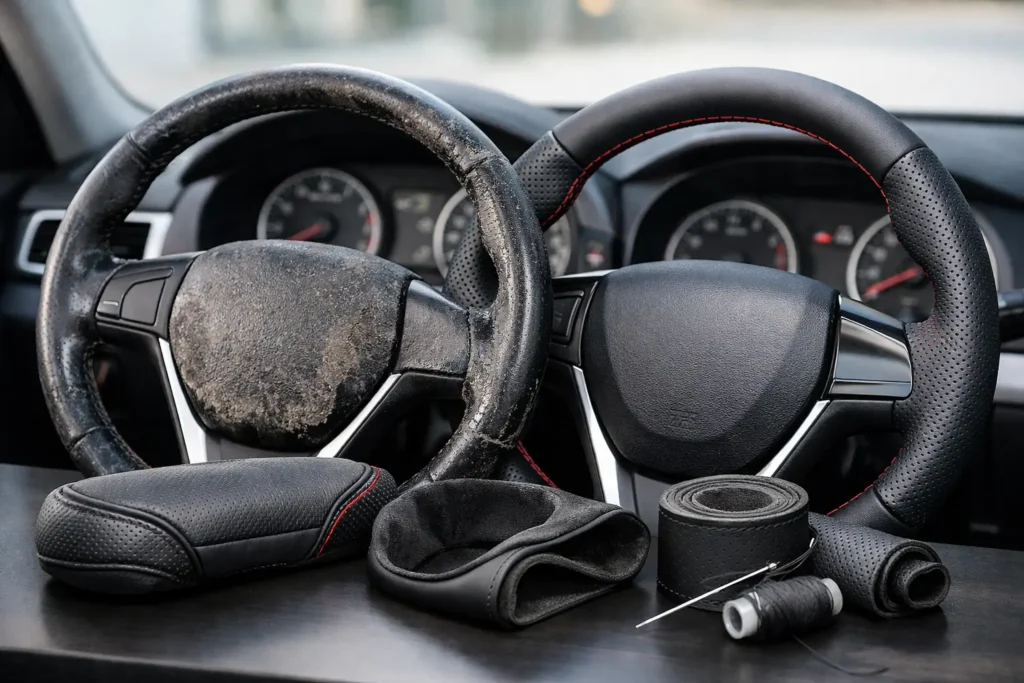
The steering wheel is the one interior part you see, touch, and judge every time you drive. When its leather is slick, cracked, faded, or peeling, it can make an otherwise well-kept vehicle feel neglected. The best upgrades for worn steering wheels do more than hide damage. They restore the correct feel in your hands, protect the original structure, and bring the cabin back to a standard that matches the rest of the vehicle.
A quality result starts with choosing an upgrade that fits the vehicle, the wheel’s condition, and how you use it. A concours-level classic needs a different approach than a modern luxury SUV, a track-focused coupe, or a daily driver with worn factory leather. Here is how to choose an upgrade that looks right now and continues to look right after years behind the wheel.
Start With the Condition of the Original Wheel
Not every worn steering wheel needs the same level of work. Surface shine from years of hand oils, minor dye wear, loose stitching, cracked leather, damaged wood, and deteriorated foam all call for different repairs. Treating a deep crack with a quick color touch-up may improve photos temporarily, but it will not rebuild the material underneath.
Inspect the wheel closely before deciding on a direction. Look at the leather around the 10 o’clock and 2 o’clock grip areas, the seams, spoke edges, thumb rests, and the top of the rim. On wood wheels, check for clear-coat failure, discoloration, cracks, and separation at the joints. If the rim feels soft, distorted, or rough beneath the covering, the foundation should be repaired before new material goes on.
A professional restoration keeps the original wheel’s fitment, spoke design, controls, and airbag compatibility intact whenever possible. That matters on rare vehicles, collector cars, and late-model vehicles where an incorrect replacement can create fitment issues or reduce authenticity.
Best Upgrades for Worn Steering Wheels by Material
Leather Reupholstery for a Factory-Correct Finish
Leather reupholstery is often the strongest all-around answer for a worn steering wheel. It replaces damaged or tired covering material rather than attempting to disguise it. Properly selected automotive leather gives the rim a clean, natural grain, renewed cushioning, and the controlled grip the original wheel should have had.
For owners who want an OEM-style restoration, leather can be matched closely in color, grain, stitch pattern, and panel layout. This is especially valuable for luxury vehicles and classics where the interior needs to retain its original character. A black leather wheel is not always just black, either. Grain depth, sheen level, thread color, and seam placement can make the difference between a wheel that looks correct and one that looks obviously redone.
Leather also gives custom-build owners plenty of room to personalize. Contrasting stitching, two-tone layouts, perforated side grips, colored center stripes, and thicker hand positions can add a performance-oriented look without changing the wheel’s underlying structure. The trade-off is that bold color choices and aggressive contrast stitching may appeal to a narrower group of future buyers than a factory-style finish.
Alcantara or Suede for Performance Grip
Alcantara and automotive-grade suede are popular upgrades for performance cars and drivers who want a softer, more connected feel. The material provides excellent grip, particularly when driving enthusiastically or wearing gloves. A suede-wrapped wheel can also tie together seats, shift boots, and headliners in a custom interior.
The trade-off is maintenance. Suede and Alcantara show skin oils, moisture, and flattening more readily than leather, especially on a daily-driven vehicle. Lighter colors require more frequent care. For a weekend car, track car, or carefully maintained custom build, the finish can be outstanding. For a commuter that sees heavy use, leather may be the more practical long-term choice.
Refinished Wood for Classics and Luxury Interiors
Worn woodgrain steering wheels deserve a restoration approach that respects their original construction. Faded color, cloudy clear coat, small cracks, and lifting finish can make a high-end or vintage interior look much older than it is. A complete wood restoration can involve stripping failed finish, repairing imperfections, refinishing the grain, and applying a durable clear coat with the correct depth and gloss.
The goal should not be a generic shiny surface. The color, grain character, transparency, and sheen need to complement the dash trim and console. Some factory wood finishes are warm and subtle, while others are darker, richer, or almost mirror-like. A properly restored wheel should belong with the vehicle’s existing trim, not compete with it.
Carbon Fiber Conversion for a Modern Custom Look
Carbon fiber is a natural option for owners who want to move away from aging wood or standard leather and give the cabin a sharper, more contemporary appearance. It works particularly well in modern sports cars, high-performance sedans, and custom luxury builds. Gloss, satin, forged-style patterns, and colored weave effects can create very different results.
A carbon fiber conversion should be planned as part of the entire interior. If the dashboard, console, or door trim has carbon fiber accents, a matching steering wheel creates a deliberate visual theme. If no other carbon fiber exists in the cabin, a full conversion can look out of place. In that case, carbon fiber spoke sections paired with leather side grips may offer better balance.
Do Not Overlook the Details You Touch
The wheel itself is the priority, but adjacent components often show the same age and wear. A fresh steering wheel can make a peeling shift knob, faded console lid, cracked e-brake handle, or worn dash trim more noticeable. Coordinating these parts gives the interior a finished appearance instead of a one-piece repair.
Color matching matters just as much. Interior black can range from cool charcoal to deep blue-black. Tan may lean caramel, taupe, or gray. An experienced refinishing shop evaluates the actual part and surrounding cabin rather than relying only on a color name. The goal is a repair or upgrade that looks integrated under natural daylight, not merely acceptable in a shop.
Stitching deserves the same attention. Factory-match thread keeps a restoration understated, while red, blue, silver, or other contrast thread can become a focal point. For a collector vehicle, subtle usually protects originality and value. For a personal build, contrast stitching can make the wheel feel tailor-made every time you get in.
Restoration Versus a Replacement Steering Wheel
Buying a used replacement wheel can be tempting, particularly for common models. The problem is that used wheels often carry the same hidden wear as the one being replaced. You may receive faded leather, weakened seams, embedded oils, damaged foam, or a finish that does not match the rest of your interior.
An aftermarket wheel may also change the vehicle’s appearance and driving position, but it can introduce serious compromises. Airbag systems, steering-wheel controls, paddle shifters, heating elements, and fitment should never be treated as afterthoughts. For many modern vehicles, restoring the original wheel is the safer and more valuable choice because it preserves factory functionality.
For a classic car with an unobtainable original wheel, restoration is even more important. The original core carries the correct shape, mounting, and period details. Repairing and refinishing it retains the identity of the vehicle in a way that a universal replacement rarely can.
What a Professional Steering Wheel Upgrade Should Include
A lasting result depends on preparation, not just the visible material. The old covering must be removed carefully, the rim inspected, damaged areas repaired, and the new finish fitted and secured with precision. On leather wheels, panel patterns, seam placement, and stitch tension must follow the wheel’s shape so the finished rim is smooth, tight, and comfortable.
For refinished surfaces, adhesion and curing are equally important. Paint, dye, clear coat, and protective finishes need to be compatible with the underlying material and the conditions inside a vehicle. Steering wheels endure heat, UV exposure, hand oils, friction, and constant movement. A shortcut in prep work tends to reveal itself quickly at the grip points.
This is where specialized, in-house craftsmanship makes a difference. Craft Customs restores and customizes original steering wheels and related interior components with material choices and finishes tailored to the vehicle, rather than relying on a one-size-fits-all cover. That level of control is especially valuable when matching rare colors, restoring woodgrain, or building a custom leather and carbon fiber combination.
Choose an Upgrade That Fits How You Drive
The right finish is not always the most dramatic one. If the vehicle is a daily driver, durable leather in a close factory color is often the smartest investment. If it is a collector car, period-correct leather, wood, stitching, and sheen may matter more than adding modern materials. If it is a performance build, perforated leather, suede grip sections, and a centered stripe can make sense, provided you are prepared for the extra maintenance.
Before sending out a wheel, document the current color, trim level, stitching, controls, and any nearby interior parts that need to match. Good photos in daylight help establish the right direction. Be clear about whether the goal is factory-new, factory-plus, or fully custom. Those three paths can all produce excellent work, but they should not be confused with one another.
A worn steering wheel is not a minor cosmetic flaw. It is a daily reminder of the vehicle’s age, use, and care history. Choose materials that fit the car and workmanship that respects the original part, and the next time you close the driver’s door, the whole interior will feel more complete.