
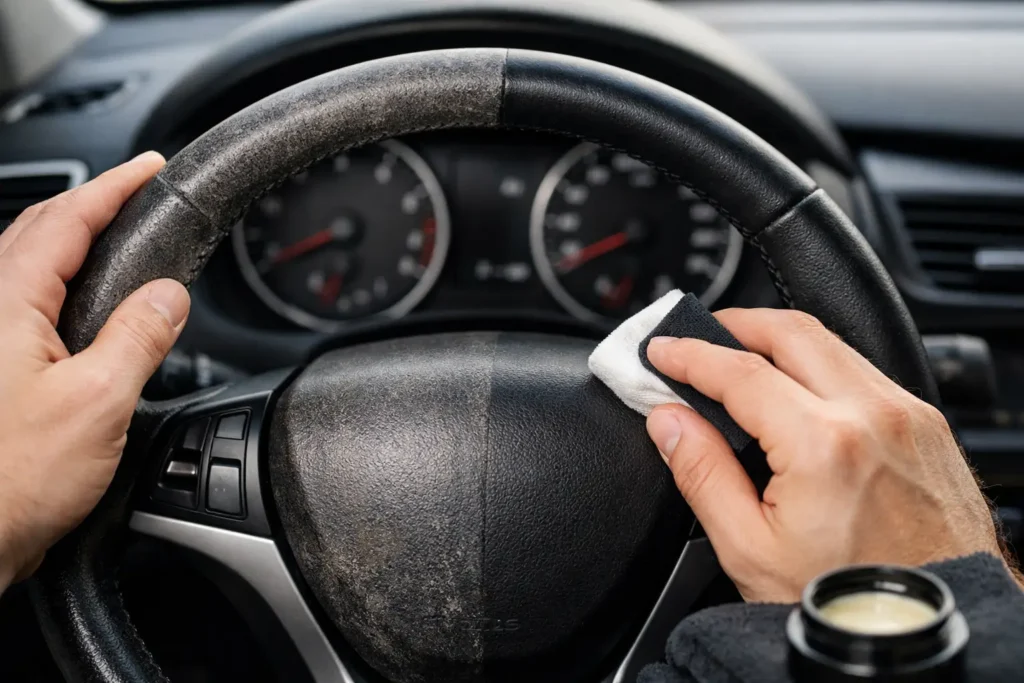
A steering wheel can make a well-kept vehicle feel neglected long before the seats or dash do. It is the interior part you see and touch every time you drive, so sun-faded leather, shiny worn spots, and discolored grip areas stand out immediately. Can faded steering wheel leather be restored? In many cases, yes – but the correct repair depends on whether the leather is merely faded or has started to crack, stretch, peel, or break down beneath the finish.
The difference matters. A quality color restoration can bring sound leather back to a clean, factory-correct appearance. Leather that is structurally worn, however, needs a more complete solution if you want a finish that looks right and holds up under daily use.
What Fading Actually Does to Steering Wheel Leather
Most steering wheel leather does not fade for just one reason. UV exposure is a major factor, especially in vehicles parked outdoors or driven in bright climates. Heat dries the material and weakens the original protective coating. Hand oils, lotions, sunscreen, sweat, and aggressive cleaners can gradually strip or discolor the finish as well.
The result is often uneven rather than uniform. The top of the wheel may bleach from sunlight, while the nine-and-three grip points become dark, glossy, or smooth from repeated contact. On black leather, fading can look gray or brown. On tan, red, blue, and specialty colors, it can make the entire interior look mismatched.
Fading is primarily a finish issue. The leather underneath may still be healthy, flexible, and firmly attached to the wheel frame. When that is the case, professional refinishing can restore the color and low-sheen factory appearance without replacing the cover.
Can Faded Steering Wheel Leather Be Restored Without Rewrapping?
Yes, if the original leather is structurally sound. A proper restoration is not simply applying a dye over a dirty surface. The wheel must be cleaned thoroughly to remove oils and residues, prepared so the new finish bonds correctly, color-matched, refinished in controlled layers, and protected with the appropriate topcoat.
The goal is to recreate the original look, not leave the wheel with a painted, overly glossy feel. Factory steering wheel leather usually has a specific texture and sheen. A correct refinishing process preserves that character while evening out sun damage, discoloration, and minor surface wear.
Color restoration is often an excellent choice for a newer luxury vehicle, a low-mileage collector car, or an original wheel with leather that remains soft and intact. It also makes sense when preserving original materials is part of the vehicle’s value. On a vintage vehicle, keeping the factory cover may be preferable to replacing it, provided there is enough sound material left to work with.
That said, no refinishing process can make compromised leather permanently healthy. If the material has lost its strength, color alone is not the answer.
Signs Refinishing Is the Right Repair
A faded wheel is generally a good candidate for restoration when the leather is still tight around the rim, has no deep cracks or holes, and feels supple rather than brittle. Minor scuffs, light abrasions, discoloration, and a worn clear coat can usually be corrected during the preparation and refinishing stages.
A wheel can also be refinished when the stitching is intact and the leather grain is still visible. The surface may look tired, but it has not reached the point where the cover itself is failing.
When Rewrapping Is the Better Investment
Rewrapping becomes the better long-term option when the leather is cracked through, torn, peeling heavily, stretched loose, or worn smooth enough that the grain is gone. Severe shrinkage and hardened sections are also warning signs. In these cases, refinishing may improve the color temporarily, but it cannot restore the strength, thickness, or original contour of the leather.
A professional rewrap removes the worn cover and replaces it with new automotive-grade leather. This creates an opportunity to restore the wheel in its original color and stitch pattern or make a purposeful upgrade. Owners often choose perforated leather for better grip, Alcantara or suede for a performance feel, colored stitching to match an interior accent, or a thicker rim profile for a more substantial hand feel.
Rewrapping costs more than a straightforward color restoration because it involves pattern work, stitching, material selection, and detailed installation. But for a wheel with genuine physical damage, it is usually the repair that delivers factory-new results rather than a short-lived cosmetic improvement.
Why DIY Leather Dye Often Fails on Steering Wheels
A do-it-yourself kit can be tempting, particularly when the damage looks like a simple color problem. The challenge is that steering wheels are high-contact surfaces. They flex slightly, receive constant friction, and collect more body oil than almost any other interior component.
Many DIY repairs fail because the wheel was not cleaned deeply enough before color was applied. Silicone dressings, shine products, skin oils, and old conditioners can prevent adhesion. The new color may look acceptable for a few weeks, then wear away at the grip points, turn sticky in heat, or develop an unnatural shine.
Color matching is another issue. Interior leather is rarely a basic black or tan. It may have a warm undertone, a low-gloss protective finish, and years of natural variation across nearby trim pieces. A close-but-not-correct color can be more noticeable than the original fading.
There is also the tactile problem. Thick coatings can fill the leather grain and leave the wheel feeling painted instead of leather-wrapped. An experienced restoration shop uses preparation methods and flexible finishes intended for the specific material and use case, then controls the final sheen so the repaired area belongs with the rest of the interior.
The Best Restoration Choice Depends on the Wheel
Not every steering wheel is leather in the same way. Some are fully wrapped in smooth leather. Others combine perforated leather, woodgrain, carbon fiber, painted spokes, metal trim, or airbag and switch assemblies that require careful handling. Classic wheels can include aged wood rims and delicate horn hardware, while modern wheels may have heating elements, paddle shifters, driver-assist controls, and complex trim pieces.
A specialist evaluates the complete wheel before recommending a repair. The focus should be on the condition of the leather, but also on matching the wheel’s other materials and protecting its functional components. A restored leather rim next to scratched woodgrain or faded spoke trim may still leave the wheel looking incomplete.
For vehicles with unusual colors, rare factory interiors, or discontinued trim, custom color matching is especially valuable. The right repair should make the steering wheel look like it belongs in that specific vehicle, whether the objective is concours-correct originality or a fully customized interior.
How to Keep Restored Leather From Fading Again
Once the wheel has been restored or rewrapped, basic care has a major effect on its lifespan. Keep harsh household cleaners, alcohol-heavy wipes, and greasy shine products away from the leather. These can dry the surface, alter the sheen, or weaken the protective finish.
Clean the wheel periodically with a mild leather-safe cleaner and a soft cloth. More importantly, reduce heat and UV exposure when possible. A windshield sunshade, covered parking, and regular interior cleaning all help prevent the same uneven wear from returning.
Be mindful of what reaches the wheel during daily driving. Fresh sunscreen, hand sanitizer, lotions, and certain cleaning chemicals can transfer quickly to leather. Wiping the wheel gently after exposure is a small step that protects a high-visibility part of the cabin.
A Better-Looking Wheel Changes the Entire Cabin
The steering wheel sits at the center of the driver’s experience. When its leather is faded, cracked, or shiny with wear, it can make an otherwise excellent vehicle feel older than it is. When it is restored correctly, the effect is immediate: the cabin looks cleaner, the material feels right in your hands, and the vehicle presents better for daily enjoyment, a show field, or resale.
Craft Customs evaluates whether refinishing or rewrapping will provide the right result for the condition of your original wheel. The best choice is not always the least involved repair. It is the one that gives your wheel the correct color, texture, durability, and finish for the miles still ahead.