
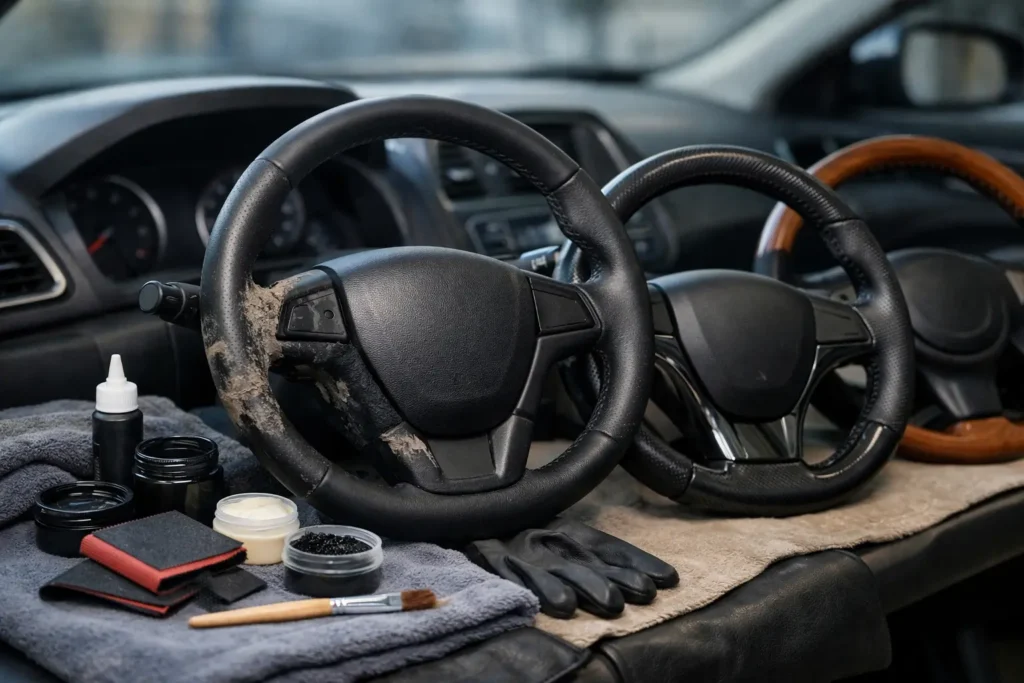
A worn steering wheel changes the whole feel of a vehicle. You can have a strong drivetrain, clean paint, and a well-kept cabin, but if the wheel is shiny from hand oils, cracked at the seams, faded, or peeling, the interior still feels tired. This guide to steering wheel refinishing options is built for owners who want the right fix the first time, whether the goal is factory-correct restoration or a more custom finish.
The best option depends on what the wheel is made of, how severe the damage is, and how you use the vehicle. A daily driver with surface wear needs a different approach than a concours classic, and a modern performance build calls for different materials than a luxury sedan. Refinishing is not one category of work. It is a set of specialized solutions.
Guide to steering wheel refinishing options by material
Before choosing a finish, you need to identify the wheel’s construction. Some wheels are all leather. Others combine leather with wood, painted trim, plastic, urethane, or carbon-style sections. Each material has its own prep requirements, coating systems, and durability limits.
If the wheel has multiple materials, refinishing usually works best when the job is handled as a complete assembly rather than as isolated touch-ups. That keeps the color, gloss level, texture, and edge transitions consistent. It also avoids the common problem of one restored section making the untouched areas look older.
Leather steering wheel refinishing
Leather is the most common steering wheel finish, and it is also the one owners notice first when it starts to fail. The early signs are slickness, darkening, fading, and flattened grain. More advanced wear shows up as cracking, loose stitching, torn panels, or leather that has worn through at the top or side grips.
If the leather is structurally sound and the issue is mostly cosmetic, refinishing may involve cleaning, surface prep, recoloring, and sealing. This can restore a more even appearance and improve the feel in hand. The trade-off is that recoloring is only as good as the condition underneath. If the leather is dry, split, or stretched, color alone will not create a lasting result.
When the damage goes beyond the surface, rewrapping is the better solution. That means replacing the leather skin rather than trying to rescue material that has already failed. A proper rewrap allows the wheel to be brought back to factory-new appearance or upgraded with a different leather grain, perforation pattern, contrast stitching, thumb grips, or a thicker profile. For many worn factory wheels, this is the refinishing option that actually solves the problem instead of covering it.
Wood steering wheel refinishing
Wood and woodgrain wheels require a different level of care because damage often involves both the finish and the substrate. Clear coat failure, yellowing, hairline cracking, chips, fading, and lifting veneer are all common. On older wheels, the wood may also have shrinkage or separation that needs correction before any new finish goes on.
A quality wood refinishing process is not just sanding and re-clearing. The color tone has to be matched, the grain pattern needs to remain natural, and the final gloss level has to fit the vehicle. Some owners want a high-gloss luxury finish. Others need a more period-correct satin look. The wrong gloss can make a restored wheel look out of place even if the surface is technically smooth.
For severe damage, restoration can involve rebuilding sections, repairing cracks, and redoing the clear finish system from the base up. This is where craftsmanship matters most. Wood flaws tend to show under light, and cheap refinishing usually reveals itself around the spoke edges and transition lines.
Painted and molded wheel restoration
Some steering wheels are molded urethane, plastic, or painted trim rather than wrapped in leather or wood. These can suffer from fading, scratches, hand-wear, peeling coatings, and general dullness. They are often found on older trucks, classics, base-model vehicles, and some modern wheels with painted accent sections.
These wheels can often be restored with careful repair, reshaping where needed, and refinishing in the correct color and sheen. Texture matching is a major part of the job. A finish that is too smooth or too glossy will stand out immediately, especially on a factory-style restoration.
If the wheel has gouges or cracks, repair quality matters more than paint quality. A nice topcoat cannot hide a bad contour. The shape has to feel right in the hand before the color goes on.
Custom steering wheel refinishing options
Not every refinishing job is about returning to stock. Many owners want the wheel to match a larger interior upgrade or give the cabin a more modern, high-end look. In those cases, refinishing becomes customization.
Suede and Alcantara-style wraps
Suede-style finishes are popular in performance builds because they offer a motorsport look and a soft, high-grip feel. They can make an interior feel more focused and more current, especially when paired with a center stripe or contrast stitching.
The trade-off is maintenance. Suede-style materials show wear faster than leather if the vehicle is driven daily, especially with bare hands, lotions, or heavy sun exposure. They look excellent when fresh and properly cared for, but they are not the best fit for every owner. If the vehicle is a weekend car or a garage-kept build, they make more sense. If it is a commuter, leather often holds up better over time.
Carbon fiber conversions and modernized finishes
For owners updating an older interior or building a more aggressive look, carbon fiber-style steering wheel sections are a common upgrade. These can be combined with leather, perforated leather, or suede for a mixed-material finish that feels more exotic and contemporary.
This option is highly visual, so the details have to be right. Weave alignment, gloss consistency, edge transitions, and the fit between hard and soft materials determine whether the final result looks premium or aftermarket. Done well, a carbon fiber conversion can make the wheel feel like a centerpiece. Done poorly, it becomes the first thing you want to replace.
Color changes and stitching upgrades
Sometimes the best refinishing choice is not a dramatic material change but a better color and cleaner detail work. Black to red, faded gray back to factory tone, or a custom stitch color that ties into the seats and dash can completely change how the cabin reads.
This is especially useful for interiors that feel dated but do not need a full redesign. A steering wheel with fresh leather, sharper stitching, and properly matched color can make the driver’s area feel newer without altering the character of the vehicle.
How to choose the right refinishing option
The right answer starts with honesty about the wheel’s condition. If the damage is light and limited to surface wear, refinishing can be straightforward. If the wheel has structural issues, missing material, deep cracking, or failed leather, a more complete restoration is the smarter investment.
You also need to think about use. A collector car can justify ultra-accurate materials and lower-use finishes. A daily-driven SUV or truck needs durability first. A performance car owner may want more grip and a thicker rim. A classic owner may care more about factory-correct stitching, grain, and gloss.
Budget matters, but so does value. The cheapest option is often cosmetic only, and cosmetic-only work tends to fail fastest on a part you touch every time you drive. A steering wheel is high-contact, high-visibility, and exposed to oils, heat, friction, and UV. That is why proper prep and material selection matter more here than on many other interior parts.
What separates a lasting result from a short-term fix
Steering wheel refinishing is one of those services where shortcuts show up quickly. Poor adhesion, bad seam work, weak topcoats, inaccurate color, and sloppy edge finishing usually become obvious within months, sometimes sooner. The wheel may look acceptable in photos, then disappoint in person once you grip it and notice the details.
A strong result comes from in-house control, material knowledge, and experience across many makes and models. The process should account for the wheel’s original construction, not force every job into the same formula. That is especially important on rare, vintage, luxury, and performance applications where factory details vary more than most owners realize.
At Craft Customs, that kind of work is treated as skilled restoration rather than basic reconditioning. The goal is not to make a wheel merely look better from a distance. It is to make it feel right in the hand, look correct under close inspection, and hold up in real use.
If your steering wheel makes the rest of the interior feel older than it is, the right refinishing option can change that fast. Choose the method that matches the material, the condition, and the way you drive, and the wheel stops being a worn touchpoint and becomes one of the best parts of the cabin again.