
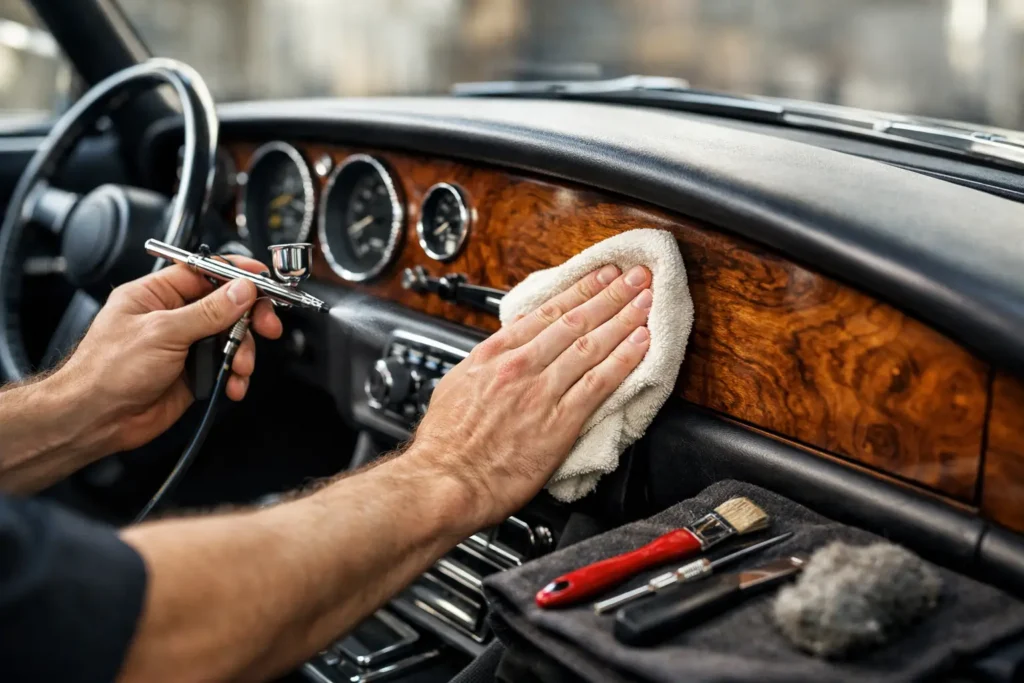
A faded dash can age the whole cabin faster than worn carpet or a shiny steering wheel. When the wood trim starts peeling, cracking, clouding, or turning orange from sun exposure, the interior stops feeling cared for. A professional woodgrain dash restoration service solves that problem by restoring the original look or refining it into something cleaner, richer, and more durable.
For many owners, the issue is not just cosmetic. Dash trim sits directly in your line of sight. Every drive reminds you when the finish is lifting at the edges, the clear coat is crazed, or the color no longer matches the rest of the interior. On a classic car, damaged woodgrain can pull value down. On a luxury or performance vehicle, it makes the cabin feel tired long before the mechanical side is ready to quit.
What a woodgrain dash restoration service actually fixes
Woodgrain trim fails in a few predictable ways. The top clear coat often breaks down first from heat and UV exposure. That creates haze, yellowing, spider cracks, dull spots, or a rough texture where the surface used to feel smooth. In other cases, the woodgrain layer itself fades, chips, or lifts away from the base material.
Not every dash panel is built the same, which is why the repair approach matters. Some vehicles use real wood veneer. Others use molded plastic with a printed or simulated woodgrain finish. Many late-model interiors rely on layered coatings that mimic wood but react very differently to sanding, stripping, and refinishing than true veneer would. Treating all of them the same is how parts get ruined.
A quality restoration service identifies the material first, then rebuilds the finish system around it. That may include stripping damaged coatings, repairing substrate flaws, recreating the grain appearance, color-correcting adjacent pieces, and applying a fresh topcoat designed for interior use. The goal is not just to make it shiny again. The goal is a finish that looks right for the vehicle and holds up under real-world heat, light, and handling.
Why replacement is not always the better option
Owners often start by searching for used replacement trim. Sometimes that works. More often, it creates a different version of the same problem.
Used woodgrain panels from salvage yards usually have the same age-related wear as the part you already own. New old stock pieces can be expensive, hard to verify, or impossible to find for rare trims and discontinued interiors. Even when you locate a replacement, the color tone and gloss level may not match the surrounding components. One fresh-looking panel next to two tired ones can make the cabin look more inconsistent, not less.
That is where a woodgrain dash restoration service makes more sense. Restoring your original part preserves fitment, mounting points, and factory alignment. It also gives you the chance to correct the entire visual finish rather than gambling on an old part with unknown history. If the rest of the dash trim needs to match, refinishing multiple pieces together usually produces the cleanest result.
Restoration versus customization
Some owners want factory-correct. Others want the cabin to feel upgraded without looking out of place. Both are valid, but they require different decisions early in the process.
Factory-style restoration focuses on recreating the original color depth, grain character, and gloss level as closely as possible. This matters most for collector vehicles, concours-minded restorations, and owners who want the interior to look period-correct. The challenge is restraint. Too much gloss, the wrong tone, or a grain pattern that feels generic will stand out immediately.
Customization gives you more latitude. You may want a darker walnut tone, a cleaner satin finish instead of heavy gloss, or a more contemporary wood appearance that fits a full interior refresh. This approach is common when the vehicle is already receiving custom leather, painted trim, or other interior updates. The right custom finish should still feel intentional with the rest of the cabin. A dramatic change can look excellent, but only if the steering wheel, console, shifter, and surrounding trim support it.
How the restoration process should work
A proper dash restoration is detail work from start to finish. First, the trim is inspected for cracks, delamination, coating failure, and heat damage. That inspection determines whether the existing finish can be safely removed and rebuilt, or whether the grain pattern and color need to be recreated from the ground up.
Next comes surface preparation. This stage matters more than most people realize. Any contamination, silicone residue, oils, or unstable clear coat left behind will compromise the new finish. Rushing prep is one of the main reasons quick cosmetic repairs fail.
Once the part is stable, the finish is rebuilt in layers. Depending on the material and the desired result, that may involve substrate correction, base color work, woodgrain recreation, and a protective clear coat. The final topcoat needs to match the intended look. High gloss is not automatically better. Some interiors were originally more subdued, and a lower-sheen finish can look more authentic while hiding fingerprints better.
The last step is quality control. Grain consistency, color balance, edge coverage, gloss uniformity, and curing all need to be right before the part goes back into service. A good-looking part on day one is easy. A properly finished part that still looks right after heat cycles and normal use is the standard that matters.
What can go wrong with low-cost refinishing
A cheap refinish usually reveals itself fast. The grain may look flat or artificial. The color can shift too red, too orange, or too dark. Clear coat can pool at the edges, peel around switch openings, or show dust and texture in direct light. On simulated wood trim, aggressive sanding can cut through the pattern and leave the part looking permanently off.
Another issue is mismatch. Dash pieces rarely exist in isolation. If the center trim, shifter surround, ashtray cover, or steering wheel wood sections are part of the same visual family, restoring only one piece without accounting for the others can leave the cabin looking patchy. Skilled restoration takes the full interior into account, even when only one part is being serviced.
This is why specialty matters. A shop that handles interior trim every day understands material behavior, color relationships, and finish durability in a way a general body shop usually does not. The difference shows up in the details you notice every time you sit in the driver’s seat.
When to restore now instead of later
If the finish is just dull, you may be tempted to wait. That can be reasonable in the earliest stages of wear. But once clear coat starts cracking, lifting, or allowing moisture and contamination to work underneath, the damage tends to accelerate.
Heat is relentless on dash components. A small failure near the windshield can spread through a season of summer exposure. Restoring earlier often preserves more of the original material and gives you better options, especially on rare or discontinued parts. Waiting until the substrate is badly compromised can turn a straightforward refinish into a more involved reconstruction.
For higher-value vehicles, timing also affects resale appeal. Buyers notice the interior immediately. A sharp exterior paired with tired woodgrain trim raises questions about overall care. Restoring the dash before listing a vehicle can improve presentation in a way photos capture well.
Choosing the right woodgrain dash restoration service
Look for a specialist that can speak clearly about materials, not just appearance. They should be comfortable explaining whether your part is veneer, molded plastic, or simulated woodgrain, and what that means for the repair plan. Ask whether the work is done in-house, how matching is handled, and what level of finish accuracy they can achieve.
Visual proof matters here. Before-and-after work should show more than glossy final shots. You want to see corrected cracking, improved color depth, clean edge work, and consistency across related trim pieces. If a service also handles steering wheels, console trim, and interior refinishing, that is often a good sign because they understand how all those components need to work together visually.
For send-in work, packaging and communication matter almost as much as craftsmanship. Trim pieces can be fragile, and proper handling protects both the part and the final result. A shop like Craft Customs that specializes in mailed-in interior restoration can make that process straightforward for owners well beyond the local market.
The result you should expect
A restored woodgrain dash should not call attention to the repair. It should look like the interior finally makes sense again. The color should sit naturally with the cabin, the sheen should feel appropriate for the vehicle, and the surface should look clean from every angle instead of only in edited photos.
Most of all, it should change how the vehicle feels to own. Interior restoration is personal because it lives where you touch and look every time you drive. If your dash woodgrain has started to drag the whole cabin down, fixing it is not a minor cosmetic indulgence. It is one of the most visible ways to bring the interior back to the level the rest of the vehicle deserves.
The right restoration does more than cover damage. It gives you back that first impression every time you open the door.