
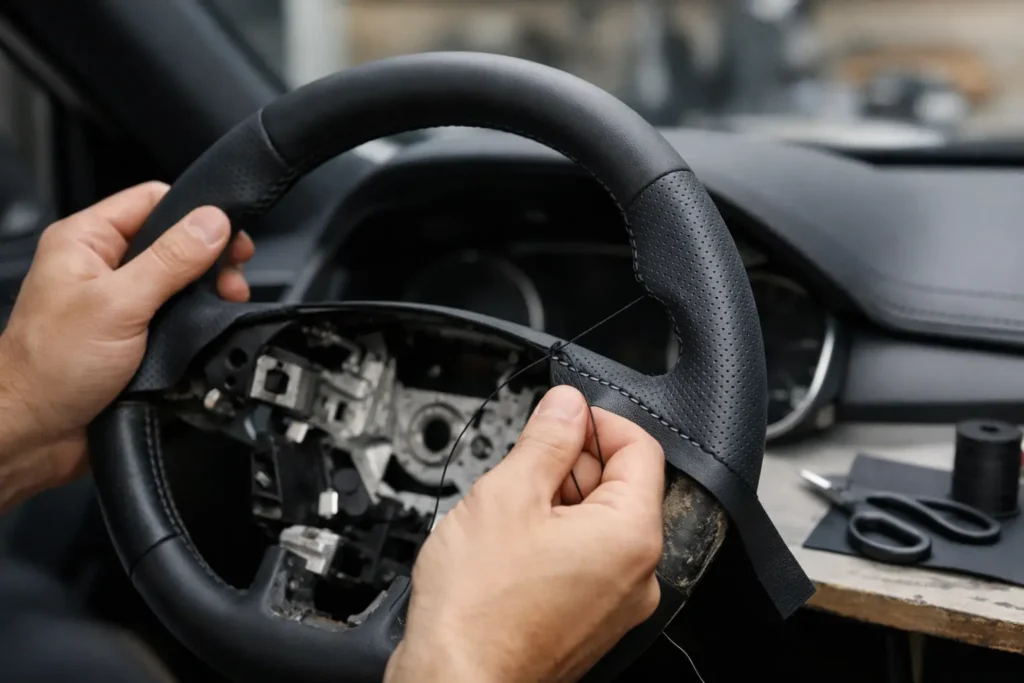
A worn steering wheel changes the whole feel of a vehicle. You can have clean seats, fresh carpet, and polished trim, but if the wheel is slick, cracked, faded, or peeling, the interior still feels tired every time you drive. That is why a leather steering wheel reupholstery service is often one of the most noticeable interior upgrades you can make.
Unlike quick covers or wrap kits, professional reupholstery restores the part you actually touch most. It addresses appearance, grip, comfort, and long-term durability at the same time. For daily drivers, luxury vehicles, classics, and custom builds, the steering wheel is not a small detail. It is the focal point of the cabin.
What a leather steering wheel reupholstery service actually fixes
Most steering wheels do not fail all at once. The damage usually builds slowly. The top section starts to fade from UV exposure. The side grips become smooth and shiny from hand oils. Stitching loosens. The leather shrinks, hardens, or splits. On some wheels, the outer layer peels away and exposes the material underneath.
A proper leather steering wheel reupholstery service is built to correct those problems at the source. The old covering is removed, the wheel is inspected, the base is repaired if needed, and new material is fitted to the original shape. That matters because the goal is not just to hide wear. The goal is to restore the wheel so it looks right, feels right, and holds up under regular use.
This is also where professional work separates itself from cosmetic patching. Surface dye can improve color in minor cases, but it will not fix torn leather, collapsed padding, poor seams, or a misshapen grip. If the wheel has real wear, reupholstery is usually the right repair.
Why replacement is not always the better option
A lot of owners assume buying another steering wheel is easier. Sometimes it is, but often it creates new problems. OEM replacement wheels can be expensive, hard to source, or discontinued altogether. Used wheels usually come with the same wear you are trying to get rid of. Aftermarket wheels may alter the factory look, driving position, airbag compatibility, or value of the vehicle.
Reupholstery keeps your original wheel core, which is especially important on rare, vintage, luxury, and model-specific applications. The fit stays true to the vehicle because it is the original part. For collectors and restoration-minded owners, that helps preserve authenticity. For custom clients, it provides a solid foundation for changing the look without compromising function.
There is also a comfort factor. Many factory wheels have a shape and thickness drivers already like. Reupholstering that same wheel lets you keep the familiar feel while upgrading the finish.
The difference between average upholstery work and specialist craftsmanship
Not every interior shop handles steering wheels well. They are tighter, more complex, and more visible than larger upholstered pieces. Small mistakes show up fast. Uneven stitching, loose leather, bulky seams, poor material stretch, and mismatched grain all stand out the moment the wheel is back in the car.
Good steering wheel work requires careful patterning, material selection, and tension control. The leather has to wrap cleanly around curves, spokes, contours, thumb grips, and control cutouts. The seam placement has to look intentional and symmetrical. The thickness has to feel consistent around the full circumference.
That is why specialization matters. A shop that works on steering wheels every day understands the differences between a modern sport wheel, a vintage thin-rim wheel, a wood and leather hybrid, and a heavily worn daily driver wheel that needs substrate repair before any new leather goes on. Craft Customs built its reputation around exactly that kind of detail-driven interior work.
Material choices matter more than most people expect
Leather is not one generic material. Different grades, textures, and finishes produce very different results. A factory-style smooth leather gives a clean OEM appearance. Perforated leather can add a sportier look and better visual contrast. Suede or Alcantara-style materials can create a more aggressive custom feel, though they also require more maintenance and are not ideal for every driver.
The right choice depends on how the vehicle is used. A weekend car can lean more heavily into style. A daily driver usually benefits from durable automotive leather with a finish that resists wear and cleans easily. Performance builds often mix smooth and perforated sections for grip and visual definition. Classic cars may call for a grain, stitch style, and color that stays faithful to the period.
Color matching is another area where experience shows. Black is common, but not every black interior is the same black. The same goes for tan, gray, red, and brown. If the goal is a factory-like result, the new leather has to work with the rest of the cabin, not just look good on its own.
When customization makes sense
Many customers start with damage repair and end up upgrading the wheel at the same time. That is a practical move, not just a cosmetic one. If the wheel already needs to be reupholstered, that is the best time to change the material layout, stitch color, grip profile, or accent sections.
A subtle custom approach might mean keeping the factory color and adding a motorsport-style stitch. A more aggressive build might use perforated side grips, smooth top and bottom sections, a thicker palm contour, or color accents that tie into seats, belts, or trim. Neither approach is automatically better. It depends on the vehicle, the owner, and whether the goal is restoration accuracy or a personalized interior.
The key is restraint and fit. Custom work should still look like it belongs in the vehicle. The best results feel intentional, not forced.
The send-in process is simpler than most owners think
A specialized leather steering wheel reupholstery service does not require local access to a shop. Many customers use a send-in process, which opens the door to better craftsmanship than whatever happens to be available nearby. You remove the steering wheel, ship it in, approve the material and finish details, and receive the completed wheel ready for reinstallation.
For many owners, that is the best option. It allows the work to be done by a true interior restoration specialist rather than a general trim shop. It also makes more sense for uncommon vehicles, high-end models, and parts that need exacting attention.
Turnaround time, communication, and packing instructions matter here. So does experience with a wide range of makes and models. A shop that regularly handles domestic, import, luxury, exotic, and classic applications is better prepared for the details that can affect the final result.
What to expect from a quality finished wheel
A properly reupholstered wheel should look clean from every angle. The seams should be straight and balanced. The leather should sit tight without wrinkles or slack spots. The transitions around spokes and controls should be smooth. Most importantly, the wheel should feel right in the hands.
That tactile result is easy to underestimate until the job is done. A fresh wheel restores grip and confidence. It removes that dry, brittle, slippery feel that makes a vehicle seem older than it is. On a premium car, it helps the cabin feel premium again. On a classic, it helps the interior present as cared for rather than partially restored.
Durability also comes down to preparation and material quality. Good leather, proper wrapping technique, and in-house workmanship produce a finish that is built for actual driving, not just photos.
Is reupholstery worth it?
If the steering wheel is one of the first things you notice when you get in the vehicle, yes, it usually is. Few interior repairs affect the driving experience as directly. The value is not only visual. It is in the way the vehicle feels every mile after the repair.
There are cases where a simple refinish may be enough, and there are cases where a full custom build makes more sense than a factory-style restoration. That is why the best service is not one-size-fits-all. It starts with the condition of the wheel, the design of the interior, and the standard you want the finished part to meet.
If your steering wheel is cracked, faded, peeling, or just no longer worthy of the rest of the cabin, fixing it is not a minor cosmetic decision. It is one of the smartest ways to bring the interior back to the level the vehicle deserves. And once you feel the difference in your hands, it is hard to believe you waited this long.